Mustang Island · Nueces County, Texas
Port Aransas, Texas
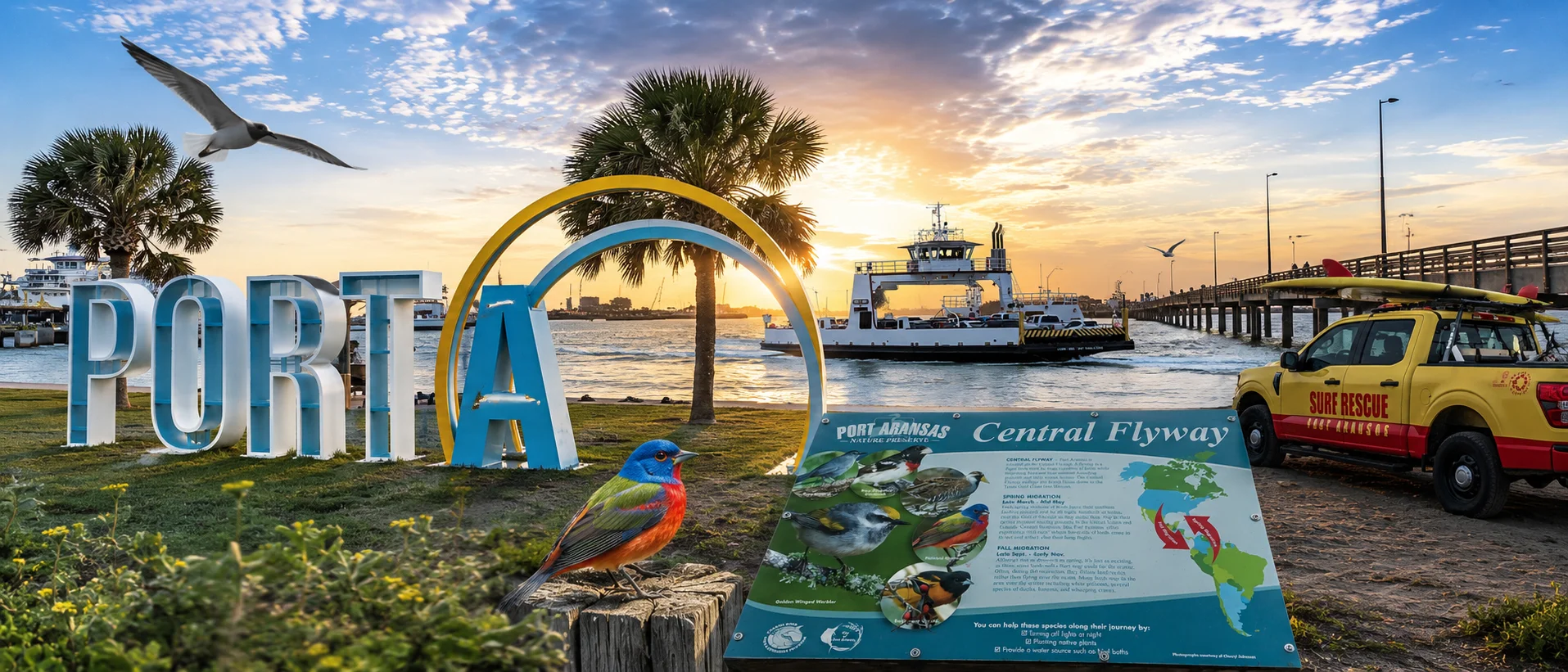
A free ferry, a Painted Bunting magnet, a tarpon fishing legend, and a Civil War battery — all on a barrier island you can reach without touching a toll booth.
The Island at the End of a Free Ferry
Port Aransas sits on the northern tip of Mustang Island, separated from the Texas mainland by the Corpus Christi Ship Channel. To get there, you board a free TxDOT ferry in Aransas Pass — a 3-minute crossing that regularly draws brown pelicans gliding alongside the bow and dolphins riding the wake. It is, not coincidentally, the first wildlife experience most visitors have.
The town is small — under 4,000 permanent residents — but its footprint on Texas natural history is outsized. The Central Flyway funnels migrating birds directly over Mustang Island every spring. Tarpon once ran the channel thick enough that the town was named for them. President Roosevelt fished here in 1937. And buried in the coastal scrub near the UT Marine Science Institute, concrete gun emplacements still face the Gulf, silent since 1945.
As a day trip from Rockport — about 45 minutes by road and ferry — Port Aransas rounds out any birding itinerary with species and habitats the mainland can’t match: Gulf-front terns, diving gannets at the jetties, and the legendary migrant fallout at Paradise Pond.
The Ferry — Your First Wildlife Encounter
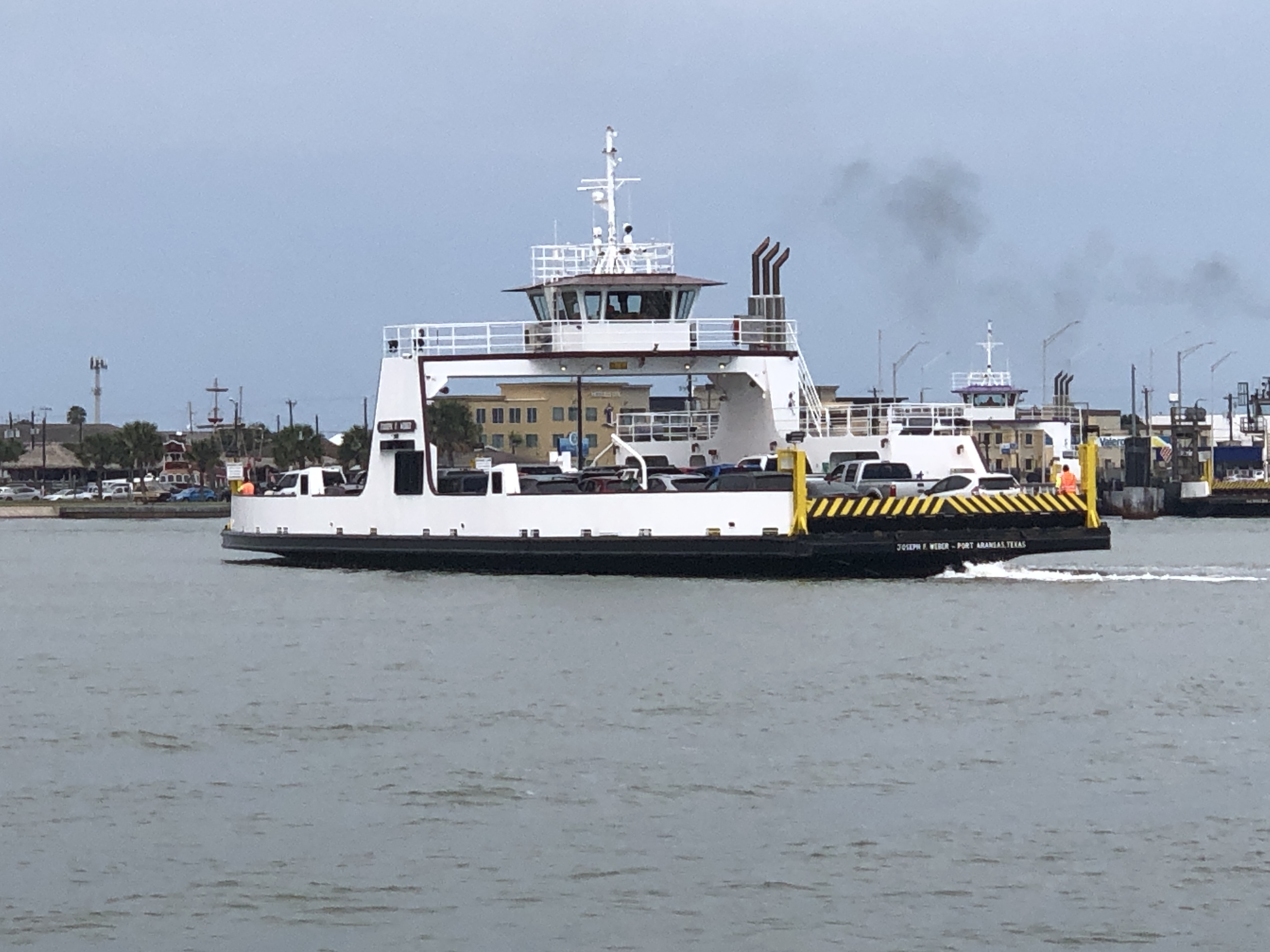
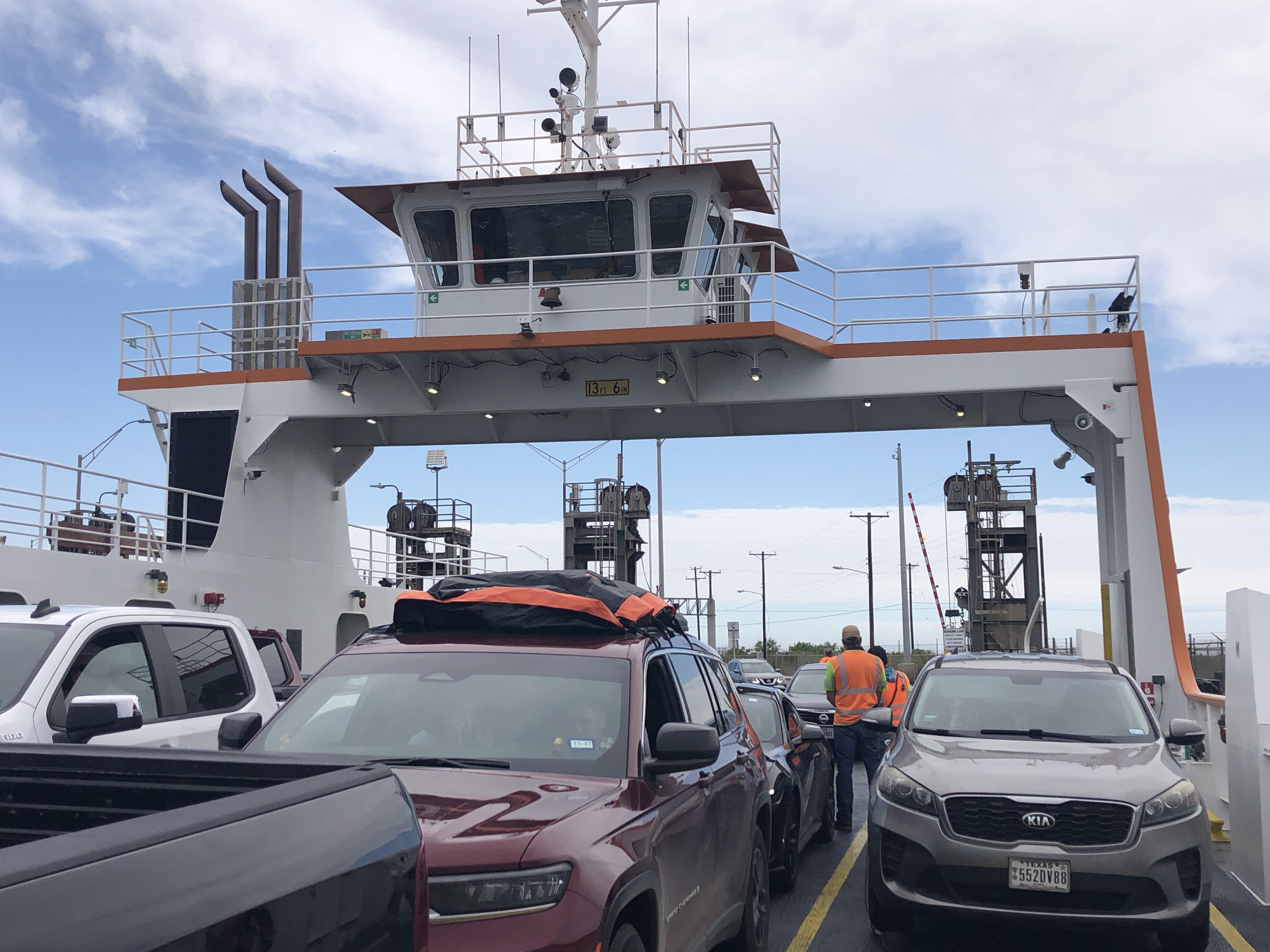
The Aransas–Port Aransas ferry is operated by TxDOT, runs 24 hours a day, 365 days a year, and costs nothing. Four to six flat-bottomed ferries rotate through the crossing, each carrying 30–40 vehicles. The channel crossing takes about 3 minutes. Brown pelicans regularly fly alongside, close enough to photograph without a telephoto lens. Bottle-nosed dolphins work the channel and will ride the bow wake of a slow-moving ferry.
Plan your timing. Lines run longest on weekend mornings heading into Port Aransas as beach-goers start their day, and longest on weekend afternoons as the beach crowd heads home. During spring break and summer holiday weekends, waits can exceed an hour. Weekday mornings in the off-season are essentially no-wait. For birders, arriving on the early ferry — first light on a weekday — gives you empty boardwalks and peak bird activity.
Check Live Ferry Wait Times
TxDOT posts real-time wait times at its.txdot.gov (select SH 361 Aransas Pass East). Updates also post to @PortA_Ferry on X/Twitter.
Birding Port Aransas
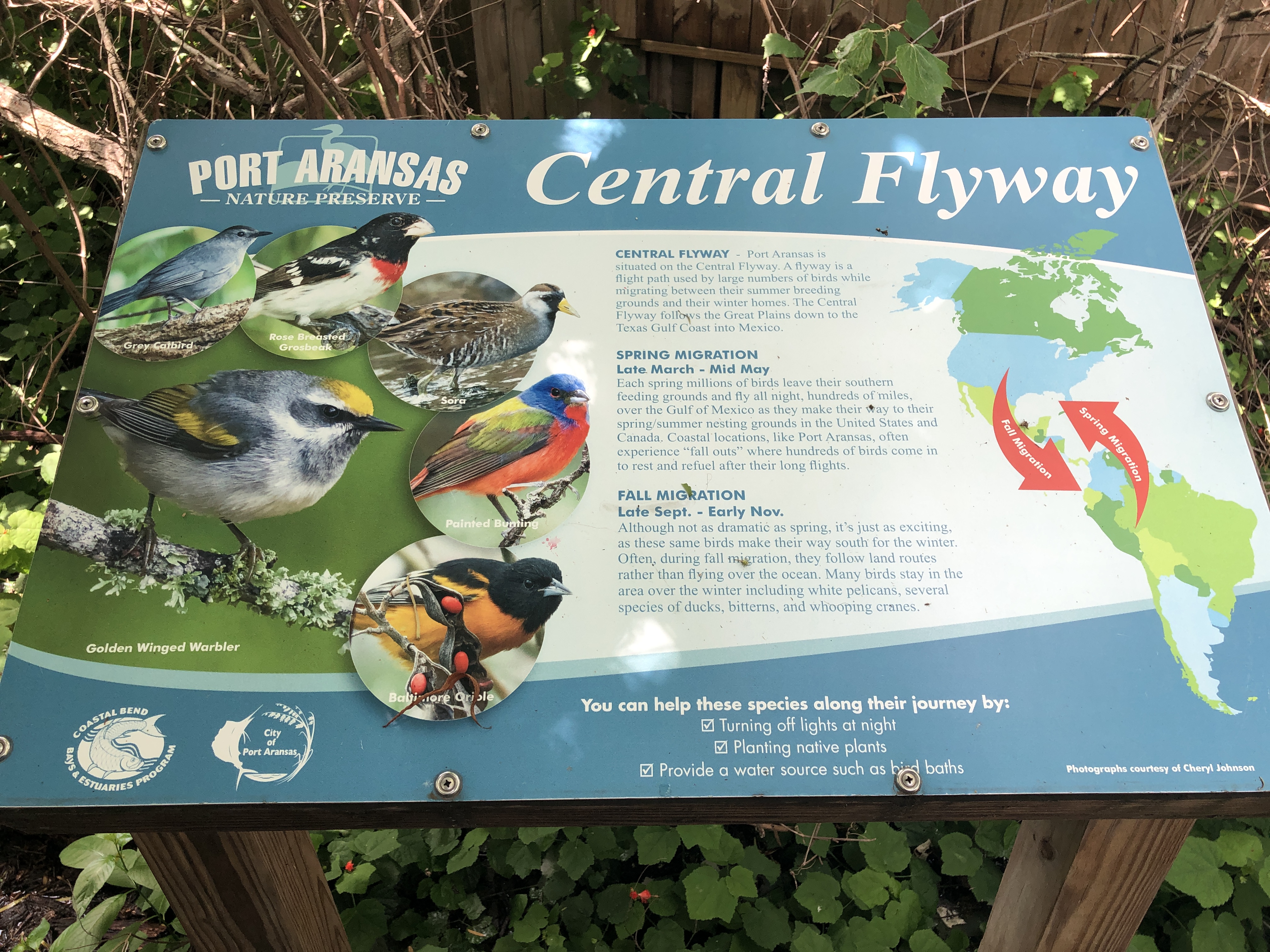
Port Aransas sits directly on the Central Flyway. In spring migration — April through mid-May — exhausted birds that have crossed the Gulf of Mexico overnight make landfall on Mustang Island and drop into the first trees they find. That makes Port Aransas one of the most electrifying birding destinations on the Texas coast during peak migration.
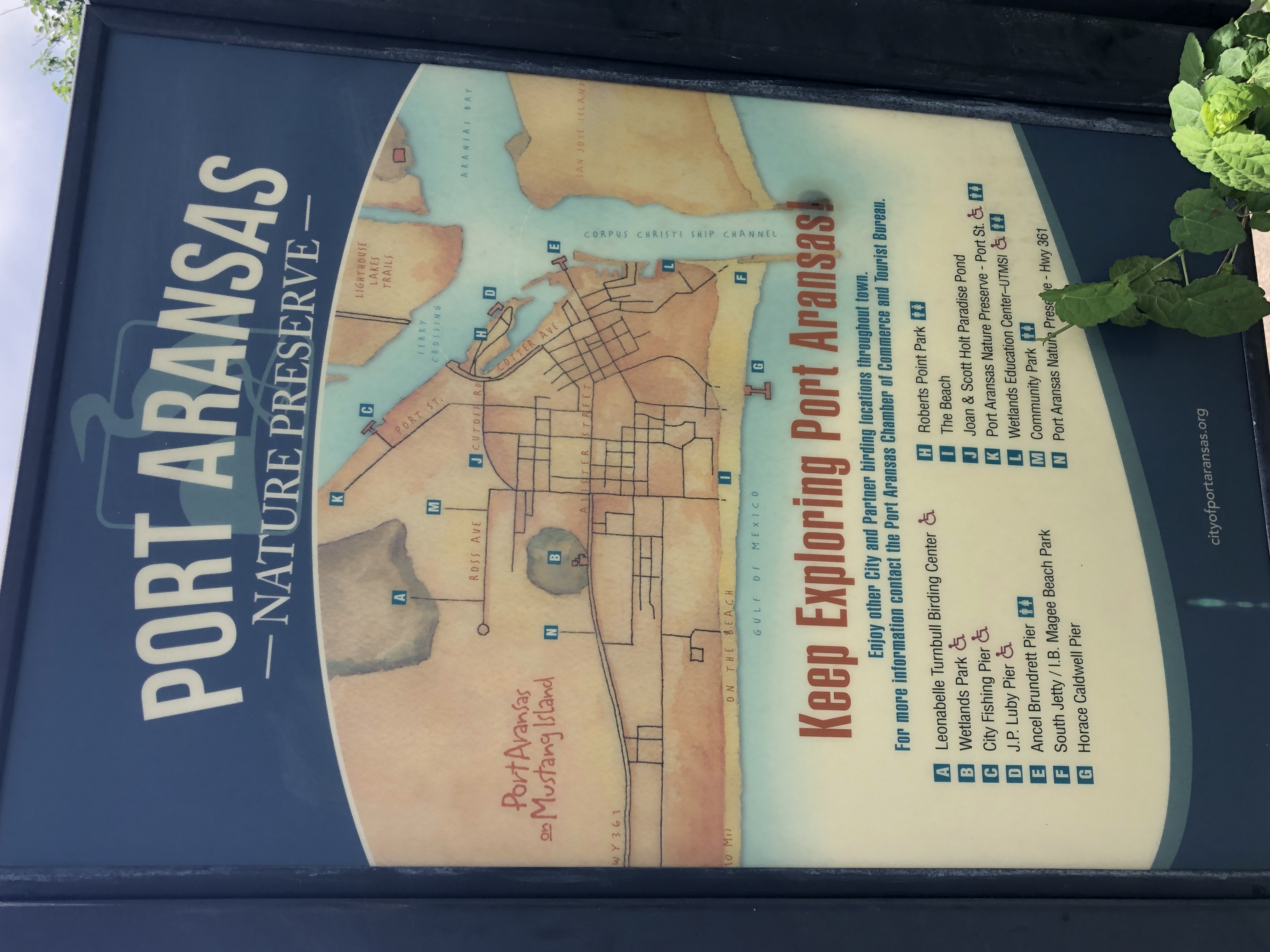
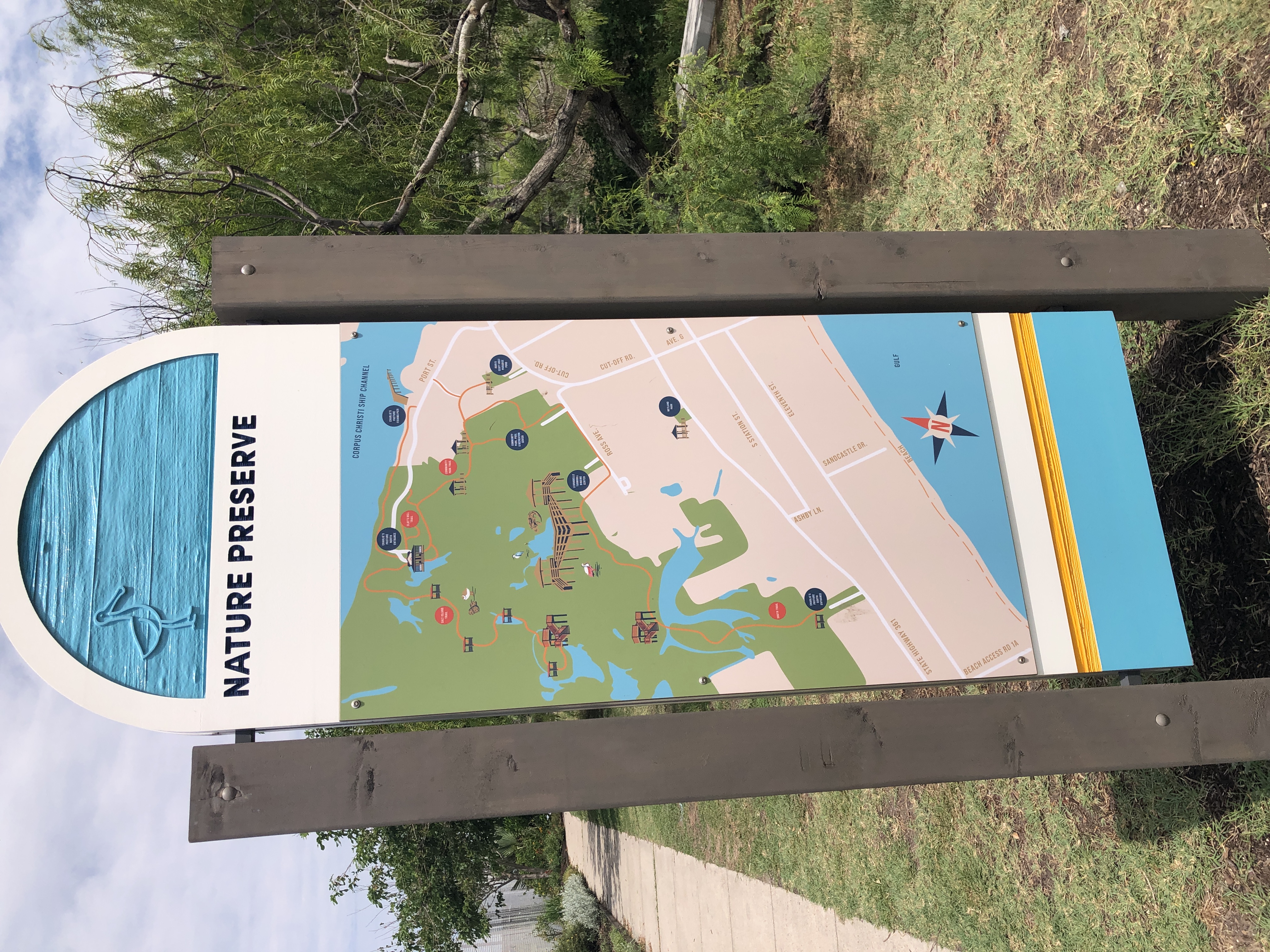
Official Port Aransas Nature Preserve birding map — 13 designated sites spanning wetlands, ponds, jetties, Gulf beach, and the Wetlands Education Center at UTMSI.
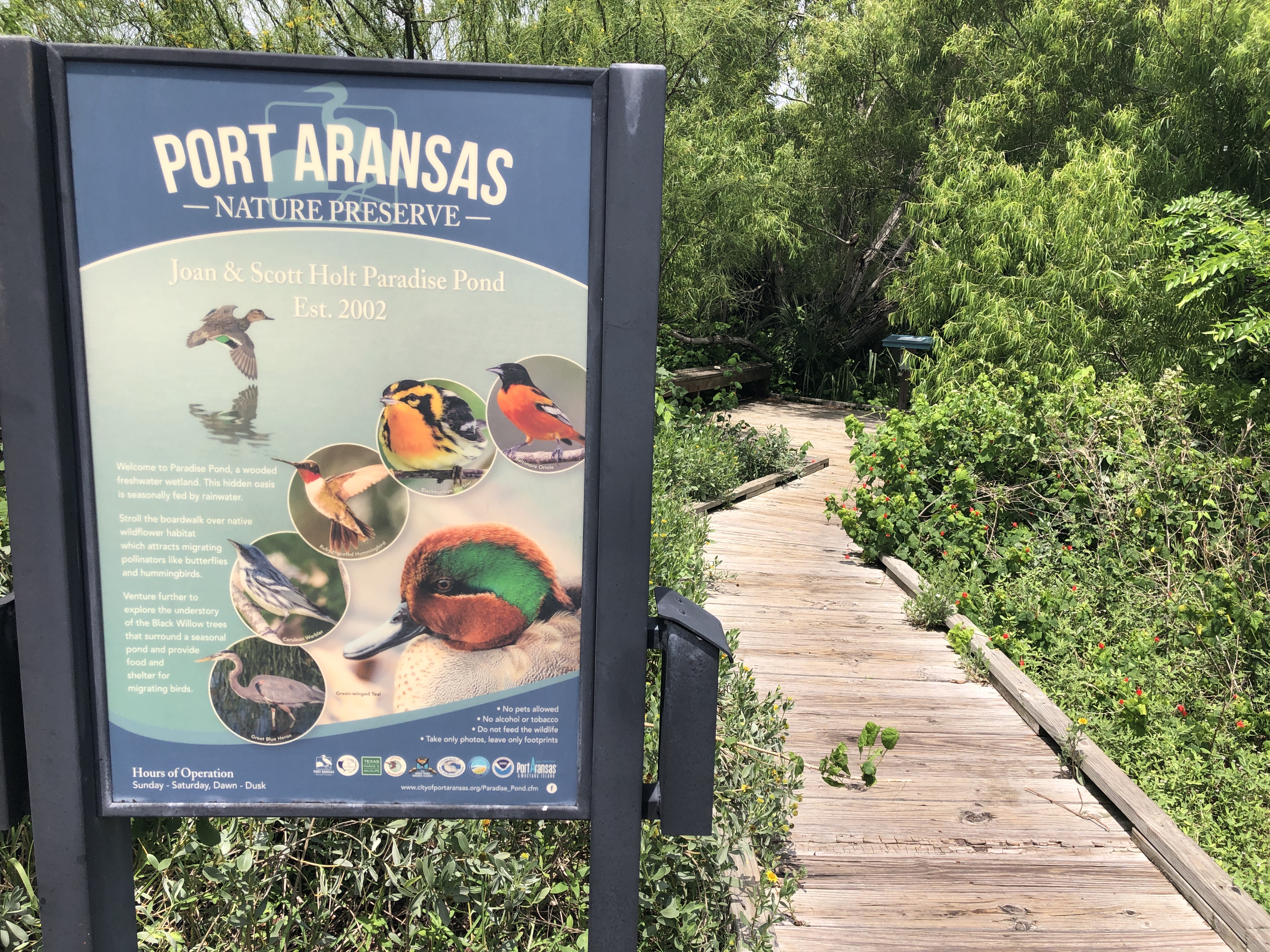
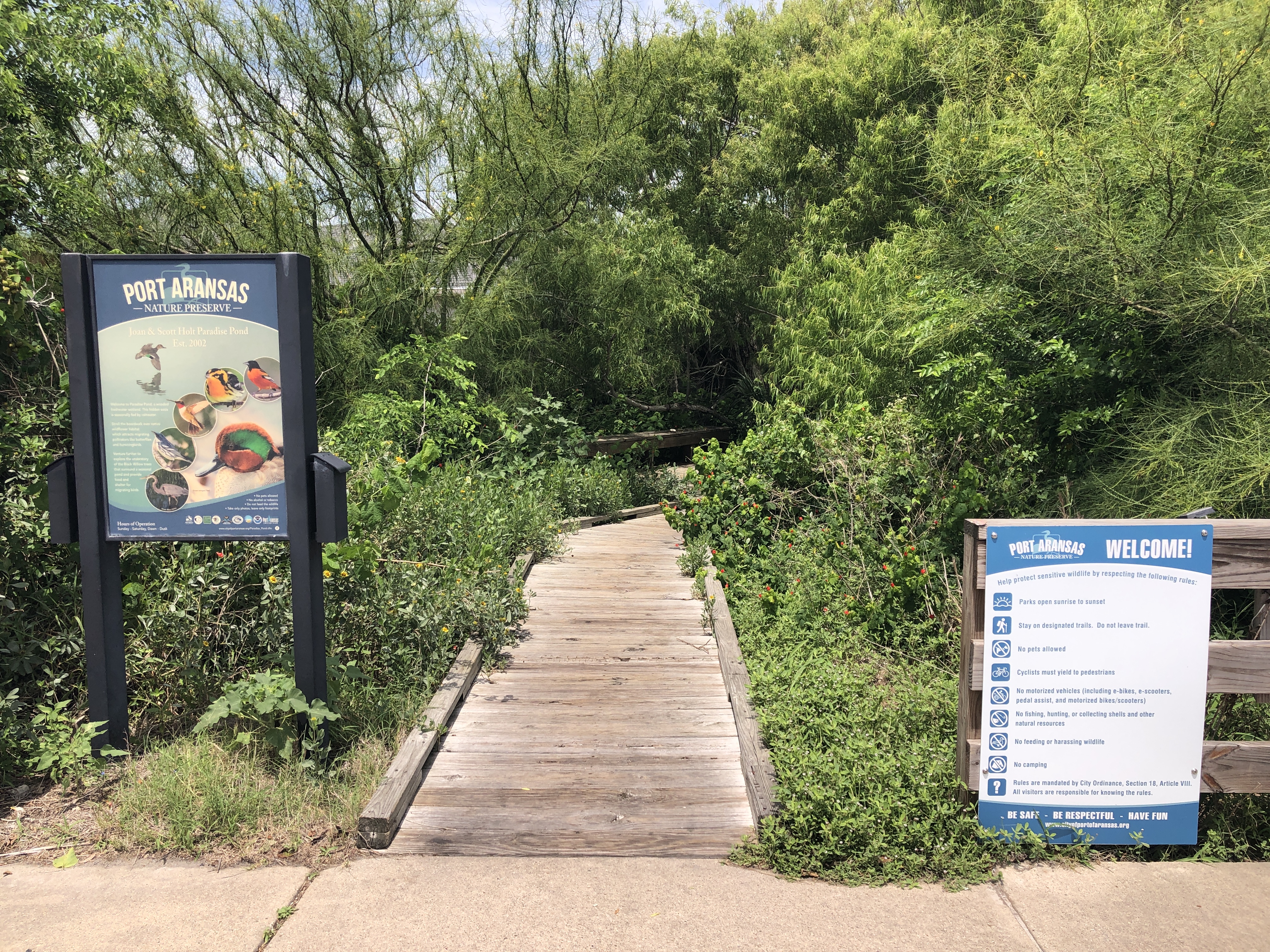
Joan & Scott Holt Paradise Pond
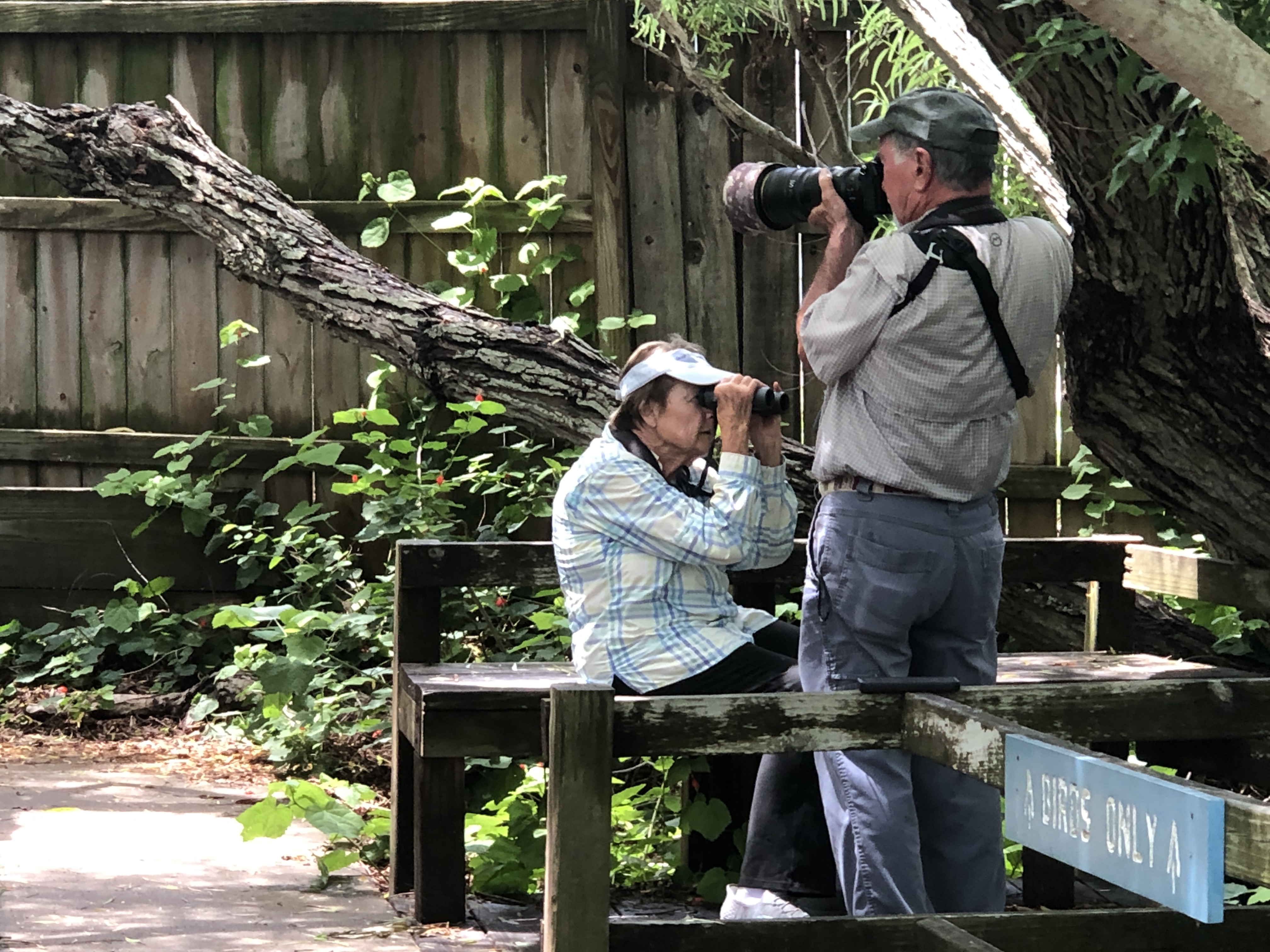
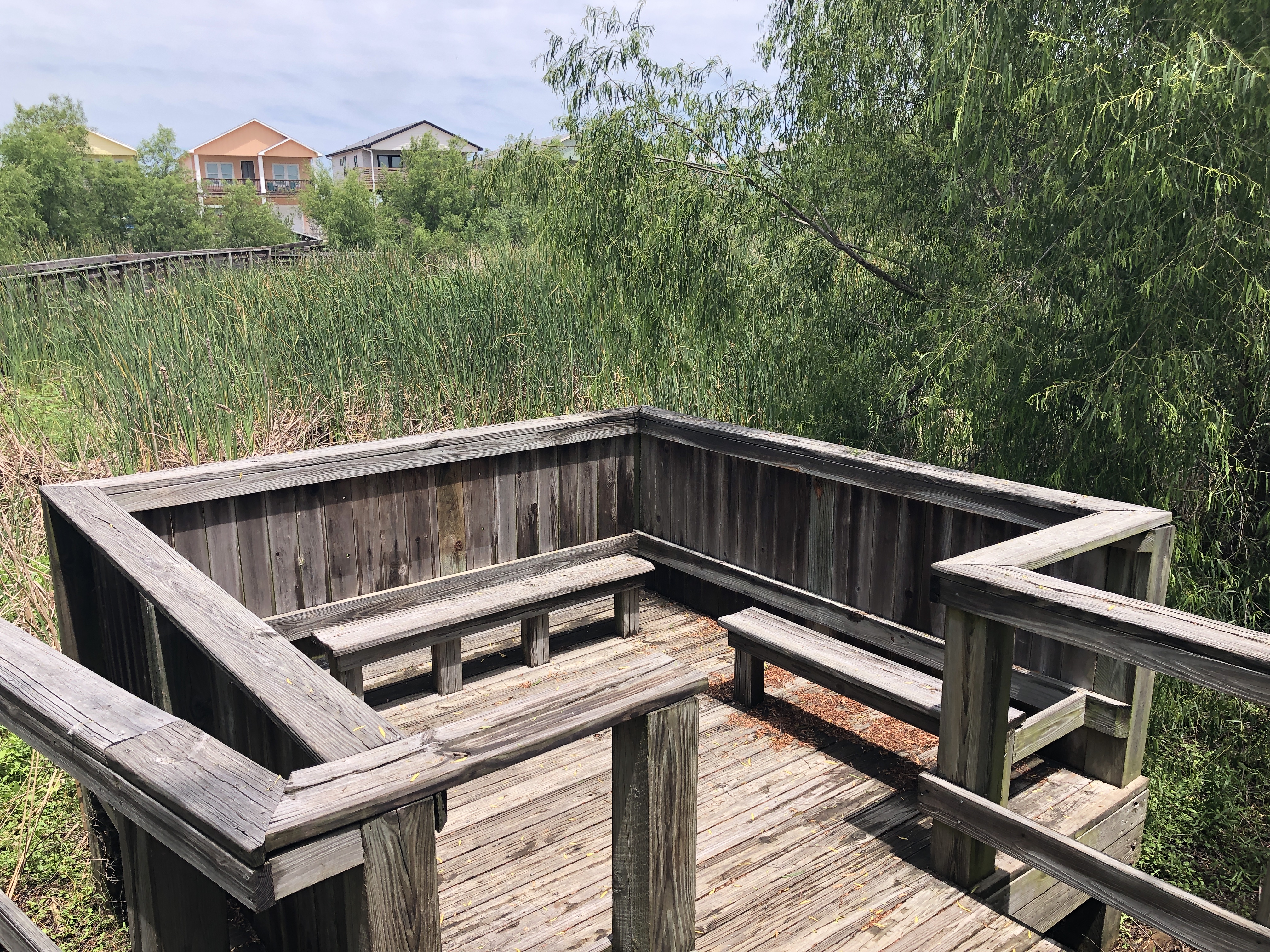
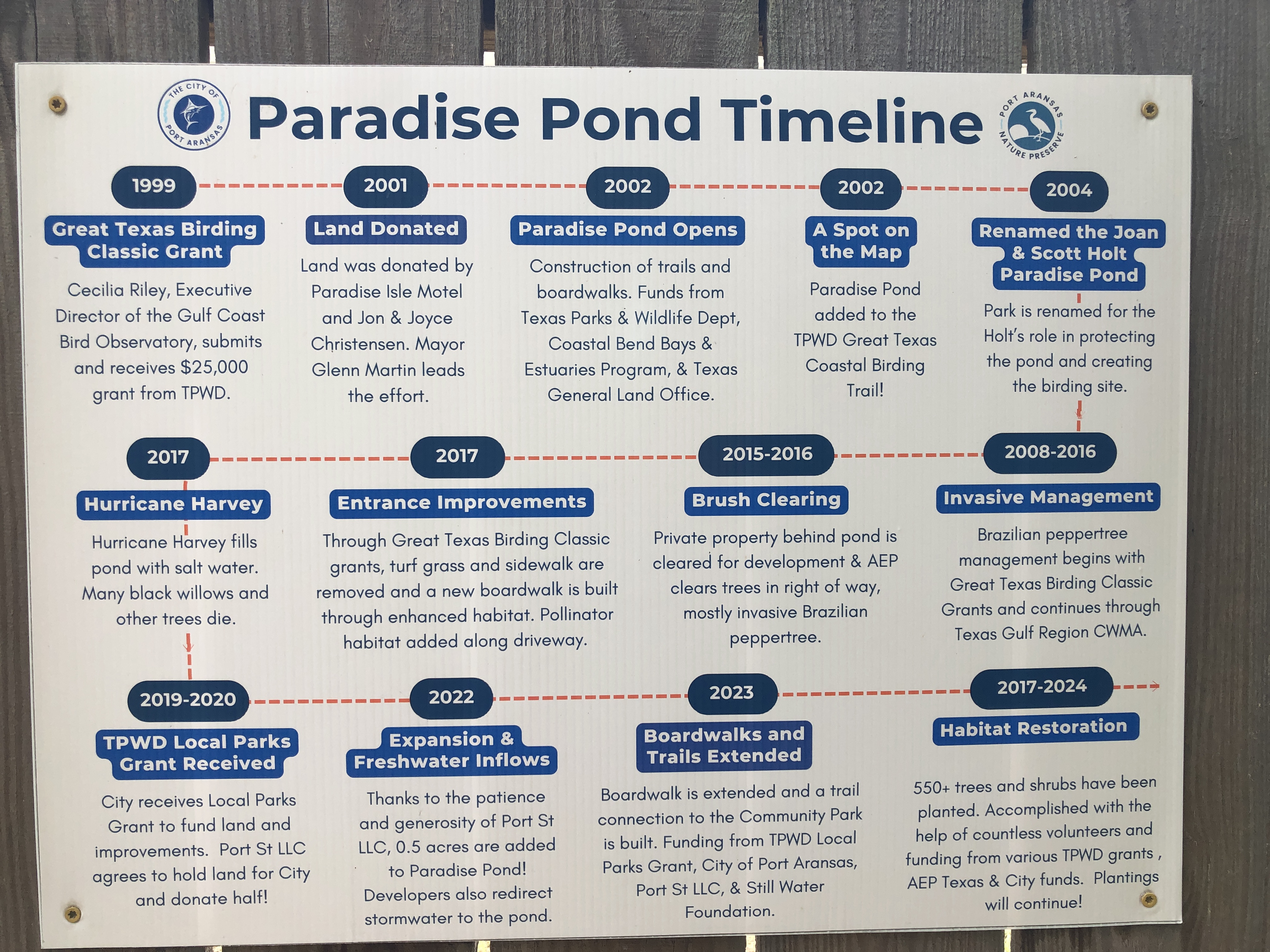
A tiny pond on Highway 361 at the Cut-Off Road intersection — barely a half-acre — that has produced more rare bird records than sites ten times its size. After an overnight Gulf crossing, migrating warblers, tanagers, orioles, buntings, and grosbeaks drop into the live oaks around Paradise Pond in numbers that leave seasoned birders speechless. During a spring fallout event, 30–40 warbler species in a single morning is not unusual. The site has an elevated observation platform and a Birds Only rule at the water’s edge. Arrive at first light.
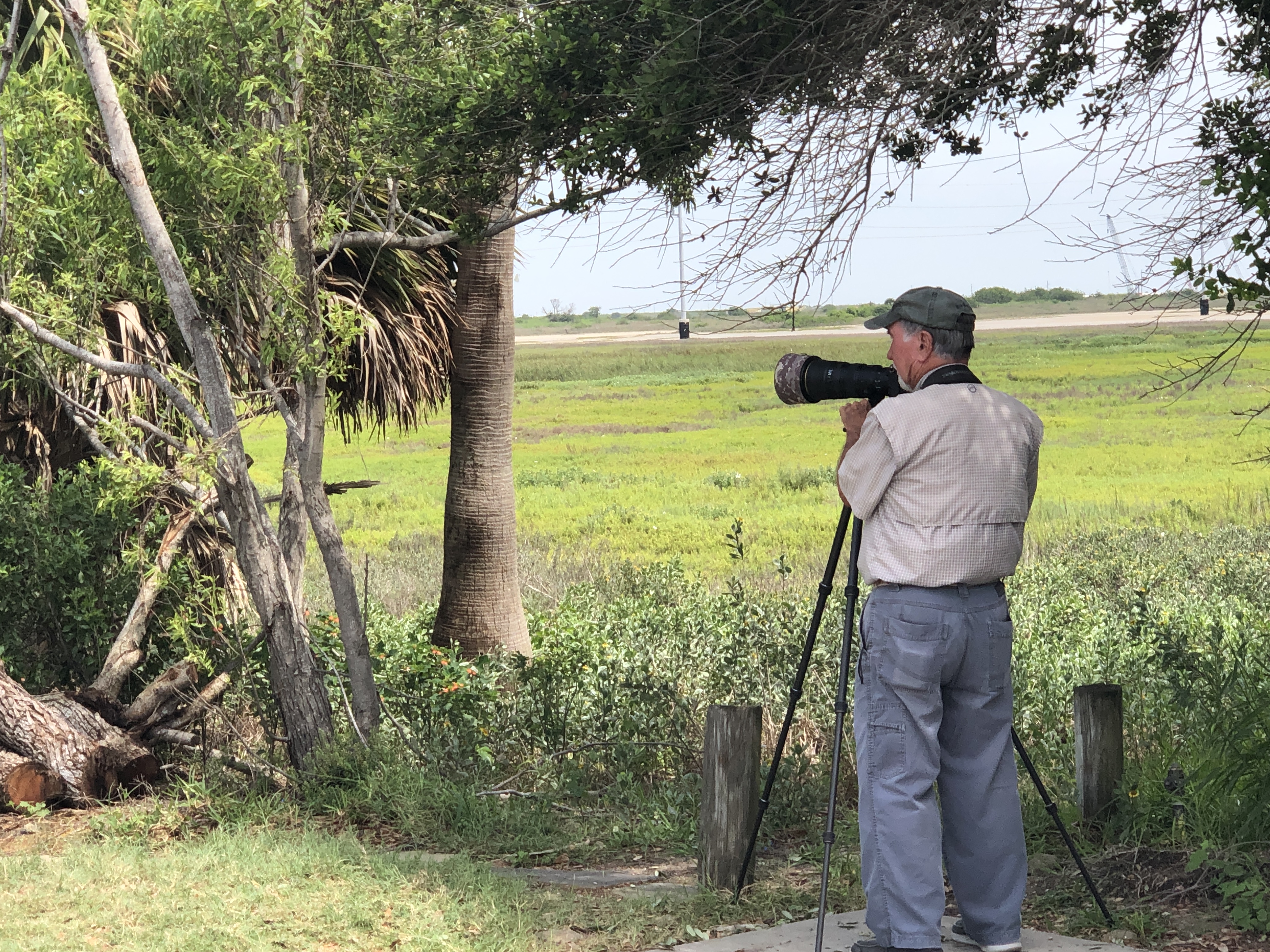
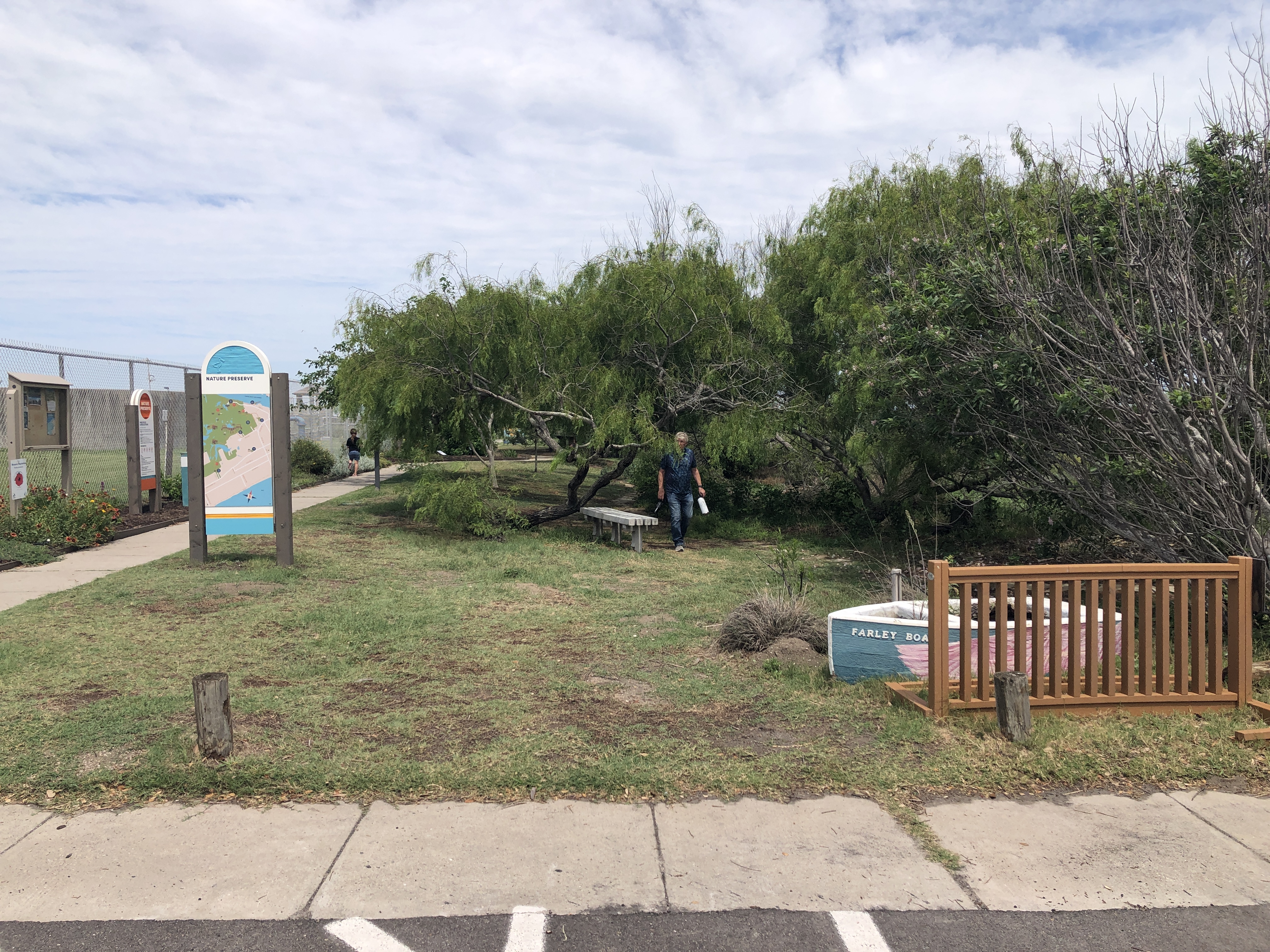
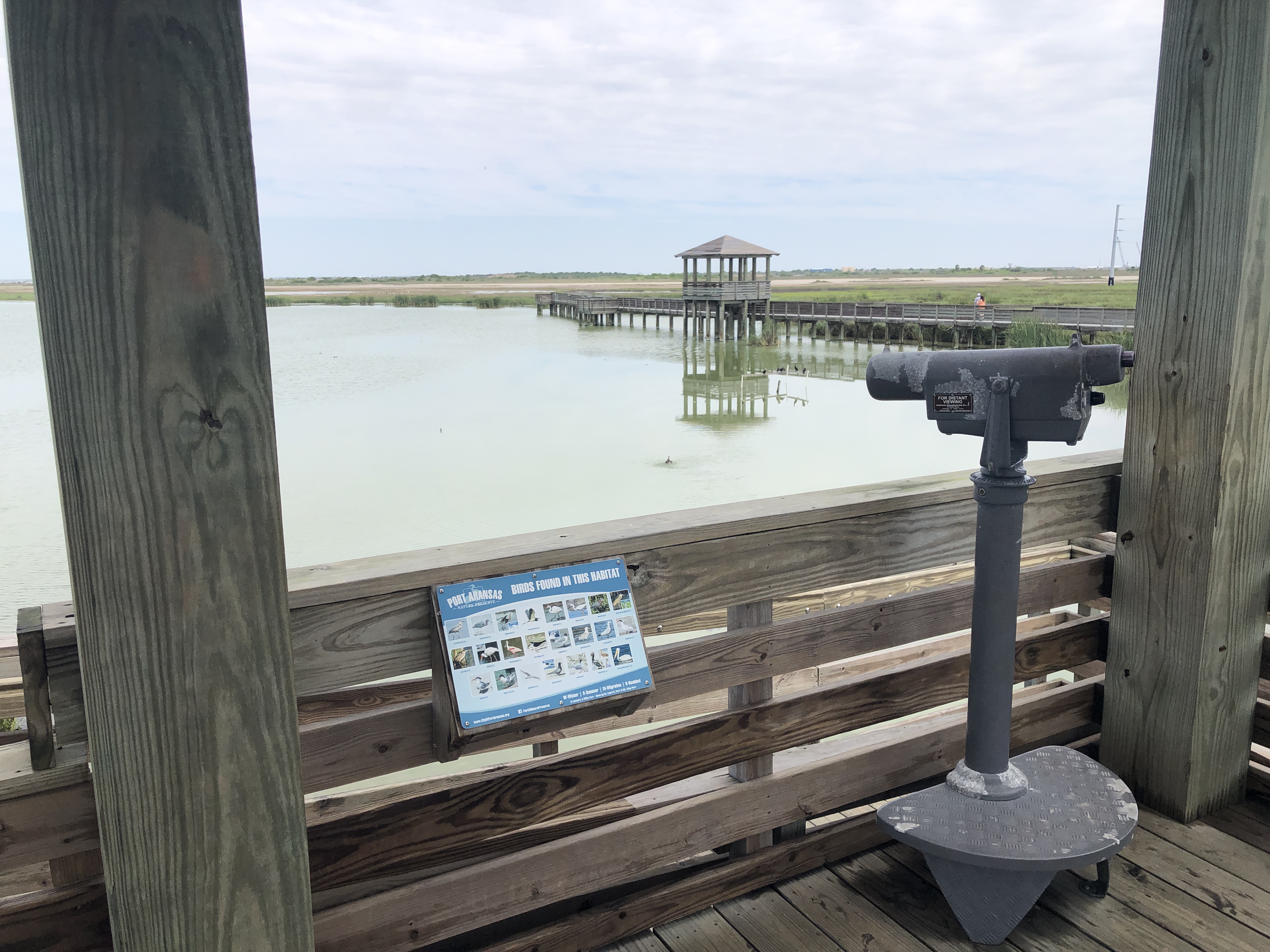
Leonabelle Turnbull Birding Center
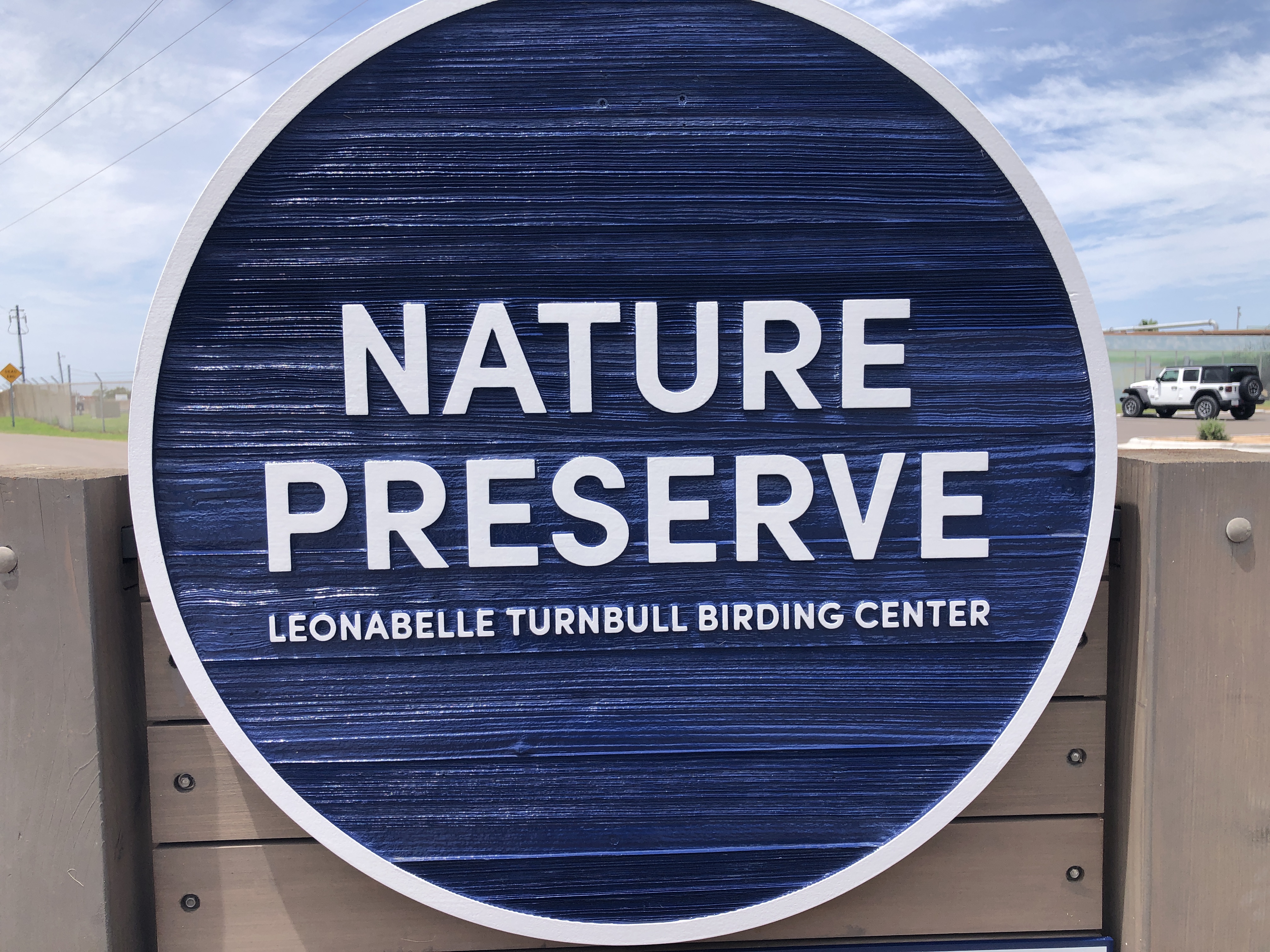
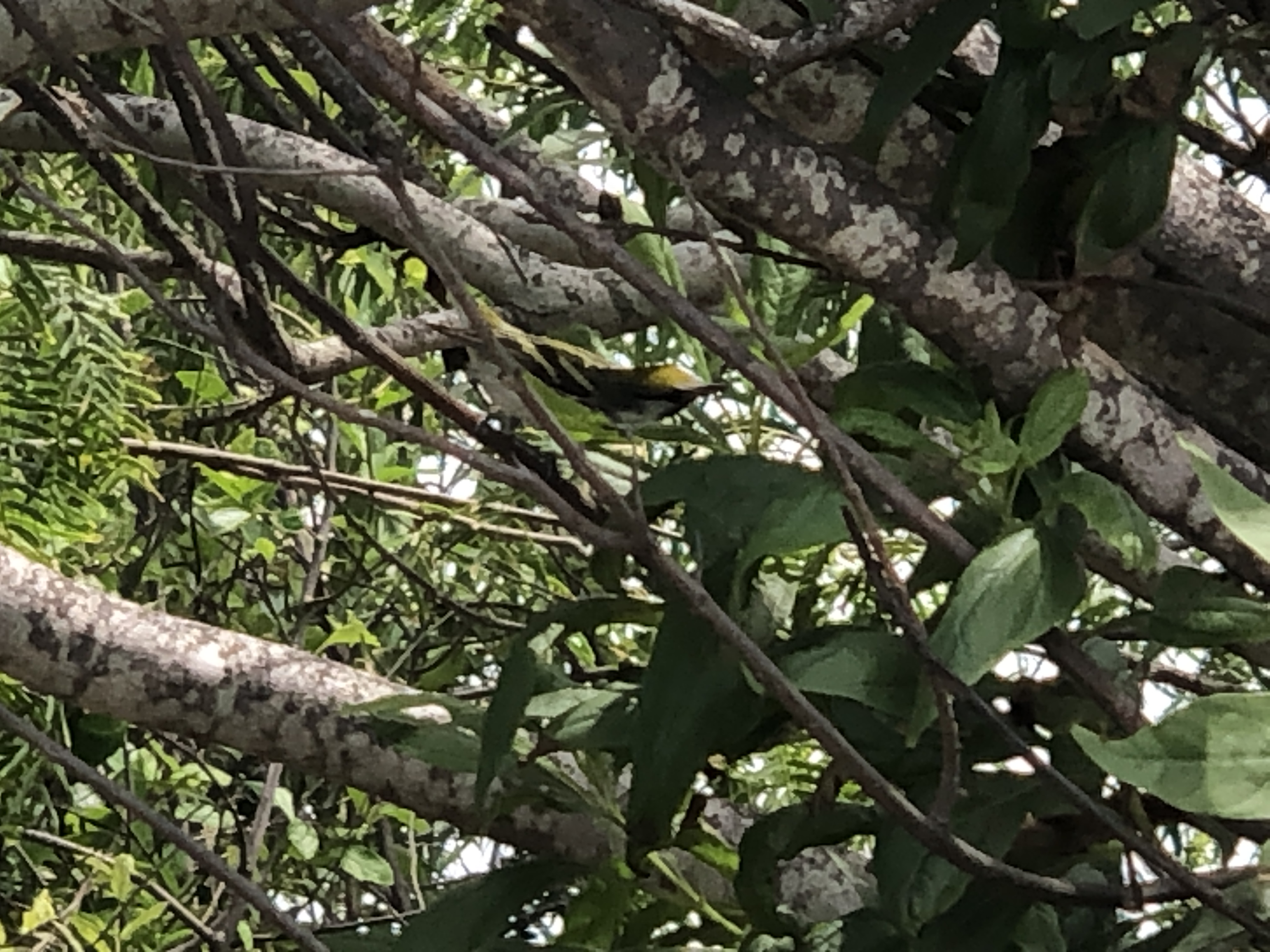
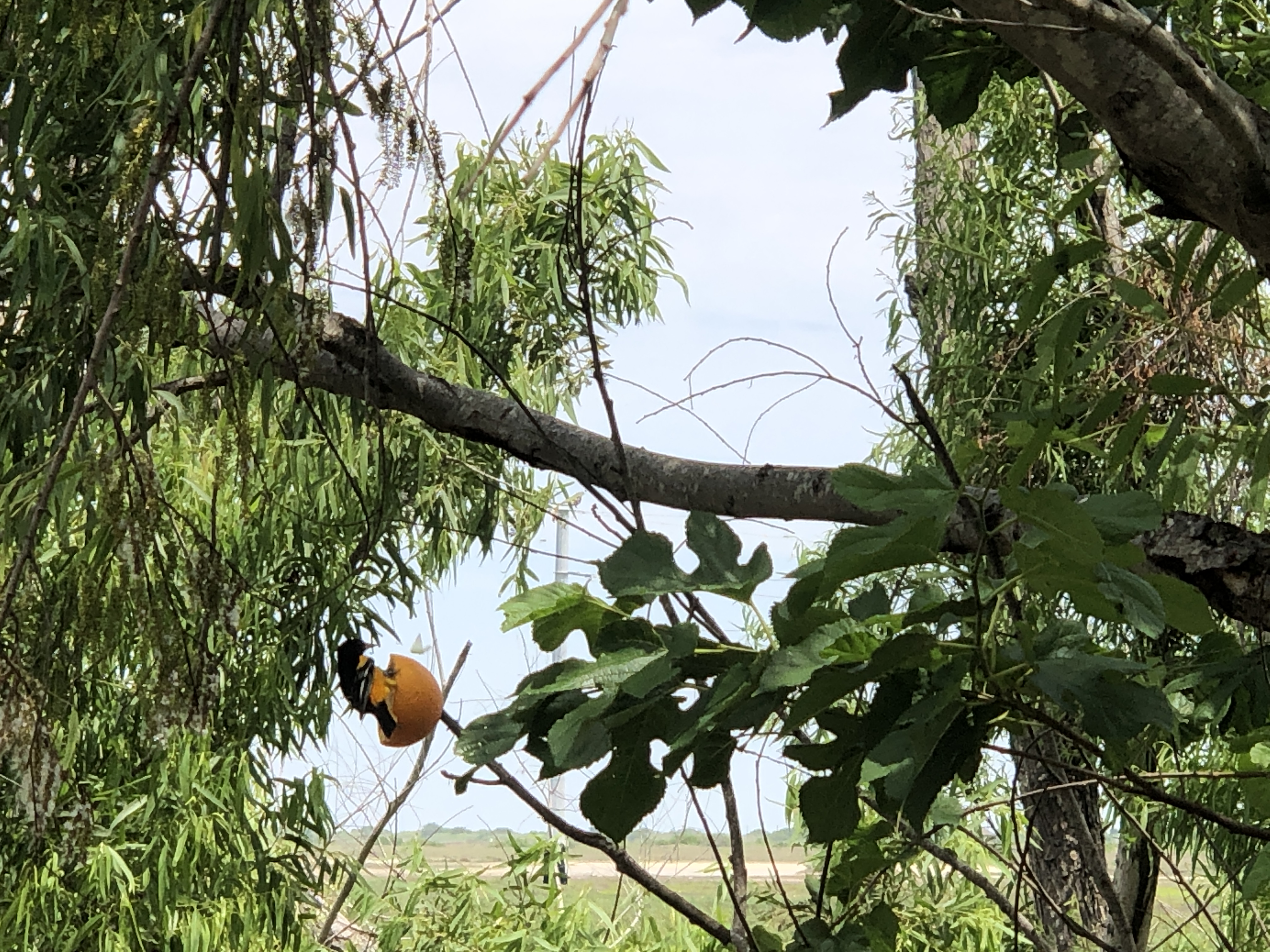
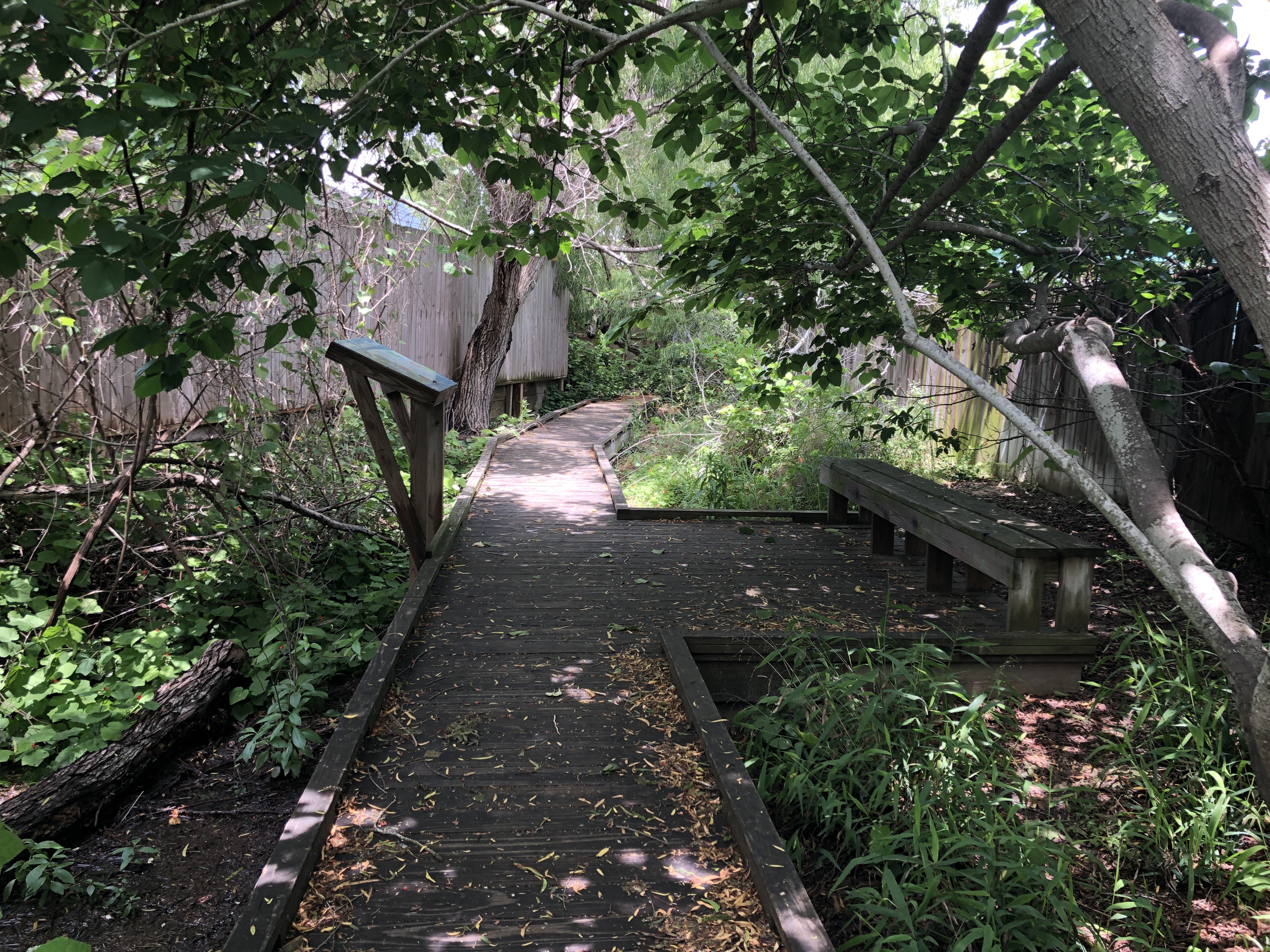
A constructed wetland with a boardwalk that puts you at eye level with roseate spoonbills, reddish egrets, black-necked stilts, and a rotating cast of shorebirds depending on the season. The Turnbull Center is productive year-round — it’s not dependent on migration timing the way Paradise Pond is. Early morning on a rising tide brings the most activity.
South Jetty
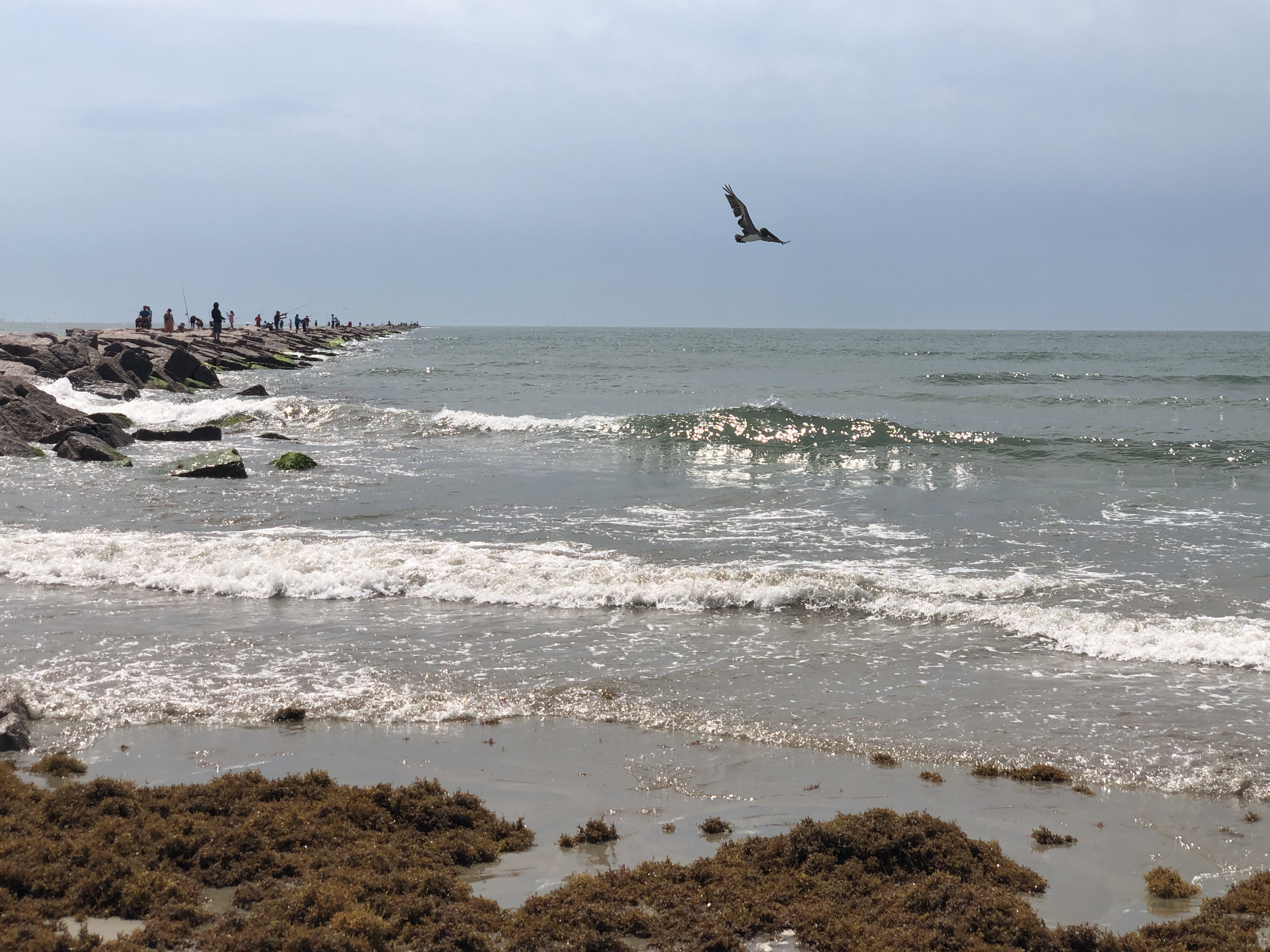
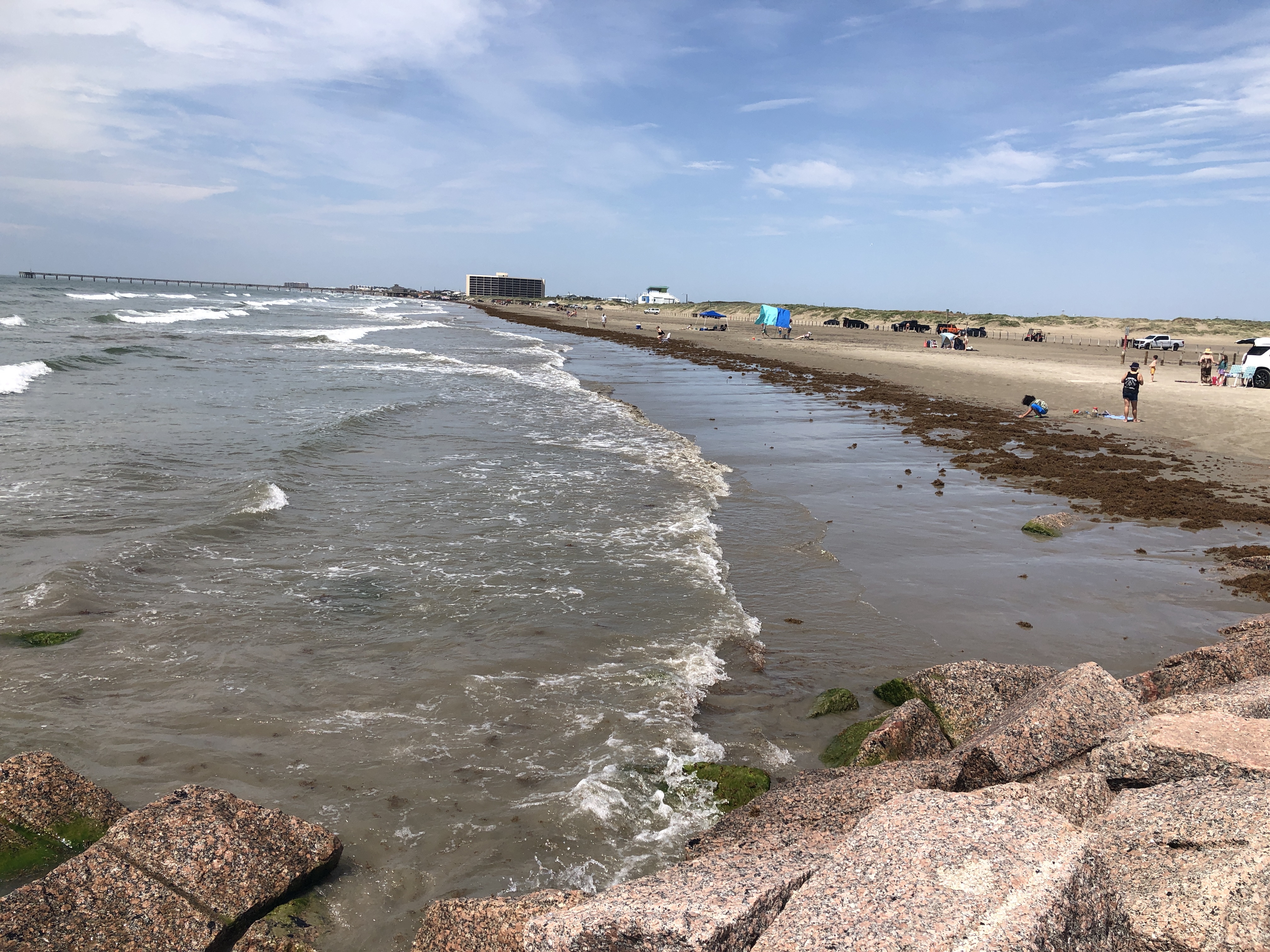
Granite boulders extending into the Gulf at the ship channel entrance. Brown pelicans, neotropic and double-crested cormorants, and laughing gulls are permanent residents. In winter, diving ducks and loons work the channel edge. Northern gannets — football-sized plunge-divers with a 6-foot wingspan — work the open Gulf beyond the jetty tips from October through March. Boat traffic in the channel adds scale and drama to photographs.
Horace Caldwell Pier
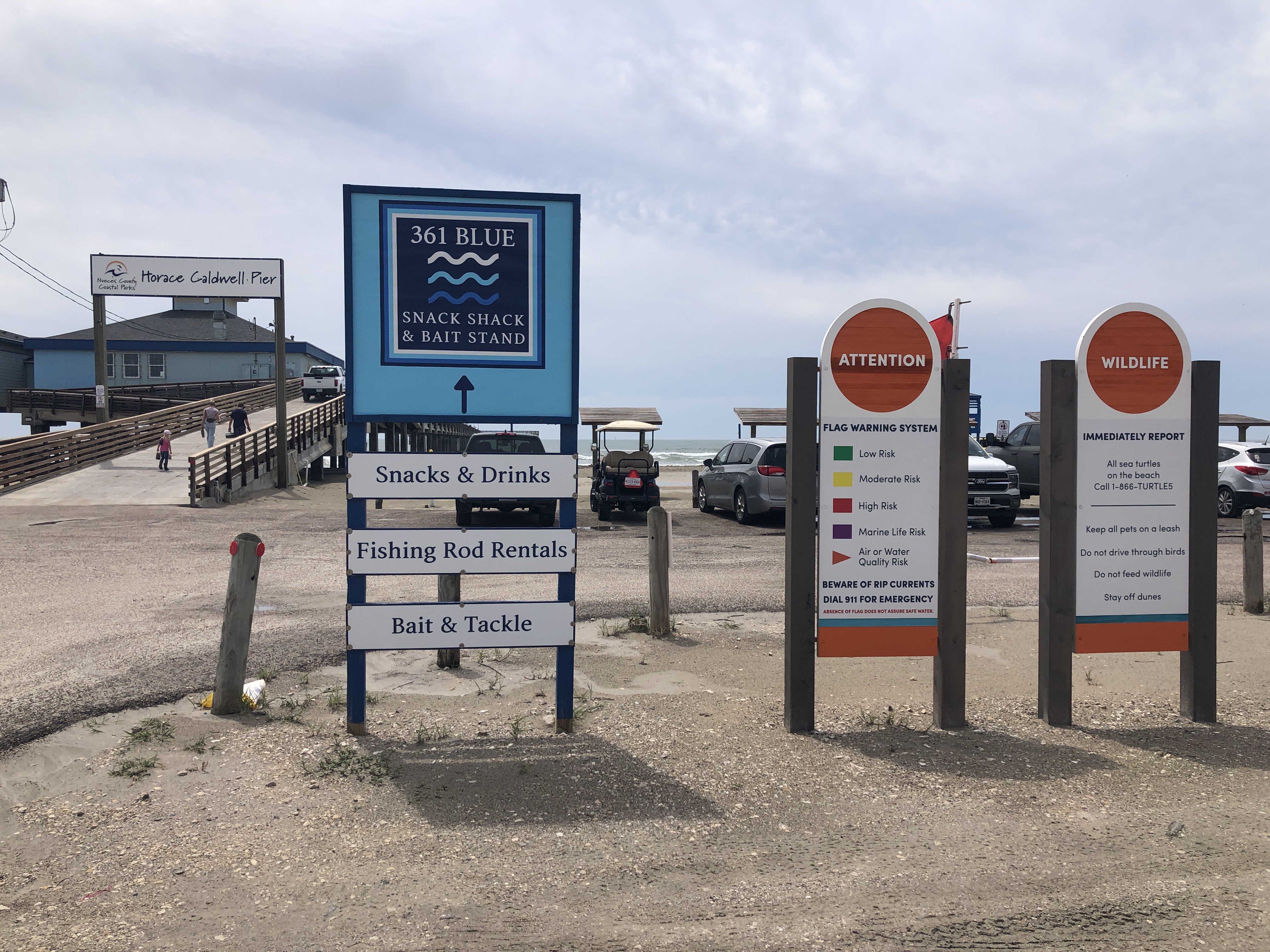
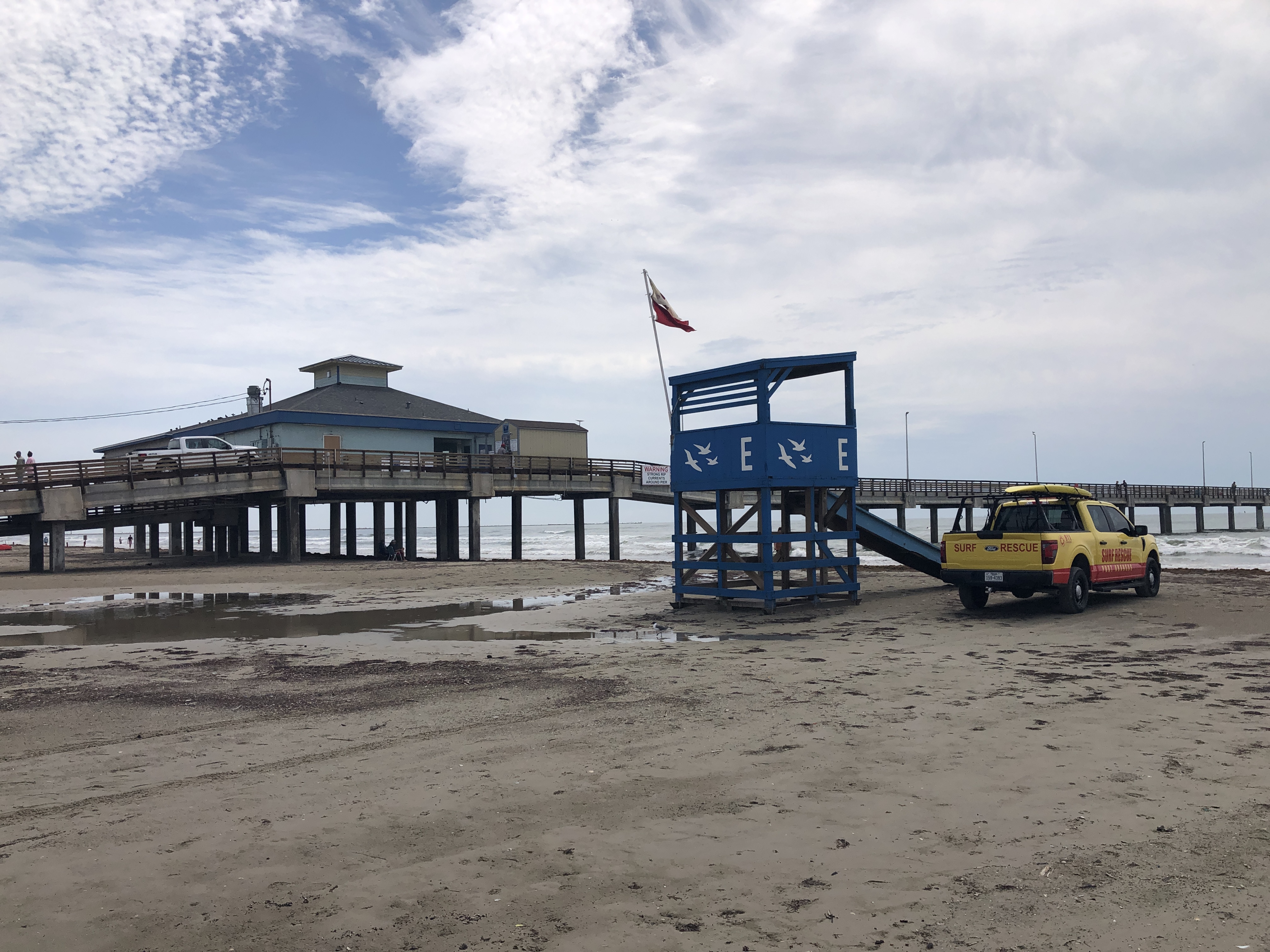
A 1,240-foot public fishing pier extending into the Gulf on the beach side of the island. At sunrise, brown pelicans roost on the pilings with the Gulf light behind them — one of the more reliably beautiful wildlife photographs you can make in Port Aransas without getting in a boat. The pier is free to walk and is open around the clock.
When It Was Called Tarpon
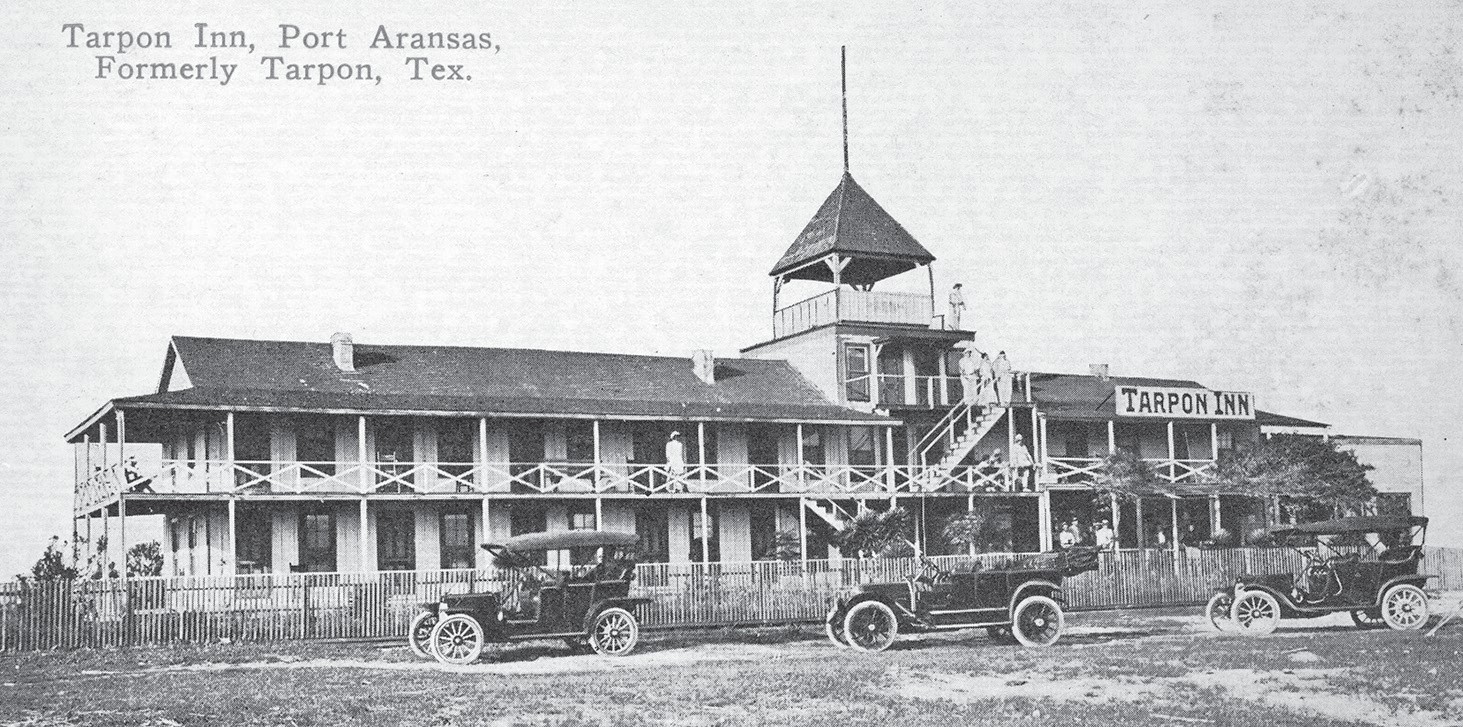
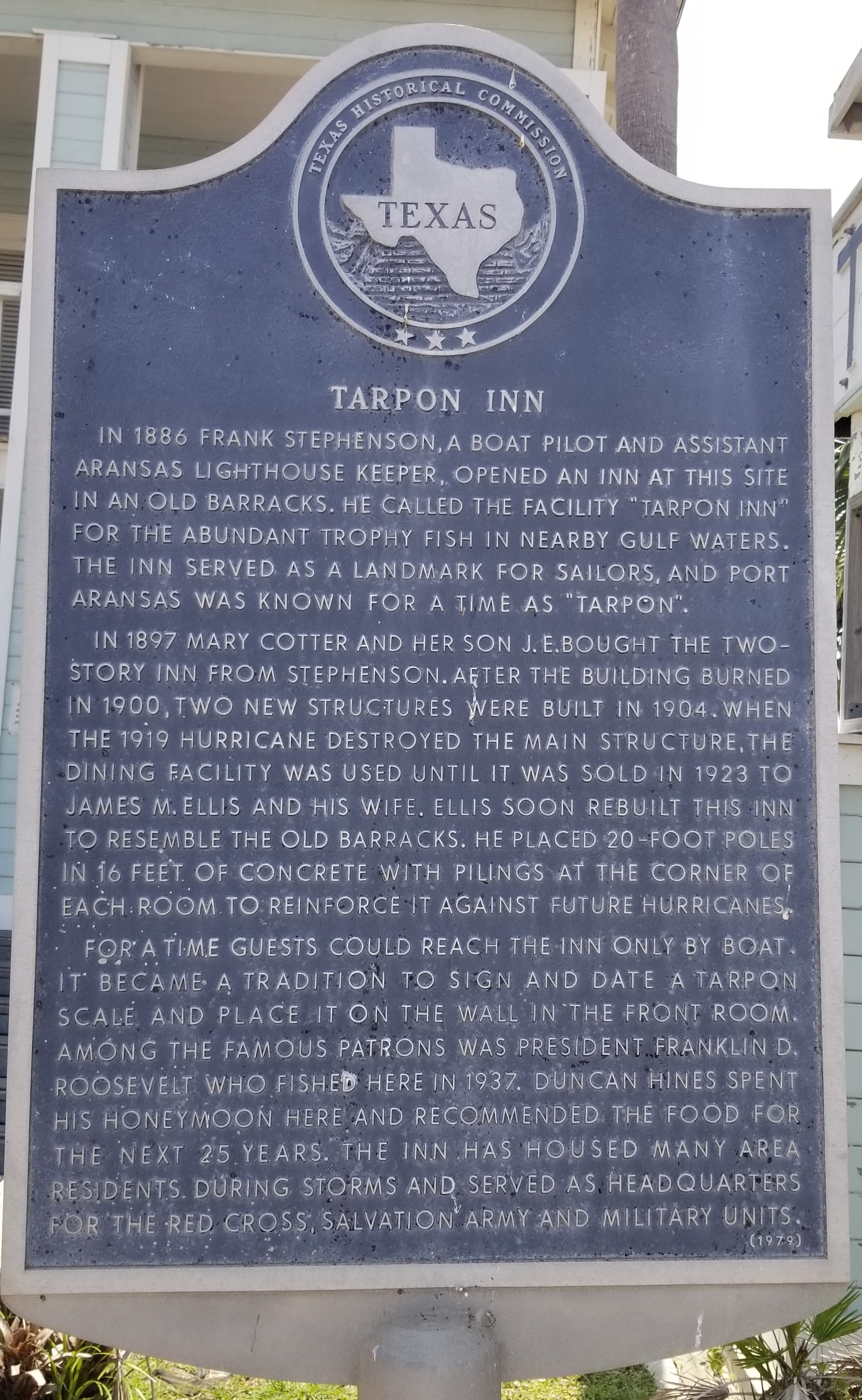
The town’s original name was Tarpon — after the great silver game fish that ran thick in the ship channel before commercial netting thinned the population. It was a sport fishing destination before it was anything else. The channel was famous enough that in 1937, President Franklin D. Roosevelt came to fish for tarpon in the waters off Port Aransas. He stayed, as most visitors of means did, at the Tarpon Inn.
The Tarpon Inn was built in 1886 by Frank Stephenson, who repurposed old army barracks to create a hotel. In 1897, Mary Cotter and her son J.E. took ownership. The original structure burned in 1900 and was rebuilt in 1904. The 1919 hurricane destroyed the main building again — the rebuilt version was set on 20-foot poles anchored in 16 feet of concrete, a lesson in coastal engineering that has kept it standing through every storm since. Duncan Hines honeymooned there. FDR’s signature is reportedly among the tarpon-scale guest records displayed inside.
The historical postcard above reads: “Tarpon Inn, Port Aransas, Formerly Tarpon, Tex.” — the town’s name change preserved in the caption of a tourist keepsake, likely printed in the early 1920s.
Roberts Point — A Channel Worth Defending
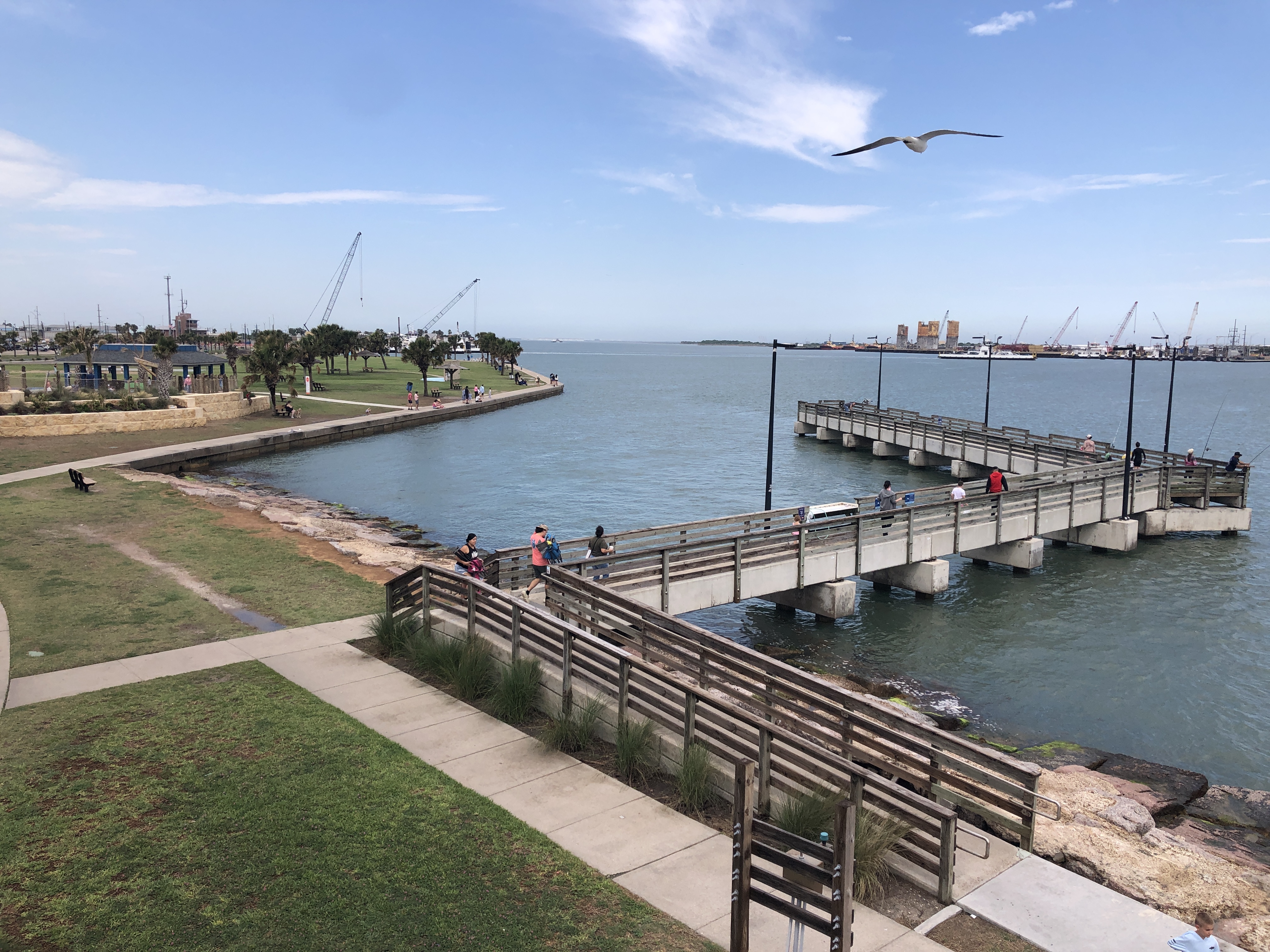
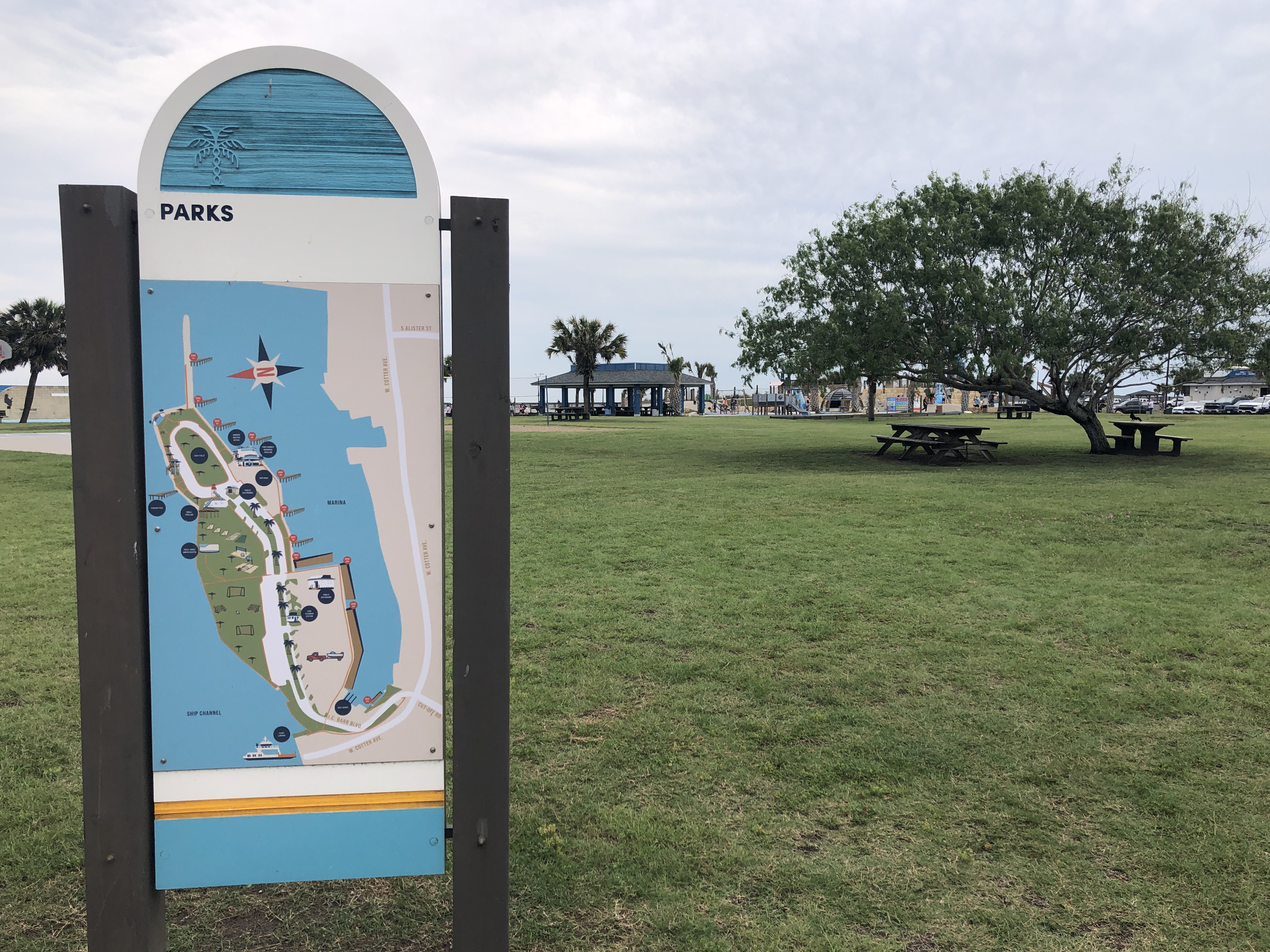
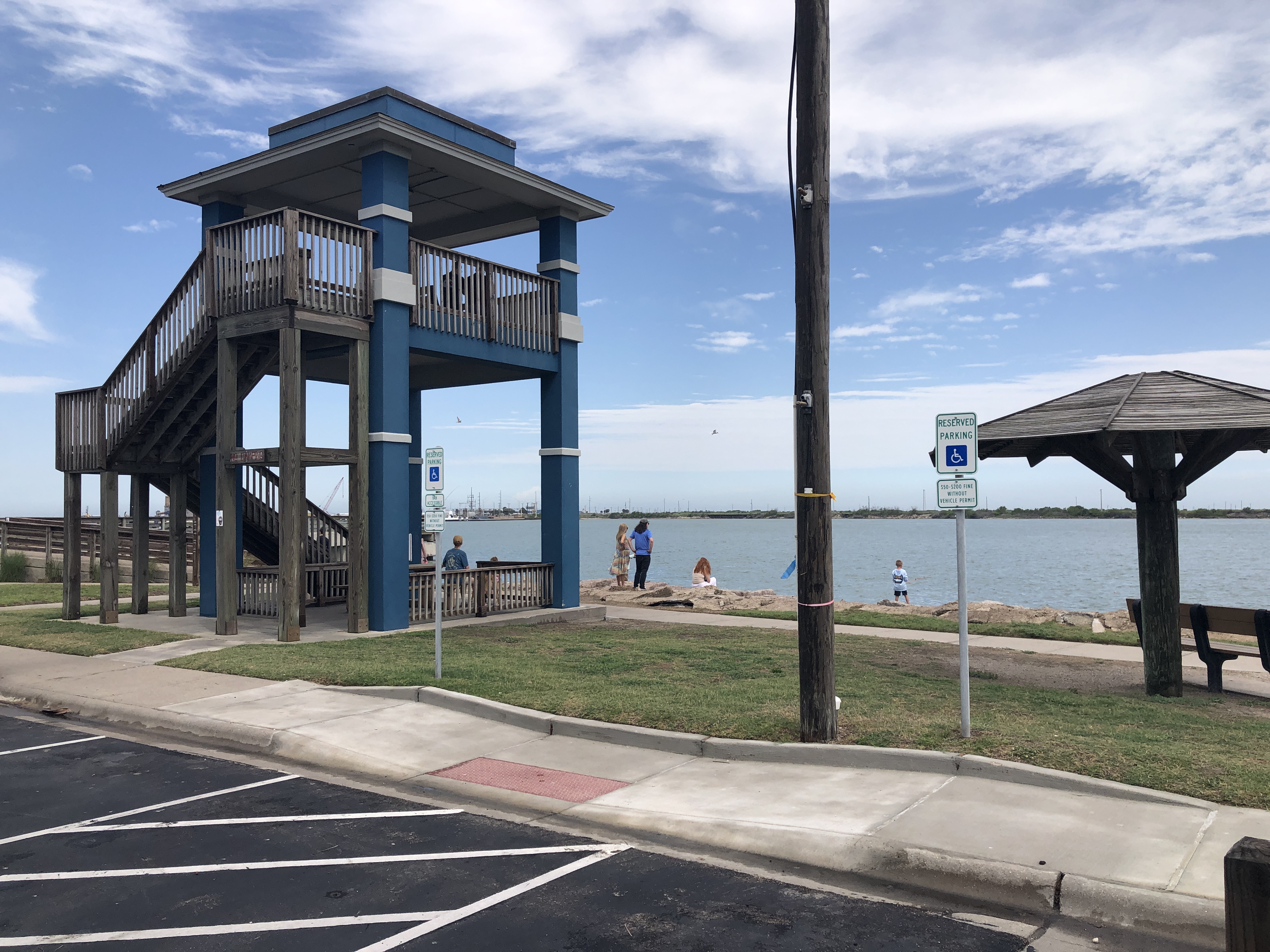
Roberts Point, at the eastern tip of Port Aransas where the ship channel meets the Gulf, has been treated as a defensive position for as long as the channel has been a shipping route. Confederate forces positioned artillery here during the Civil War to control access to the upper bay system — the same waters feeding Corpus Christi, Aransas Bay, and the ports on the Lamar Peninsula. Union forces eventually gained control of the channel in 1862, cutting off Confederate supply lines along the coast.
By World War II the strategic logic hadn’t changed. Concrete gun emplacements were constructed near the present-day UT Marine Science Institute to defend the entrance to the Corpus Christi Ship Channel — a critical supply and petroleum route. The emplacements, still partially visible in the coastal scrub, held artillery positions capable of covering the Gulf approaches. They were manned and ready through the end of the war, though no engagement ever came.
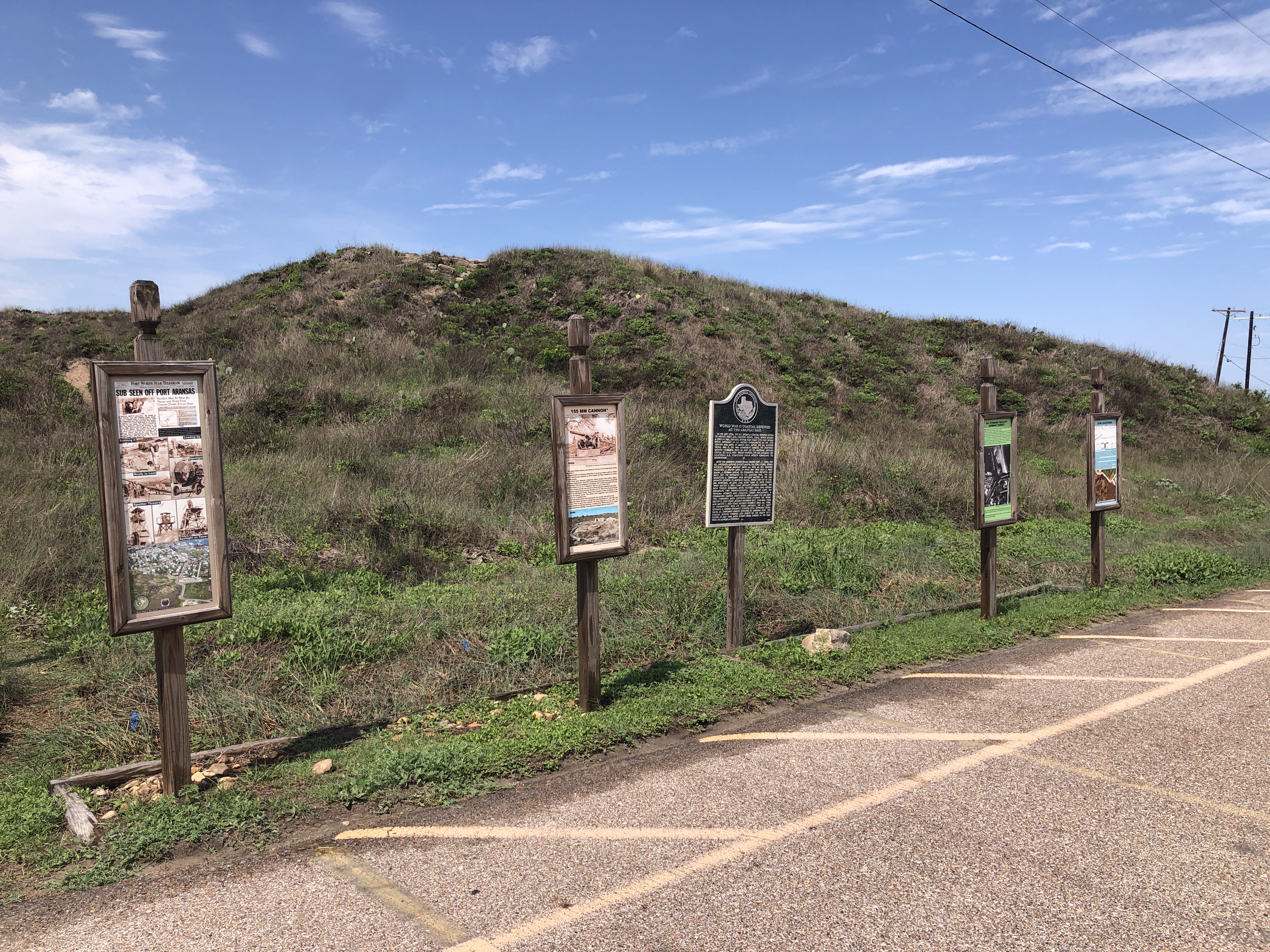
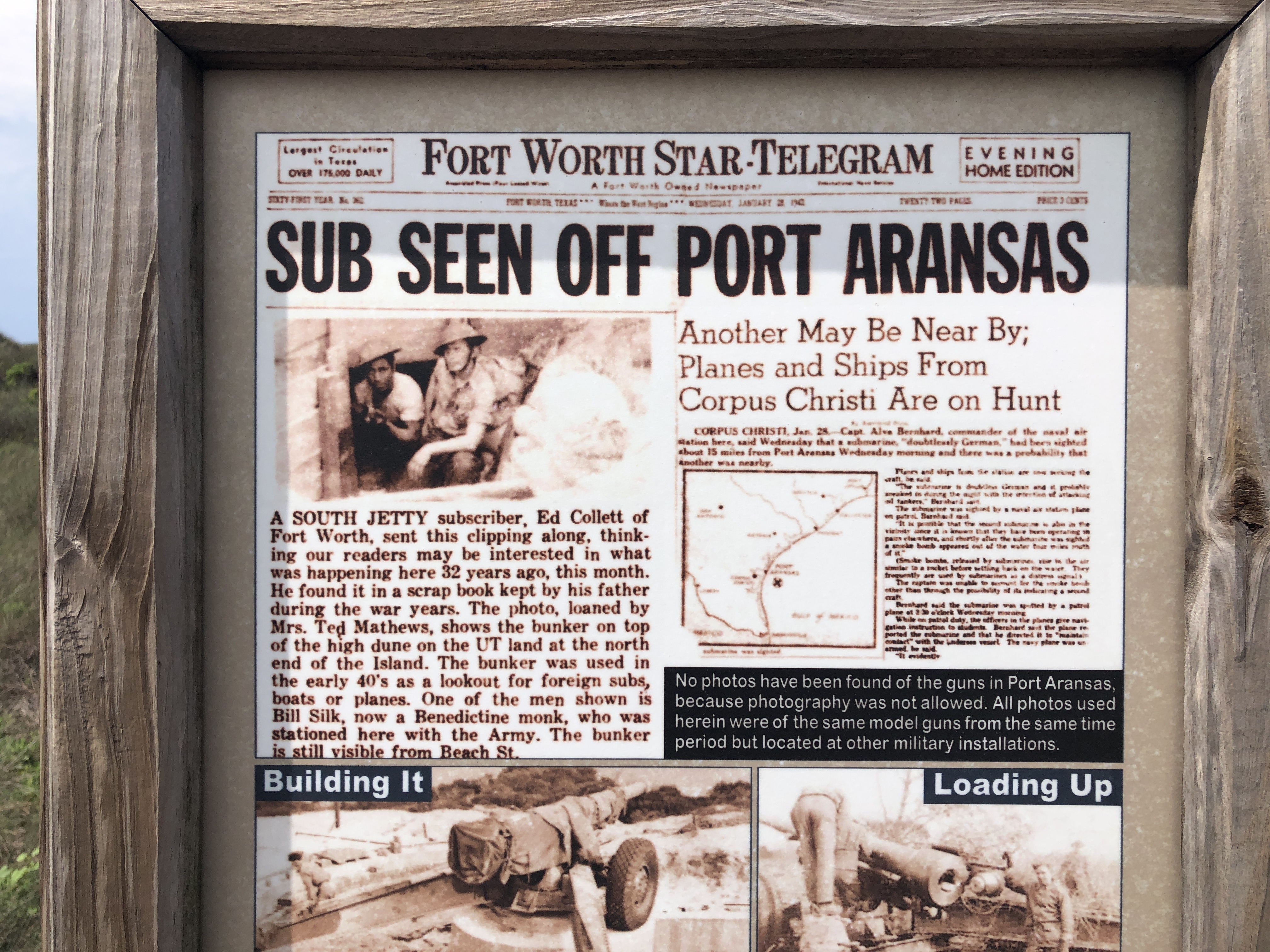
Today Roberts Point Park is a public green space with channel views and strong birding — the mix of open water, rip-rap, and marsh edge draws herons, egrets, and shorebirds. The park sits directly adjacent to the ferry landing, making it an easy first or last stop on any Port Aransas visit.
Lydia Ann Lighthouse — Built 1857
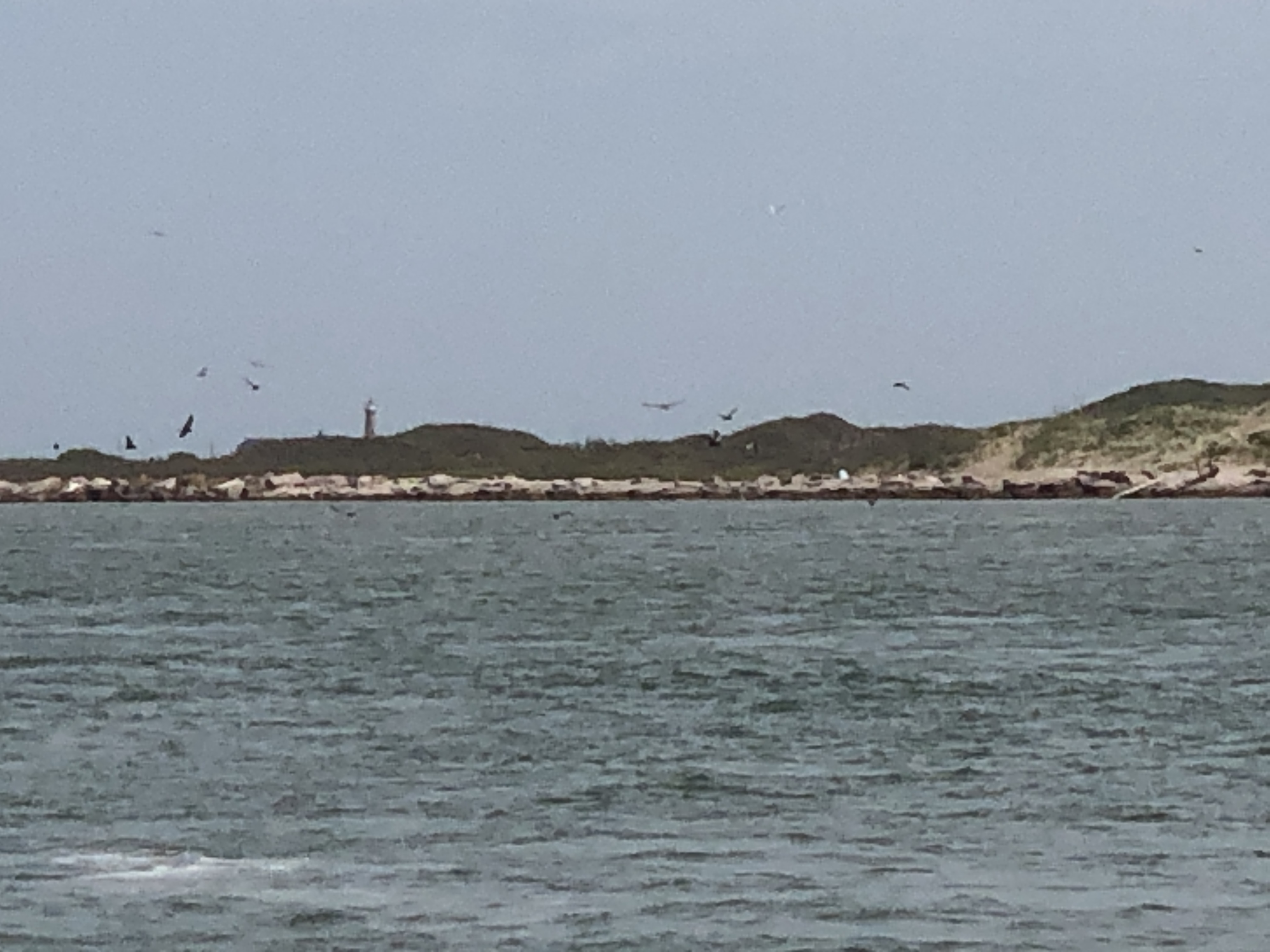
Built in 1857, the Lydia Ann Lighthouse stands on a small spoil island in the Lydia Ann Channel, visible from the ferry crossing and from boat tours operating out of Port Aransas and Rockport. It is one of the oldest lighthouses on the Texas coast and is not accessible by land — the island is private property reachable only by water.
Several tour operators offer sunset and history cruises that pass close to the lighthouse. Golden-hour light on the white brick tower with the marsh behind it makes for one of the most photographed scenes on the Texas coast.
UT Marine Science Institute
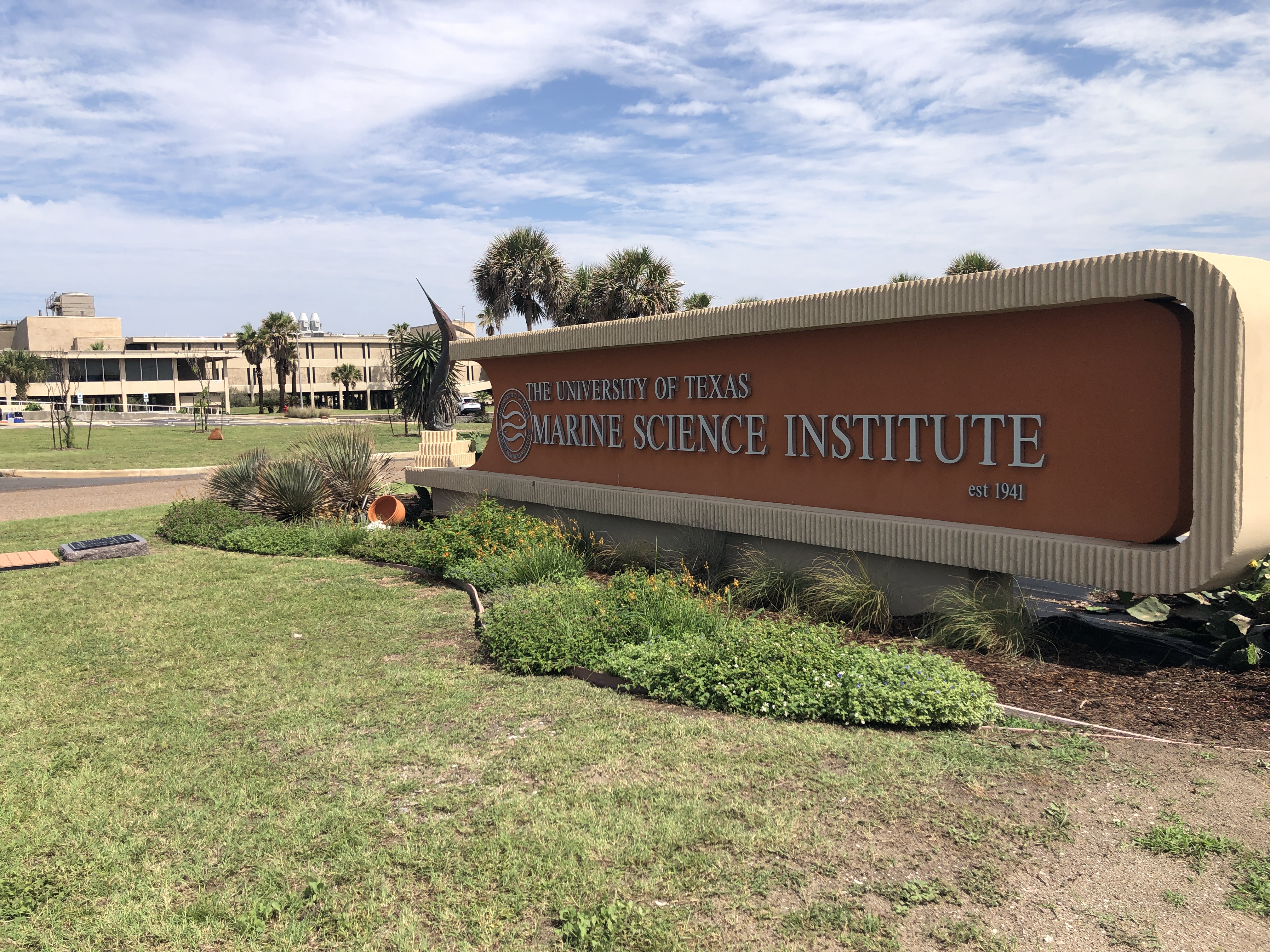
UT Austin’s marine research station has operated on Port Aransas since 1941, making it one of the oldest continuously operating marine science facilities on the Gulf Coast. The institute has a small public aquarium open to visitors, with Gulf of Mexico species on display. The grounds along the channel — which adjoin the WWII gun emplacement site — are worth a birding walk in spring, when the mix of open water and ornamental planting draws migrant songbirds.
Quick Facts
- Location Mustang Island, Nueces County
- Access Free TxDOT ferry from Aransas Pass — runs 24/7
- Ferry wait timesCheck live at its.txdot.gov →
- From Rockport ~45 min total (road + ferry)
- Best for birding April–May spring migration
- Year-round Wading birds, shorebirds, pelicans
- Winter bonus Diving ducks, loons, northern gannets
Top Birding Sites
- → Joan & Scott Holt Paradise Pond
- → Leonabelle Turnbull Birding Center
- → South Jetty
- → Roberts Point Park
- → Horace Caldwell Pier
- → Mustang Island State Park
Plan Your Trip
Paradise Pond Gallery
Turnbull Center Gallery

Shop
The Hummingbird Company
Bird-themed gifts and gear for the obsessed. By a Rockport local.
Shop Now →
Stays
Rentals & Stays
Rentals near Goose Island and Lamar Beach Road — chosen by birders.
Browse Rentals →
Tours
Guided Birding Tours
Whooping crane tours, bay birding, photography, and fishing charters.
Ask About Tours →Making a Day Trip to Port Aransas?
Stay in Rockport’s birding hub — Goose Island, Lamar Peninsula, and 33 Aransas Pathways sites right outside your door. ANWR and Port Aransas are easy day trips.