Local Insider Guide
Rockport’s Best Birding Spots
Six prime birding locations — from free county roads where whooping cranes walk to guided ranch tours where grassland specialists hide in the grass. We know every one of them, and we’ll tell you exactly where to stand.
Looking for the complete list? This guide covers 6 flagship sites in depth. We also maintain a complete directory of all 33 birding locations near Rockport.
All 33 Sites →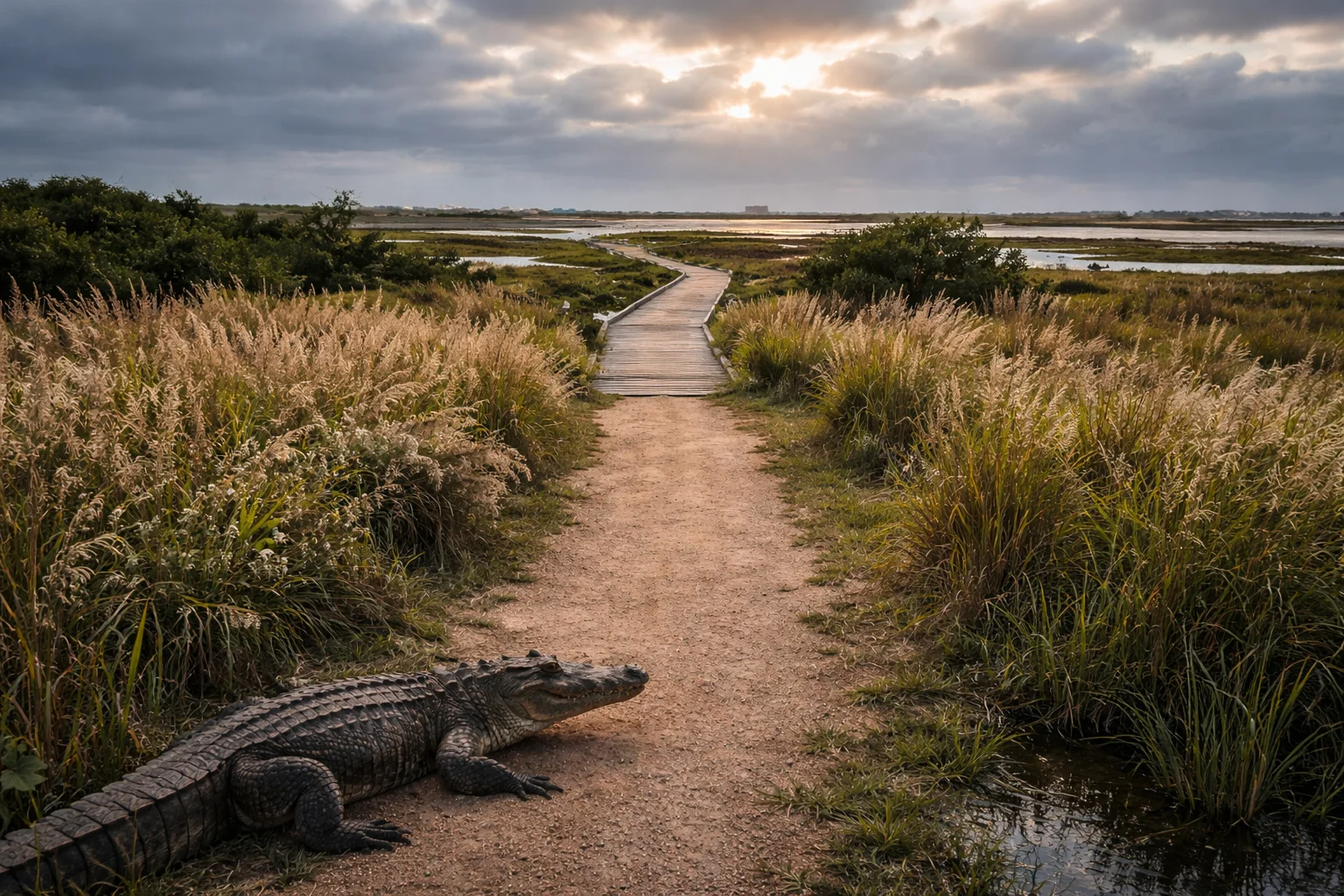
Aransas National Wildlife Refuge
Outstanding habitat birding and the whooping crane wintering grounds — but cranes are distant. Read before you drive 38 miles.
Aransas NWR is 115,000 acres of salt marsh, tidal flat, coastal prairie, and live oak forest. The 16-mile Wildlife Drive is one of the finest birding roads in the country — take it slowly, stop often, and keep your binoculars up at all times.
The observation tower at the end of the drive overlooks San Antonio Bay and is your best land-based chance at whooping cranes in winter. But don't let the cranes distract you from everything else: roseate spoonbills, white-tailed deer, alligators, hundreds of shorebird and wading bird species, and raptors throughout the year.
Spring brings songbird migration, summer brings nesting wading birds, and fall brings shorebirds. There truly is no bad season here.
Key Species
- →Whooping Crane (Nov–Mar)
- →Roseate Spoonbill (year-round)
- →White Pelican (winter)
- →Reddish Egret (year-round)
- →Crested Caracara
- →Sandhill Crane (winter)
- →Seaside Sparrow
- →Clapper Rail
- →400+ species total
Insider Tips
- ★Arrive at the gate right at sunrise for the best light and least traffic
- ★Low tide days = best crane viewing from the observation tower
- ★The alligators near the drive are wild — stay in your vehicle
- ★Bring a spotting scope for the tower; cranes can be distant
- ★Check the refuge bird list at the visitor center
Goose Island State Park
Outstanding bay-shore birding, spring songbird migration, camping, and one of the few public restrooms near Lamar Beach Road.
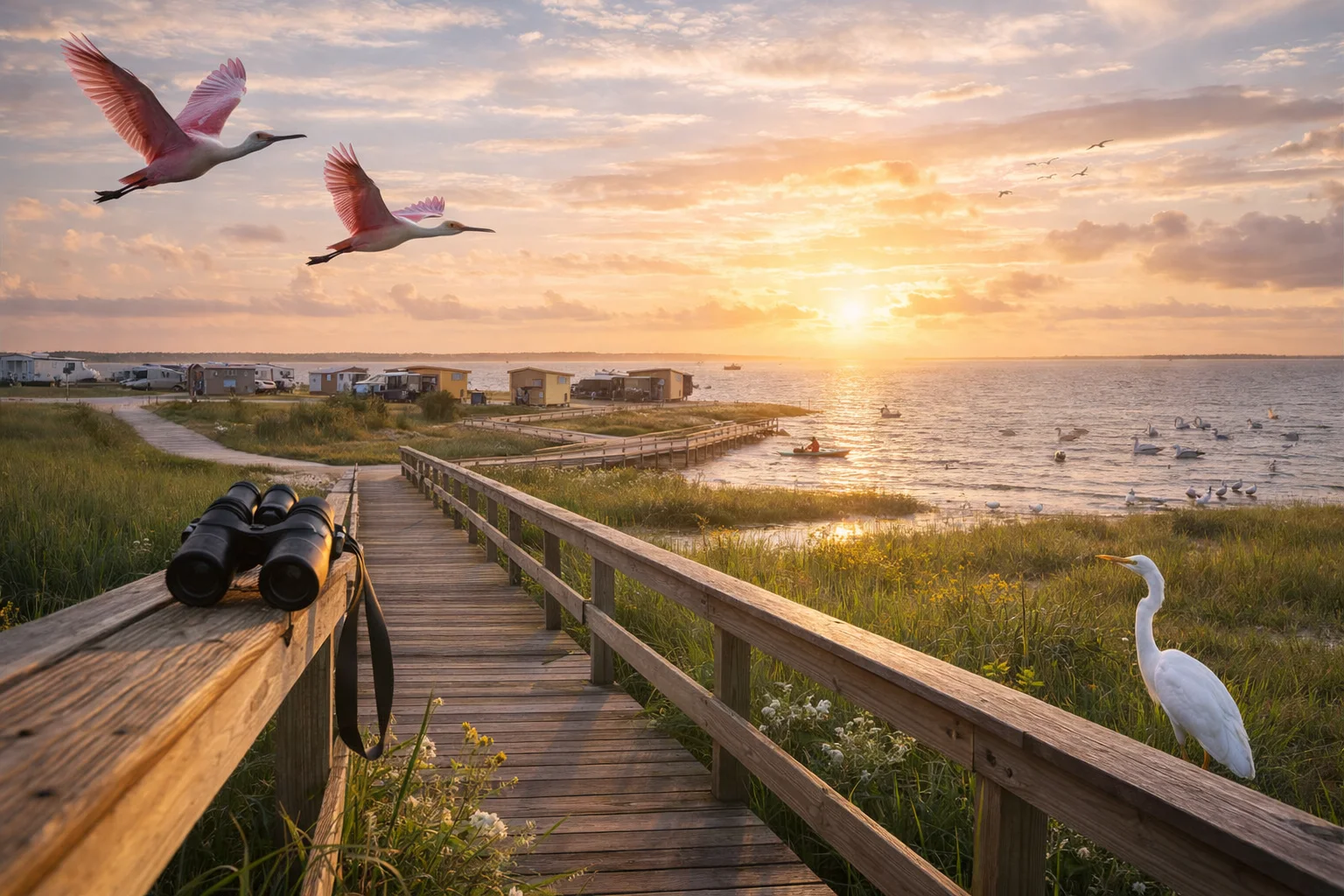
Goose Island State Park occupies a peninsula between Aransas Bay and St. Charles Bay, giving it excellent bay-shore birding, coastal live oak habitat, and a fishing pier with direct water access. The park has a fee entrance ($5/person), camping, and one of the only public restrooms in the area — a practical necessity if you're spending a morning on Lamar Beach Road.
The park is outstanding for spring songbird migration, when warblers, tanagers, buntings, and other neotropical migrants drop into the coastal live oak brush after crossing the Gulf. During a "fallout" event — when a cold front hits migrants over the Gulf — the trees can be loaded with exhausted birds at every level.
Winter brings bay-shore shorebirds, loons, grebes, and ducks. The park road and fishing pier provide easy access to excellent waterbird viewing year-round.
Note: The 1,000-year-old Big Tree is managed by Goose Island State Park but is NOT at this main entrance — it sits at 1622 Twelfth St at the intersection of Lamar Beach Road, about 5 miles north. The Big Tree has its own free parking area and is a perfect launch point for walking Lamar Beach Road.
Key Species
- →Painted Bunting (spring/summer)
- →Many warbler species (spring migration)
- →Roseate Spoonbill
- →Black Skimmer
- →Brown Pelican
- →Scissor-tailed Flycatcher (spring/summer)
- →Winter waterfowl
- →Bay shorebirds year-round
Insider Tips
- ★The fishing pier is reportedly longer than the Eiffel Tower is tall — a park ranger's claim, unverified, but a great reason to walk to the end
- ★Everyone goes to the shoreline — drive the camping loop through the live oak tree section and bird from the AC, away from the mosquitoes
- ★Turk's Cap Trail is a short nature walk through the trees in the back of the treed camping area — not a long hike, just a peaceful stroll with a dedicated bird viewing area. Wonderful when the mosquitoes aren't out (that depends on the last rain)
- ★One of the only public restrooms near Lamar Beach Road — plan your morning accordingly
- ★Live oak canopy along the camping loop is a migrant trap after any cold front in spring
Connie Hagar Cottage Sanctuary
Named for the legendary Texas birder who put Rockport on the birding map. Small but mighty.
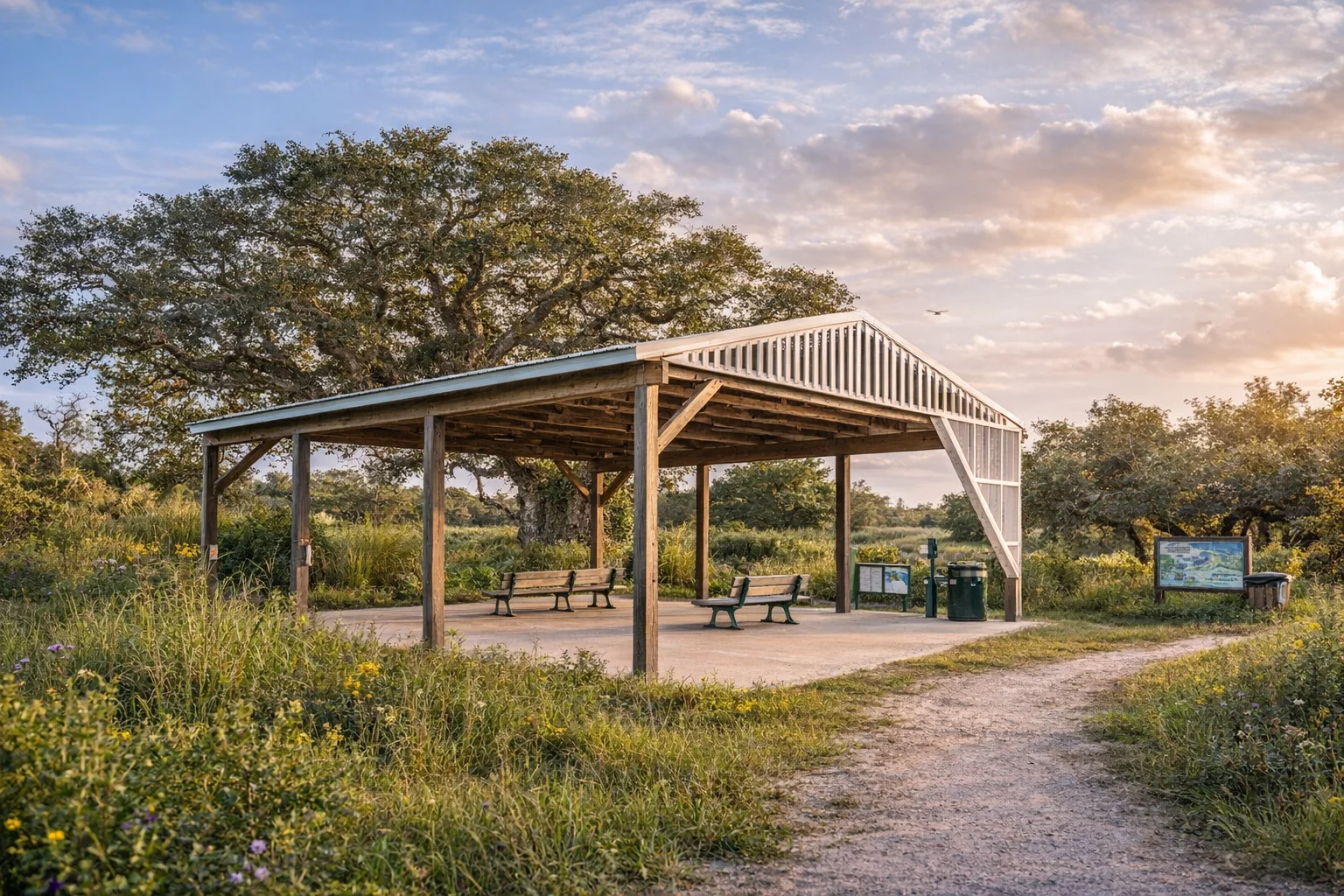
This small but beloved sanctuary is named for Connie Hagar (1886–1973), the Rockport birder who spent decades documenting the remarkable diversity of birds on the Texas coast and essentially put Rockport on the national birding map. Her patient observations and meticulous records helped establish the area's reputation as one of America's premier birding destinations.
The sanctuary preserves a small pocket of coastal brush habitat in the heart of Rockport — and during spring migration, birds pour into it. It's a classic "migrant trap": a patch of trees in an otherwise open landscape that exhausted migrants find irresistible.
Small in size, but it consistently produces rare birds, warbler fallouts, and exciting sightings throughout migration season.
Key Species
- →Dozens of warbler species (spring)
- →American Redstart
- →Baltimore Oriole
- →Rose-breasted Grosbeak
- →Indigo Bunting
- →Veery, thrushes
- →Yellow-billed Cuckoo
- →Rare/vagrant species appear regularly
Insider Tips
- ★Best visited early morning during spring migration (late April–early May)
- ★After a south wind night, expect a quiet morning; after north wind, expect a fallout
- ★Walk quietly and scan low in the brush — many birds feed at ground level
- ★The sanctuary is small; you can cover it thoroughly in 30 minutes
- ★Check eBird reports the morning before you go to see what's been found
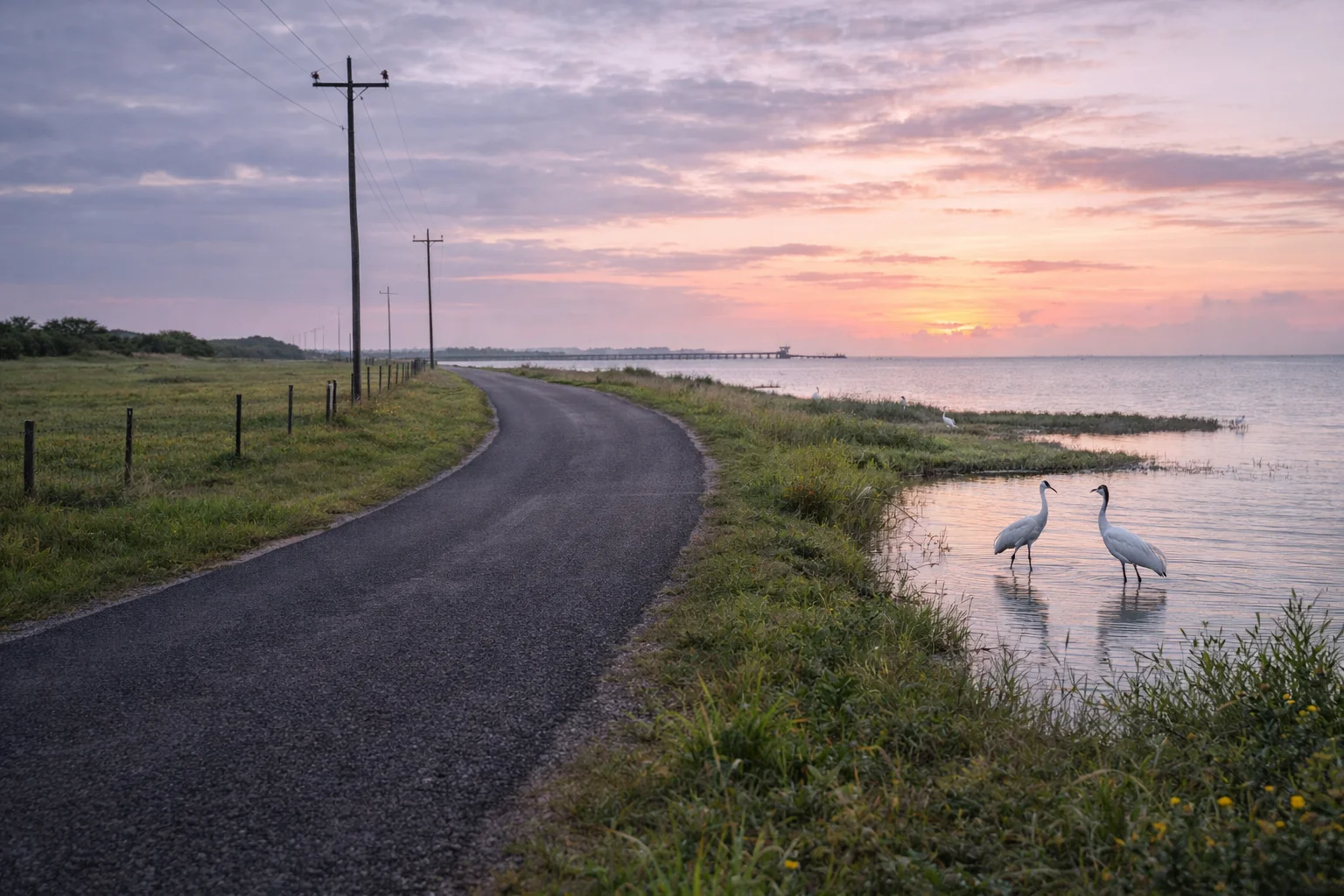
Lamar Peninsula Beach Road
Where whooping cranes walk across the road. A rural loop locals drive daily — no fee, no tour, no brochure.
This is the spot that separates Rockport birding from anywhere else on Earth. Lamar Beach Road is a narrow rural loop that locals drive every single day — not a dead-end, not a one-shot drive, but a peaceful circuit they return to again and again. On a good tide day in January, you may watch a crane family wade and feed just feet from your truck window — for free, in public, on a Texas county road.
The road has two distinct birding characters: the beach road section along Aransas Bay is crane and shorebird territory. The Palmetto and Twelfth Street sections through the live oak canopy are warbler country — a completely different experience on the same loop.
Most surrounding land is private — stay on the road and respect the landowners. Critical warning for RV drivers: Twelfth Street and Palmetto through the oaks are barely wide enough for one car. TxDOT painted center lines that look like normal lanes — do not trust them. Drive the center strip between your tires. Locals have watched many RVs hit the oak trees by following the painted lines. A new addition to the area is the Lamar Burton Wetlands Sanctuary, with a well-marked entrance, cattail marsh, and open wetland habitat that looks very promising.
Key Species
- →Whooping Crane (Nov–Mar)
- →Sandhill Crane
- →Roseate Spoonbill (year-round)
- →Long-billed Curlew
- →Various herons and egrets
- →Raptors including Crested Caracara
- →Warblers (Palmetto / Twelfth St oak sections)
- →Shorebirds on exposed bay flats
Insider Tips
- ★RV and wide-vehicle warning: Twelfth St and Palmetto through the oaks are one-car-wide — ignore the painted lines, drive the center
- ★Most surrounding land is private — stay on the road and respect the landowners
- ★Beach Road along the bay = cranes and shorebirds · Palmetto and Twelfth through the oaks = warblers
- ★Stay in your vehicle near cranes — it serves as a blind, birds tolerate it far longer than a person on foot
- ★Look for the Lamar Burton Wetlands Sanctuary entrance — new, well-marked, cattail wetland with promising habitat
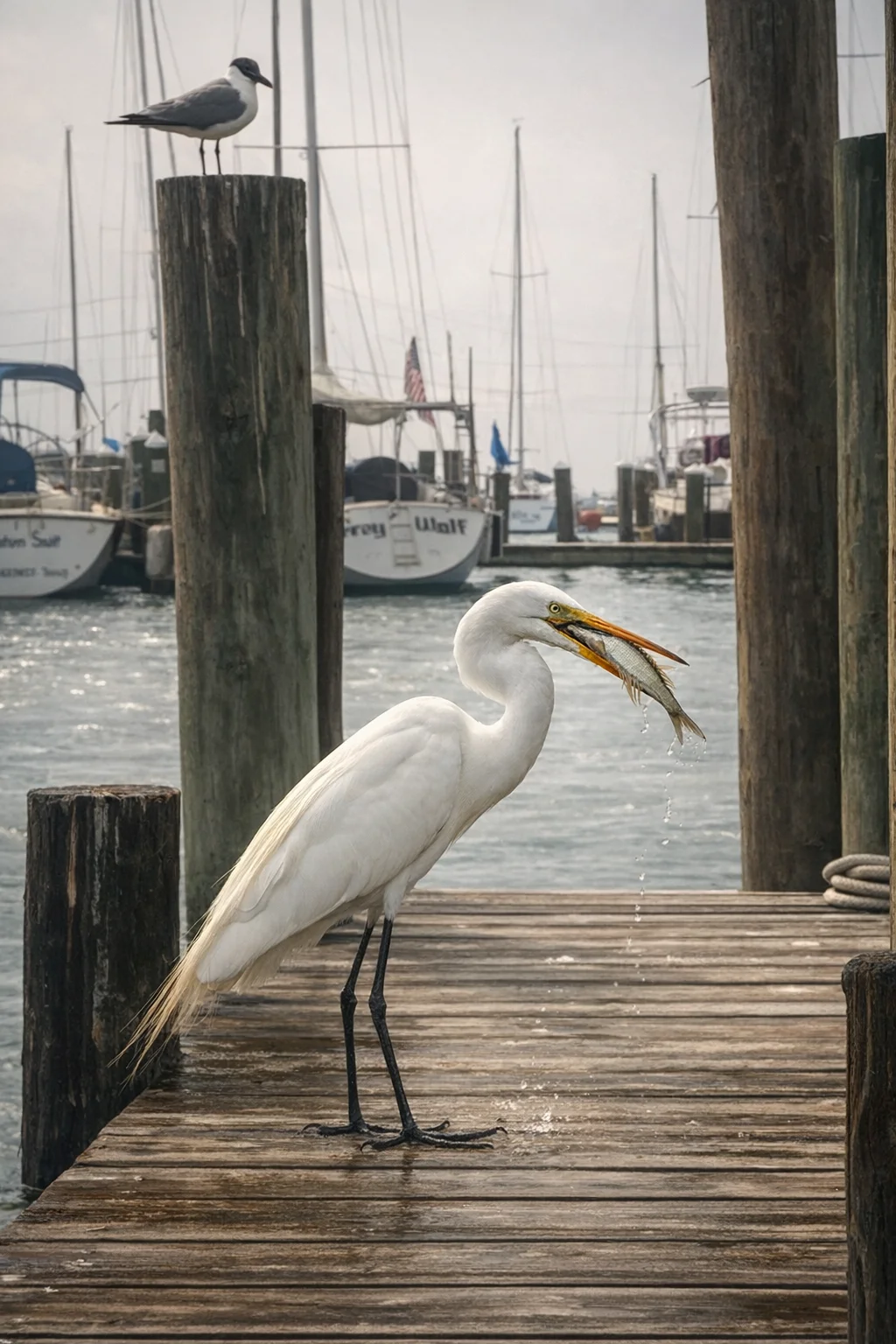
Little Bay — Rockport Harbor Area
Active bay scene — water skiers, kite surfers, bait stands, herons, and free dog beach all in one stretch.
Little Bay is a working waterfront, not a quiet preserve — and that's what makes it interesting. Water skiers, kite surfers, and windsurfers share the water with Brown Pelicans, herons, and skimmers without anyone seeming to mind. The bait stands are a reliable heron station: Great Blue Herons position themselves right beside the fish-cleaning tables and wait for scraps — often close enough to photograph without a lens.
Public restrooms are available near the bait stands and festival grounds area, making this a practical first stop before heading north on Lamar.
Know the difference between the two beach zones here: the dog beach side is free, no entrance fee, and dog-friendly — park and walk the bay at your own pace. Rockport Beach proper (the Blue Wave–certified section) has a paid entrance and does not allow dogs. The protected nesting area on the back side of Rockport Beach is where Black Skimmers nest in season — view from the road and keep your distance.
In winter, the open bay holds buffleheads, lesser scaup, and other diving ducks alongside the year-round residents.
Key Species
- →Brown Pelican (year-round)
- →Great Blue Heron (year-round — especially at bait stands)
- →Laughing Gull (year-round)
- →Royal Tern
- →Black Skimmer (nesting in season — protected area)
- →Black-crowned Night-Heron
- →Tricolored Heron
- →Winter diving ducks
- →Ruddy Turnstone (migration)
Insider Tips
- ★Herons station at the bait stands — best photo opportunity in town, no special equipment needed
- ★Dog beach is free with no entrance fee and dog-friendly — great morning walk
- ★Rockport Beach proper: paid entrance, no dogs — different zone entirely
- ★Skimmer nesting area is on the back side of Rockport Beach — observe from road, keep distance
- ★Bathrooms near the bait stands and festival grounds — one of the few options on this stretch
- ★Check harbor pilings for Black-crowned Night-Herons at dusk
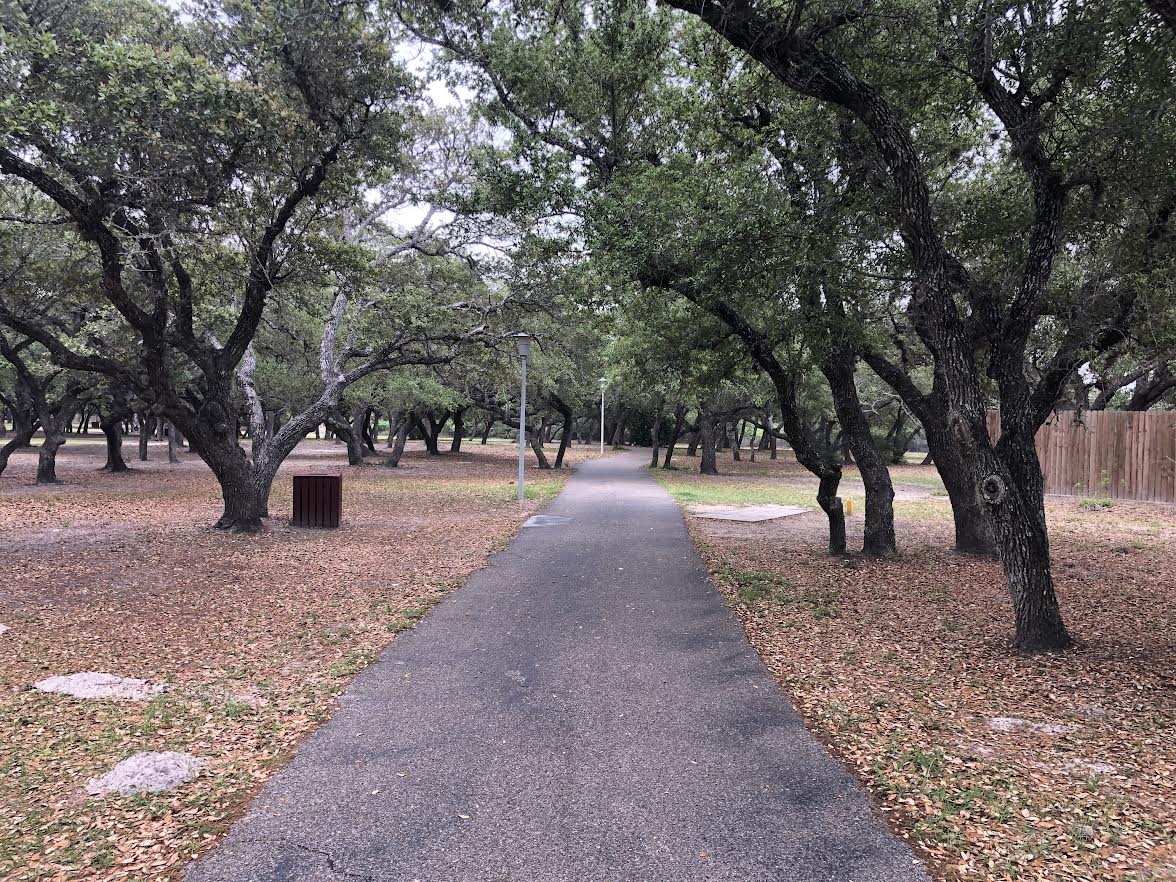
Memorial Park — Back Pond & Tree Loop
The best-kept birding secret in Rockport — paved, free, wheelchair accessible, and almost nobody knows about the back entrance.
Most visitors park up front near the ball fields and miss everything. Drive all the way to the back of the park — roughly 10 parking spots beside the pond and the live oaks, with a restroom right there. That's the local entrance. It puts you directly on the small loop through the trees around two freshwater ponds, where the birding happens.
The Wilderness Edge Nature Trail winds through the Habitat Preservation Area with five dedicated bird observation benches — sit and let the birds come to you. Cardinals, wrens, vireos, and warblers move through the live oak canopy year-round, with peak activity during spring and fall migration. The ponds attract wading birds and waterfowl. The full 1.65-mile Hike & Bike Trail connects everything.
Because every path is paved, Memorial Park is the only genuinely wheelchair-accessible birding destination near Rockport — no sand, no gravel, no barriers. Dogs welcome. Two-acre off-leash dog park on site.
Key Species
- →Northern Cardinal (year-round)
- →Carolina Wren (year-round)
- →White-eyed Vireo (spring/summer)
- →Many warbler species (migration)
- →Great Blue Heron (pond)
- →Great-tailed Grackle (fields)
- →Gulf Fritillary butterfly (year-round)
- →Painted Bunting (spring/summer)
Insider Tips
- ★Drive to the far back — ~10 spots, restroom, direct pond/tree access (most locals don't know this)
- ★The back loop by the pond is the best section — you don't need to walk the full 1.65-mile trail
- ★Fully paved — the only wheelchair-accessible birding path near Rockport
- ★Five bird observation benches on the Wilderness Edge Nature Trail — sit and wait
- ★After a cold front in April, warblers fill this canopy
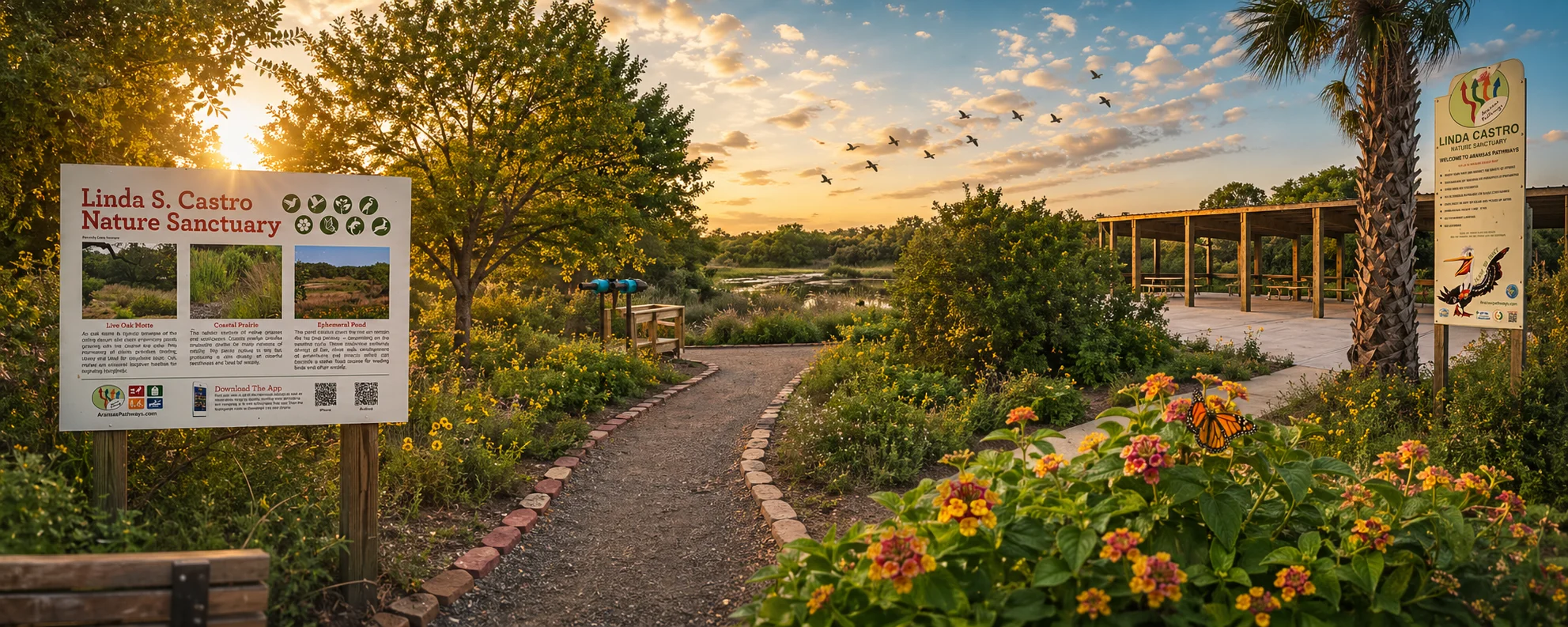
Linda S. Castro Nature Sanctuary
"No visit to Rockport is complete without visiting Linda Castro." — Aransas Nature Fest Guide
Easy to blow past on Hwy 35 — the entrance is a gravel drive between a welding shop and an old building, easy to miss at road speed. Address is 4041 Hwy 35 N. What's inside is one of the most carefully curated native habitat gardens on the Texas coast.
Aransas Pathways manages the 4.5-acre sanctuary with recent significant investment in improvements. Three habitat types in one small space: a native plant garden through brick-edged paths, a coastal prairie "pocket prairie" with over 200 native plant species, and an ephemeral pond — a fishless seasonal wetland that attracts herons and egrets for easy feeding. An elevated viewing platform with mounted binoculars overlooks the pond directly. A shaded covered pavilion offers a place to sit and watch.
The sanctuary also protects a rare Live Oak-Redbay Forest — a coastal forest type found in only five Texas counties. No restrooms on site.
Key Species
- →Great Blue Heron (pond)
- →Great Egret (pond)
- →Ruby-throated Hummingbird (feeders)
- →Rufous Hummingbird (fall)
- →Many warbler species (migration)
- →Monarch Butterfly (October)
- →Gulf Fritillary (year-round)
- →White-eyed Vireo (spring/summer)
Insider Tips
- ★Slow down on Hwy 35 — gravel entrance at 4041 Hwy 35 N, between the welding shop and the building
- ★Viewing platform has mounted binoculars pointed over the ephemeral pond — best at dawn
- ★No restrooms — stop at Memorial Park (5 min away) before visiting
- ★Hummingbird feeders active on the platform railing during migration
- ★Aransas Pathways recently upgraded the facilities — it's better than ever
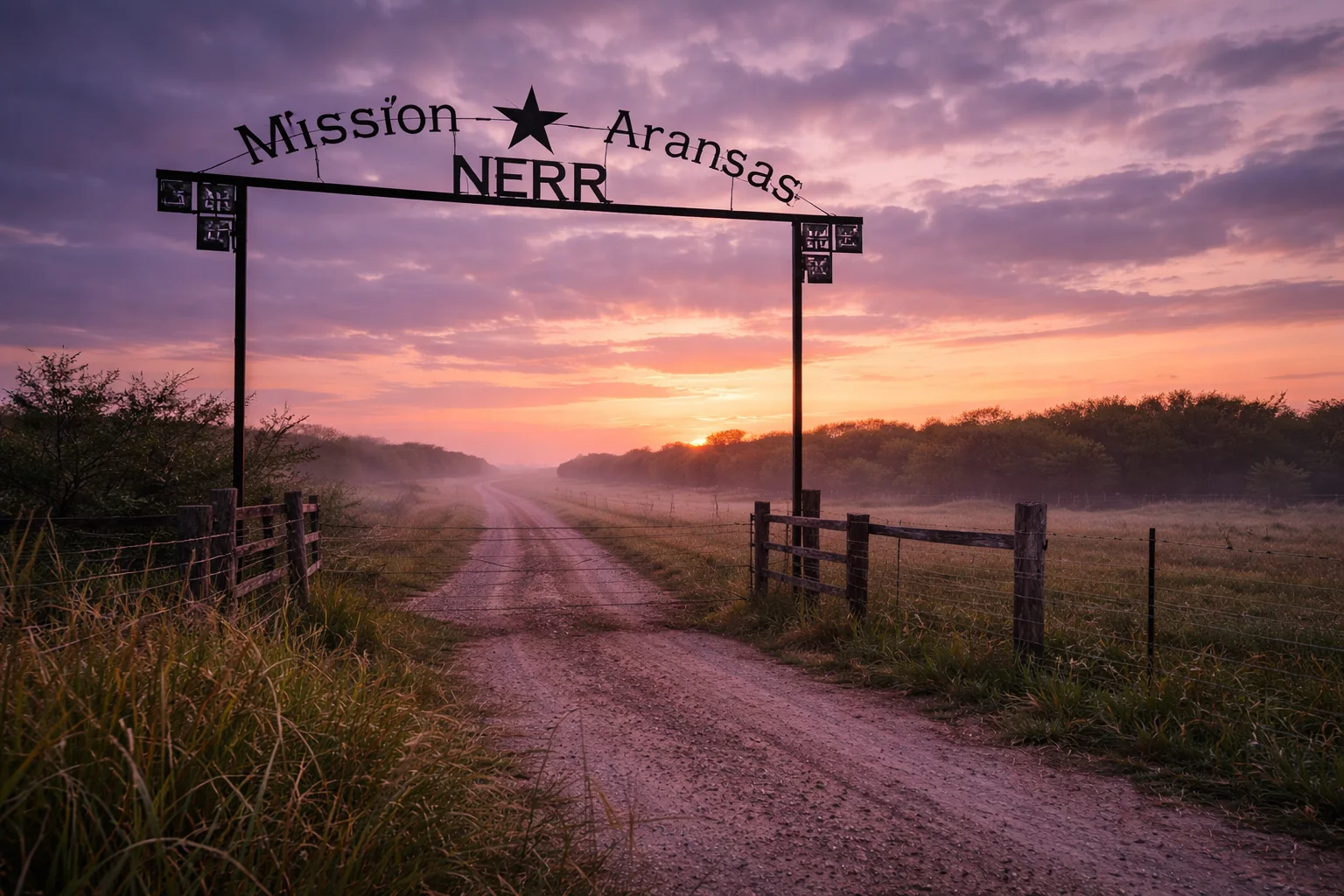
Fennessey Ranch
A birding-friendly private ranch offering access to exceptional inland coastal habitat.
Fennessey Ranch is a working cattle ranch along the Mission River that has opened select areas to birders. The combination of riparian woodland, native coastal prairie, wetlands, and brush country creates habitat diversity you simply can't find along the immediate coast.
This is the place for grassland specialists — Sprague's Pipit, Henslow's Sparrow, Dickcissel, and other species that prefer open prairie habitat. The river corridor produces migrant and breeding woodland birds. Advanced birders willing to work a little harder for their sightings will find Fennessey Ranch deeply rewarding.
Contact Fennessey Ranch directly to arrange guided access. This is not a walk-in birding site.
Key Species
- →Sprague's Pipit (winter)
- →Henslow's Sparrow (winter)
- →Dickcissel (summer)
- →White-tailed Hawk
- →Grasshopper Sparrow
- →Upland Sandpiper (migration)
- →Painted Bunting (summer)
- →Multiple warbler species (migration)
Insider Tips
- ★Contact the ranch in advance — access is by guided tour only
- ★Bring good rubber boots for wet areas
- ★Walk slowly through grassland areas — flushes miss most of the good birds
- ★Dawn start times are essential here
- ★A scope is essential for grassland shorebirds and raptors
Ready to Plan Your Visit?
Seasons, packing lists, photography tips, and getting here — our full trip planning guide has everything you need.
Plan Your Trip →Explore All 33 Sites
Beyond these 6 flagship locations, there are 27 more birding sites near Rockport — wetlands, woodlands, harbors, and scrub country.
Complete Site Directory →