

Pre-Built Trips
Rockport Birding Itineraries
Ready-to-go trip frameworks built from local knowledge. Use them as-is or adjust for your schedule.
Hummingbird Festival Weekend
The most celebrated 4 days on the Texas coast.
- ✓Private garden tours throughout Rockport & Fulton — hummingbirds at every feeder
- ✓Hummingbird Breakfast at the Aransas County History Center
- ✓Golf cart rental for effortless garden-to-garden access
- ✓Roseate Spoonbills and Painted Buntings as bonus birds
- ✓Moondog Seaside Eatery for waterfront dinners
📅 Best time: September 17–20, 2026
🏡 Stay in Fulton — walk or golf-cart to most festival events
✈️ Fly into CRP · Rockport Rides airport transfer ($130/way)
3-Day Photographer's Weekend
Dawn departures, backwater access, and golden-hour light.
- ✓Dawn boat tour — shallow-draft access to crane and spoonbill habitat
- ✓Connie Hagar Cottage Sanctuary mid-morning for warblers and migrants
- ✓Lamar Beach Road evening loop for golden-hour crane viewing
- ✓Pop's Place lunch after morning boat tours
- ✓Self-guided Rockport Birding Circuit on day 3
📅 Best time: November – April
🏡 Stay in Rockport — close to the boat put-in and town birding
✈️ Fly into CRP · Rockport Rides pickup at airport
Spring Fallout Trip
Chase the cold fronts. Find the warblers.
- ✓A south wind followed by a cold front can stack 20+ warbler species overnight
- ✓Painted Buntings and Rose-breasted Grosbeaks at peak numbers
- ✓Connie Hagar and Linda Castro Nature Sanctuary at dawn — legendary migration spots
- ✓Self-guided Lamar Peninsula Loop — coastal brush migrants and shorebirds along Beach Road
📅 Best time: April – May
🏡 Rockport or Fulton — flexible, both have coastal brush access
✈️ Drive or fly CRP — migration is worth the trip either way
Family Day Trip
Big Tree, bay views, and easy birding anyone can do.
- ✓The Big Tree at Goose Island — 1,000-year-old live oak, fully accessible
- ✓Waterfront walk through downtown Rockport
- ✓Roseate Spoonbills visible from the Fulton Harbor boardwalk
- ✓No special equipment needed — just binoculars
- ✓Lunch in downtown Rockport before heading home
📅 Best time: Year-round (avoid peak summer heat)
🏡 Day trip from Corpus Christi or San Antonio — or stay a night
✈️ Drive in — parking is easy except Festival weekend
Whooping Crane Long Weekend
The rarest large bird in North America. On the water at dawn.
- ✓Dawn boat tour — closest legal approach to the Aransas flock (560+ birds)
- ✓Lamar Beach Road evening viewing — cranes move close at low tide
- ✓Winter waterfowl: White Pelicans, ducks, geese on the bays
- ✓Raptors: Peregrine Falcon, Merlin, Northern Harrier on the flats
- ✓Quiet season — low crowds, honest prices, cold-front light
📅 Best time: November – March
🏡 Rockport or Fulton — both put you minutes from crane habitat
✈️ Fly into CRP or drive — winter rates are the lowest of the year
Rockport Partner Network
Complete Your Trip
We partner with one trusted local business per category — so every part of your visit is covered. One spot per category. First come, first served.
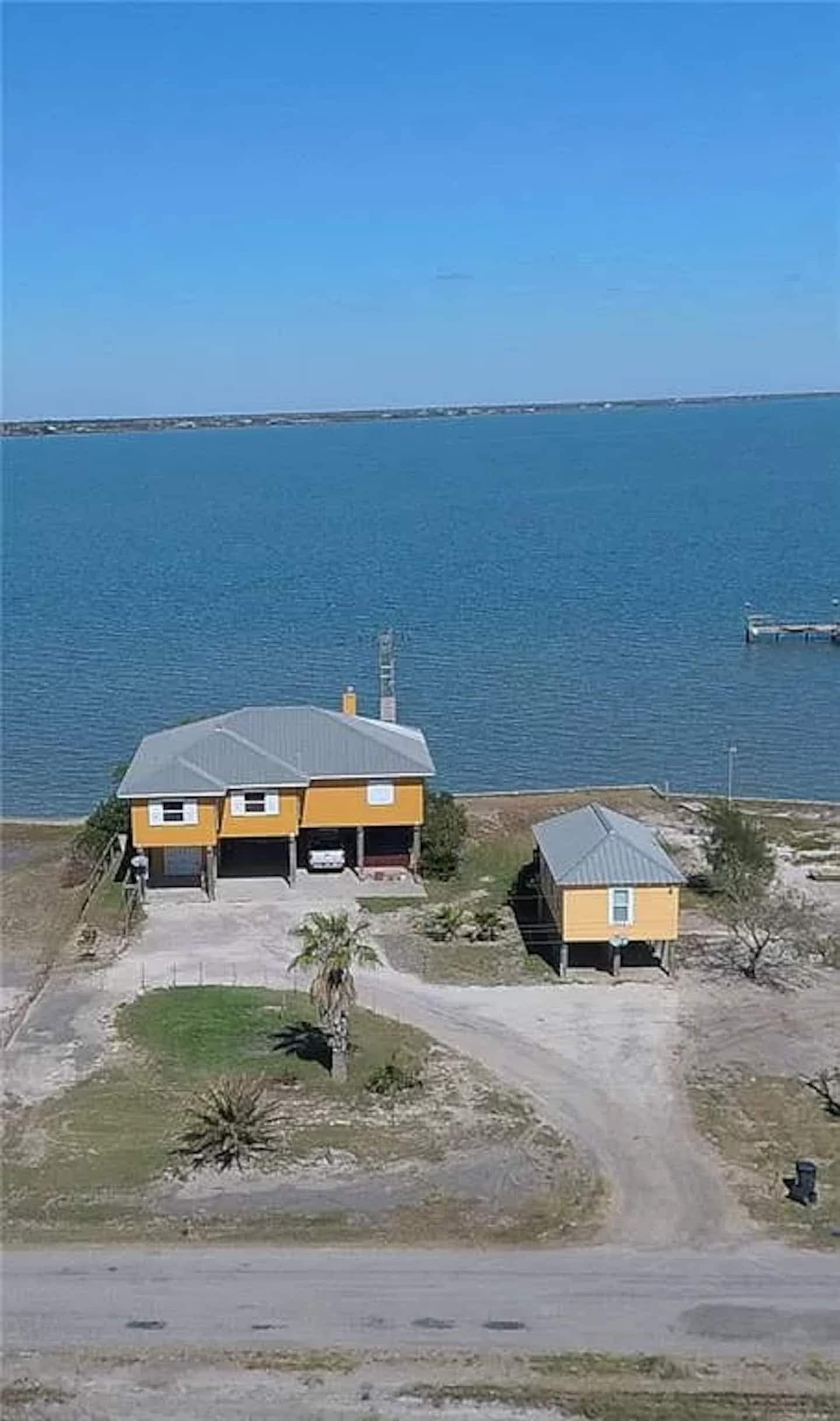
Vacation Rental
Copano Bayhouse
Waterfront views and a private 325-ft pier
View Details →Advertising Spot Open
Airport Transfer
Fly into CRP. Get picked up at the gate by a local driver who knows every birding spot between the airport and your cottage.
Claim This Spot →Advertising Spot Open
Golf Cart Rentals
Explore Fulton by cart — private hummingbird gardens, the harbor boardwalk, and waterfront dining without fighting for parking.
Claim This Spot →Advertising Spot Open
Local Restaurant
The spot birders gather after a morning on the water. Waterfront seafood, local flavor, and a table that understands early risers.
Claim This Spot →Advertising Spot Open
Guided Birding Tour
Put your clients on the water at dawn — shallow-draft access to crane and spoonbill habitat no one reaches from shore.
Claim This Spot →Advertising Spot Open
Fishing Charter
Rockport redfish and speckled trout at first light — in the same backwaters where the whooping cranes feed.
Claim This Spot →Getting to Rockport, Texas
By Air
Closest major airport: Corpus Christi International (CRP) — about 35 miles / 45 min. San Antonio International (SAT) is 2.5 hours. Houston airports (IAH/HOU) are about 3.5 hours.
By Car
Rockport is on US-35 and TX-188, about 35 miles north of Corpus Christi. From San Antonio: I-37 south to US-181, then TX-188 to US-35. From Houston: I-10 west to US-77 south, then TX-35 through Victoria. Car rental at CRP is the easiest option if flying.
Where to Stay
Waterfront cottages, bay-view vacation rentals, historic inns, and full-hookup RV parks — all within easy reach of the birding spots.
⚠️ Texas Weather Warning
The Texas coast is in hurricane country. If visiting June through November, monitor weather forecasts. “Blue northers” (fast cold fronts) can hit in fall and winter — dress in layers and always have a warm layer accessible. In summer, heat and humidity are intense — start before dawn, finish by 10am, rest midday. Hydration is not optional.
Where to Stay in Rockport
From waterfront inns to private dock cottages — lodging across every price range and group size.
Some links below are affiliate links — we earn a small commission if you book, at no extra cost to you.
Hotels & Inns
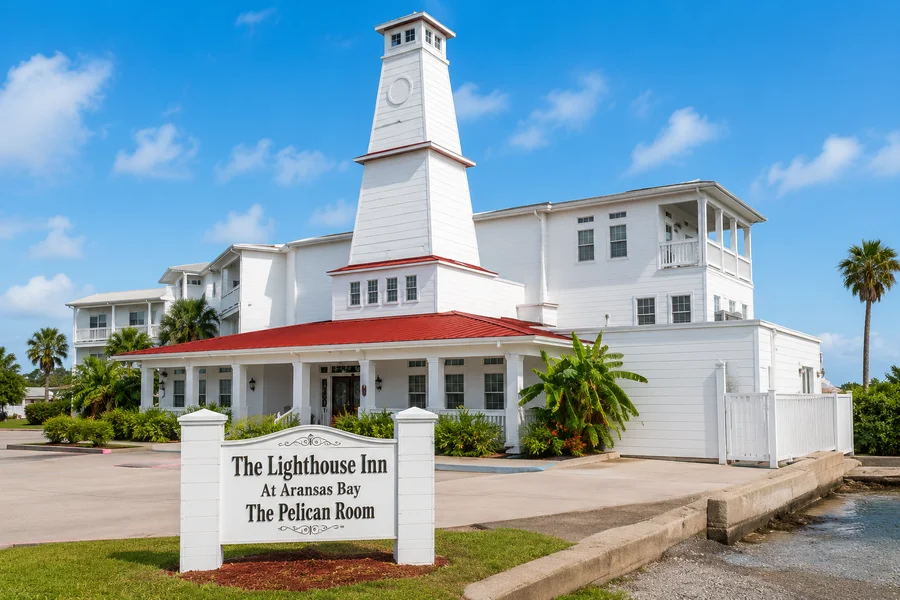
Lighthouse Inn at Aransas Bay
Rockport's highest-rated waterfront property — bay views, full kitchen in every suite, and walking distance to the harbor boat launches.
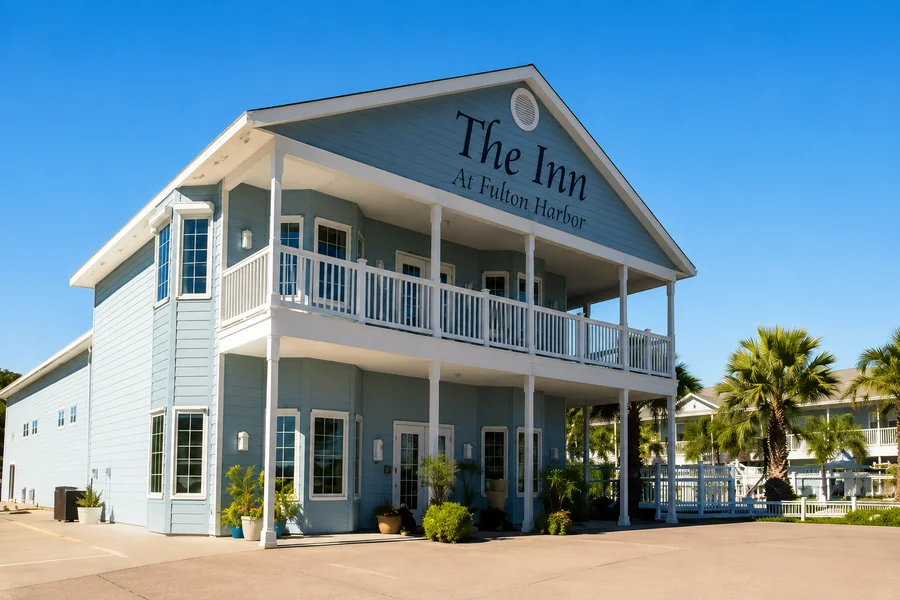
Fulton Inn
Historic Fulton property within walking distance of the harbor boardwalk — minutes from Lamar Beach Road and the crane viewing corridor.
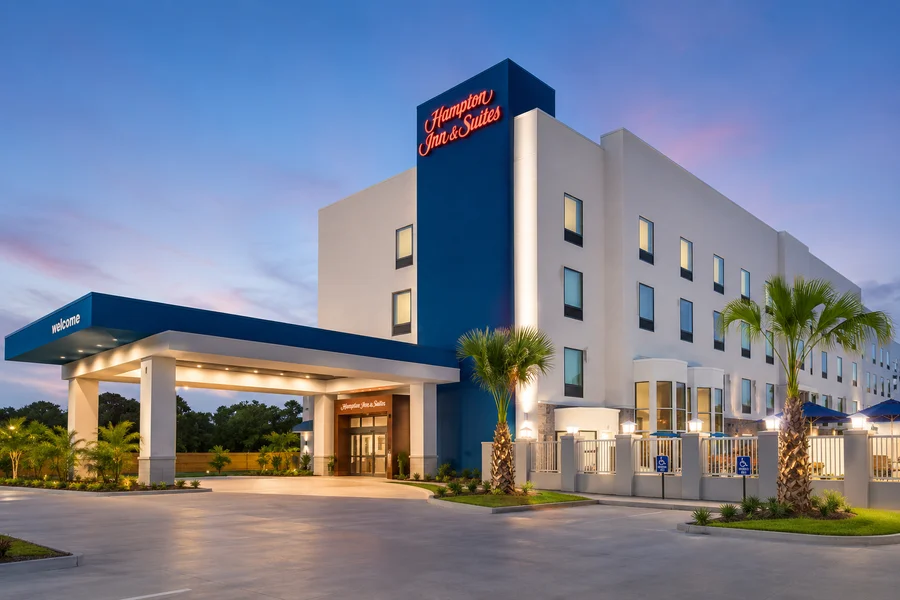
Hampton Inn Rockport
Full-service hotel with pool and complimentary breakfast — a reliable base for multi-day birding trips when predictable comfort matters.
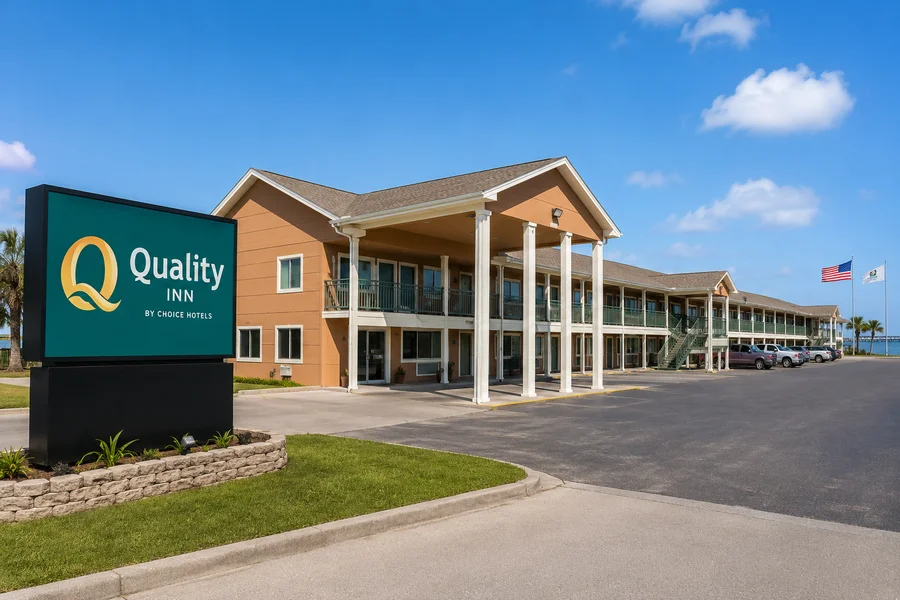
Quality Inn Rockport
Budget-friendly and close to downtown Rockport — the smart move when the lodging budget goes toward the boat tour instead.
Vacation Rentals

Reel Inn @ Rockport
Private cottage 5 minutes from the beach — full kitchen, quiet setting, ideal for couples or a birding pair.

Rustic Retreat Near Goose Island
4-bedroom retreat near Goose Island State Park — sleeps up to 28, ideal for a birding group or family gathering.
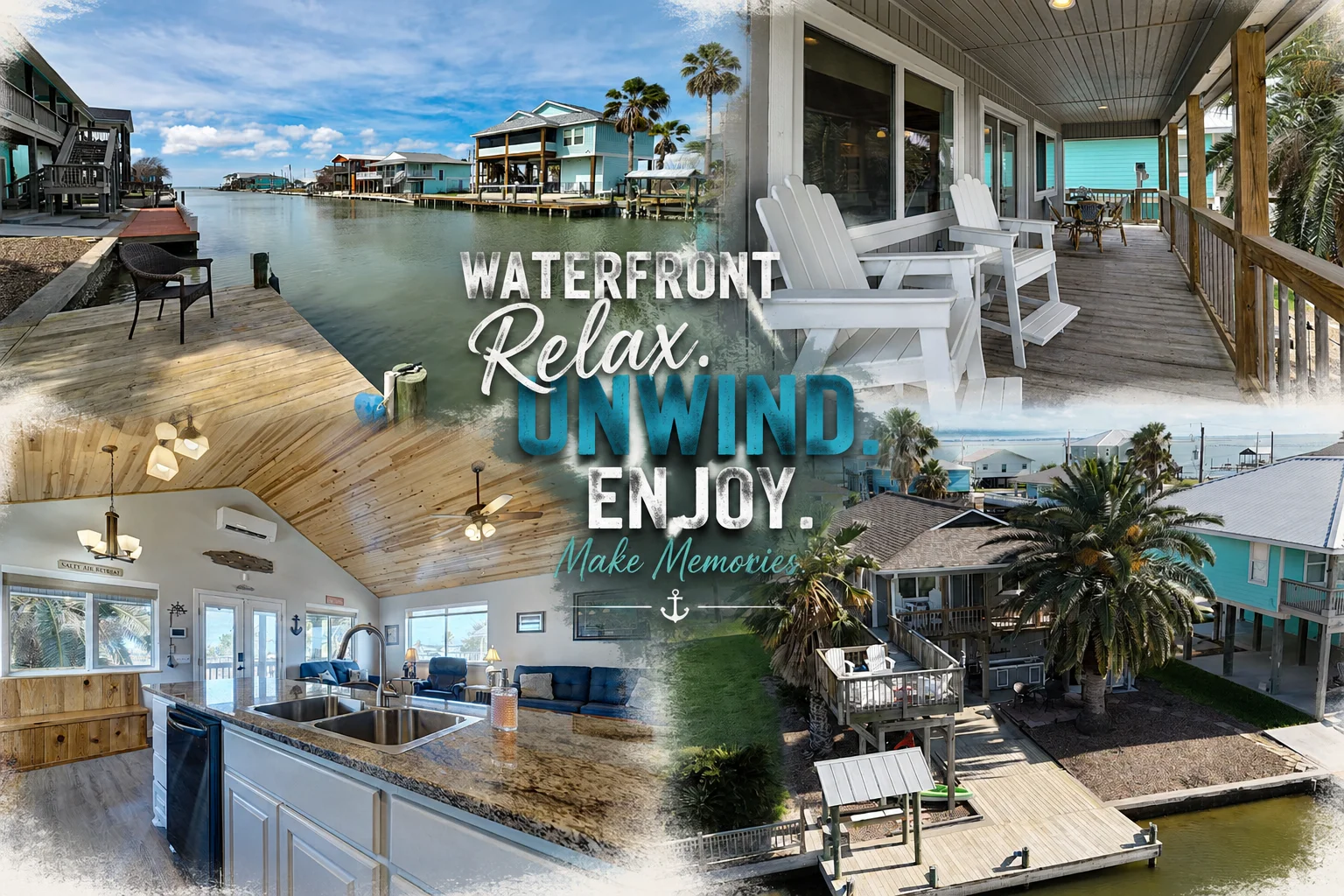
Canal Fishing Retreat
Private canal dock, rooftop sky deck, golf cart included — 3 bedrooms, sleeps 10, in the heart of Rockport's back bays.
RV Parks
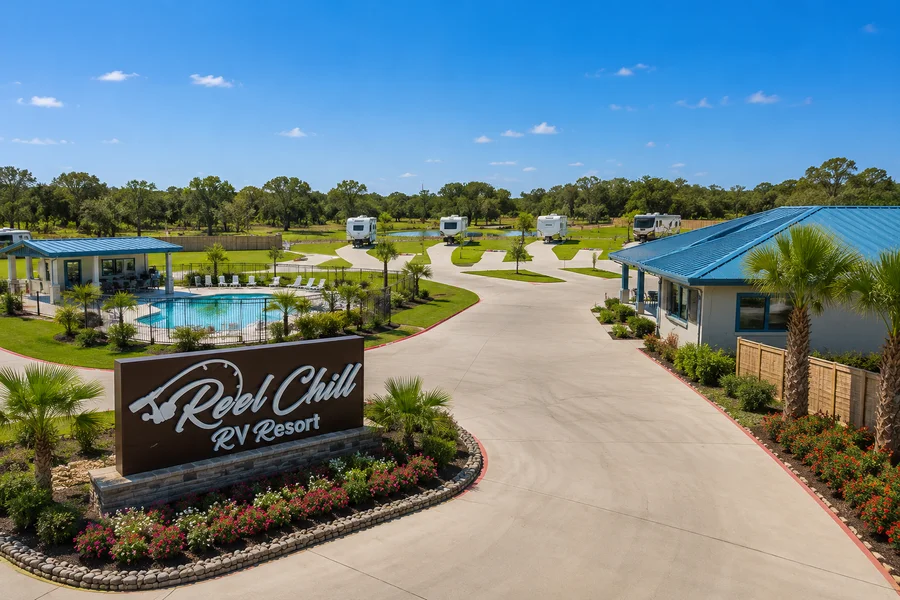
Reel & Chill RV Park
Full hookups within easy reach of Goose Island and the bay — a favorite winter base for snowbirds working the crane season.
Online booking coming soon
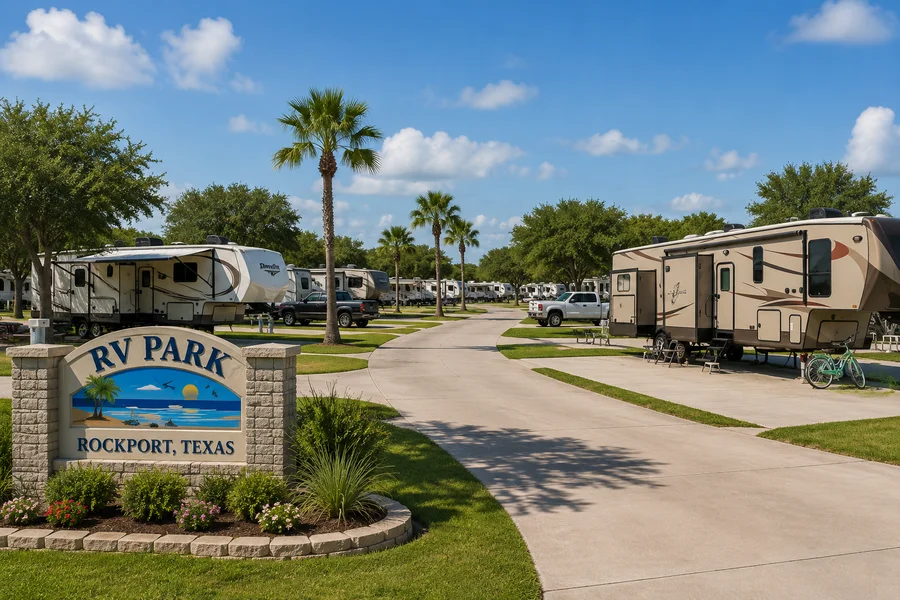
Rockport RV Park
Full hookups close to downtown Rockport — walking distance to restaurants and the Rockport waterfront.
Online booking coming soon
Getting Around Once You’re Here
Airport Transfer
Corpus Christi (CRP) is 35 miles out. Local transfer services offer personal airport pickups — you and your gear, door to door, no rental car stress.
Book in advance · Ask us for a recommendation
Golf Carts in Rockport
Festival weekend and summer, golf carts are the move around Rockport. Reach private hummingbird gardens, the harbor boardwalk, and waterfront dining without fighting for parking.
Local cart rentals available · Full-day rates
Local Dining
Fulton has waterfront seafood right on Aransas Bay. Near the Lamar Peninsula, local breakfast spots open early — perfect after a dawn boat tour. Ask locals for current favorites.
Waterfront dining in Fulton · Breakfast near Lamar
Groceries & Supplies
HEB and Walmart both in Rockport. Favor, UberEats, and Instacart deliver to most rentals — useful when you want to stay in the field all day and not cook.
HEB on Hwy 35 · Curbside pickup available
Book a Guided Tour
Bookable directly online — no phone tag, no waiting. Secure your spot before the season fills.
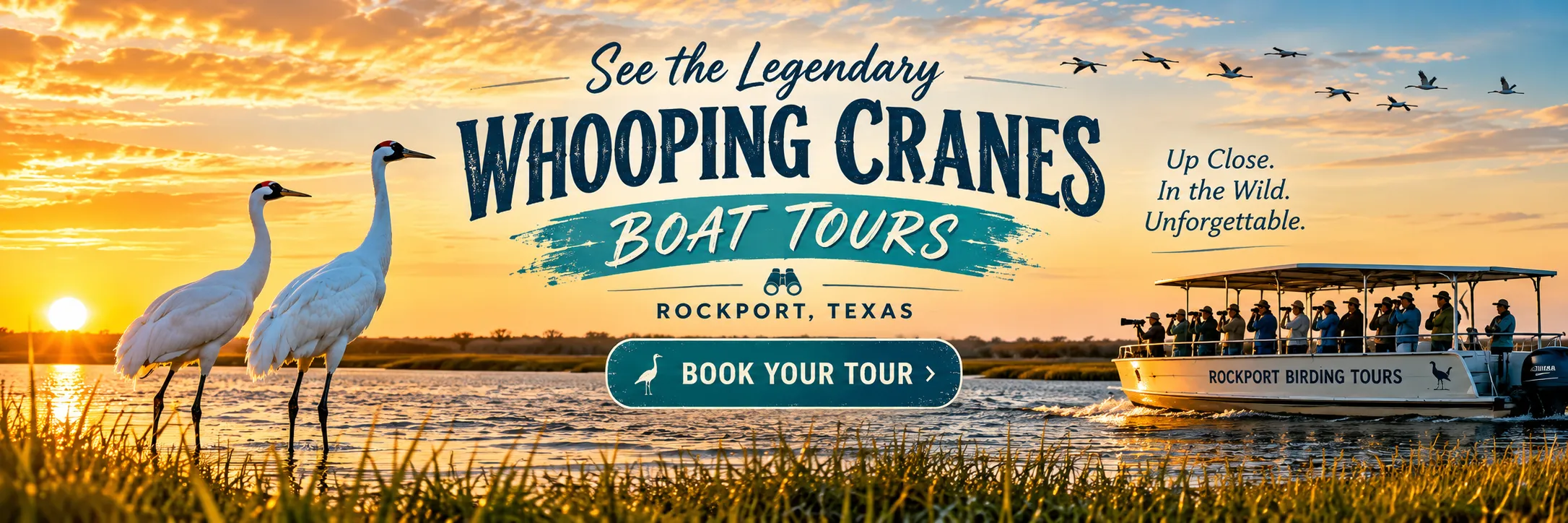
From $450 · Secure booking · Instant confirmation · Affiliate link — we earn a commission at no extra cost to you.
When to Visit — Seasonal Guide
Every season on the Texas coast offers something worth traveling for. Here’s how to choose based on what you most want to see.
Fall
September – November
Highlights
- ✓Hummingbird Festival (third weekend of September)
- ✓Peak hummingbird migration — Ruby-throated, Rufous, Buff-bellied
- ✓Monarch butterfly migration passes through coastal brush
- ✓Shorebird diversity peaks in September on bay flats
- ✓First whooping cranes arrive late October/early November
- ✓Neotropical migrants moving through coastal brush
Weather
Warm to hot in September (85–95°F), cooling by November (55–75°F). Hurricane season officially ends Nov 30. September–October can be humid.
Our Take
Excellent for hummingbirds and shorebirds. Book accommodations early for Festival weekend.
Winter
December – February
Highlights
- ✓Peak whooping crane season — maximum flock size
- ✓Best boat tour conditions for crane viewing
- ✓Waterfowl: ducks, geese, and white pelicans on the bays
- ✓Raptors: Peregrine Falcon, Merlin, Northern Harrier
- ✓LaMardiGras celebration (February)
- ✓Quiet season — short lines, uncrowded roads, great for photography
Weather
Highly variable. Can be 70°F one day, 35°F the next. "Blue northers" — fast-moving cold fronts — can drop temps 30°F in hours. Always bring layers. Rarely freezes hard but it happens.
Our Take
The single best season for whooping crane viewing. Dress in layers and embrace the weather.
Spring
March – May
Highlights
- ✓Spectacular neotropical songbird migration
- ✓Warbler "fallouts" after cold fronts: 20+ species in a morning
- ✓Painted Buntings arrive for breeding season
- ✓Cranes depart for Canada in March/April
- ✓Fulton Oysterfest (March)
- ✓Wildflowers along roadsides at peak
Weather
Mild and beautiful — 60–80°F most days. Can have cold fronts in March. Increasingly warm by May.
Our Take
Best season for variety. A cold front after a south wind can produce legendary songbird fallouts.
Summer
June – August
Highlights
- ✓Roseate Spoonbill colonies nesting at Goose Island
- ✓Wading birds — Great Blue Heron, Tricolored, Little Blue
- ✓Magnificent Frigatebird visible over the bay
- ✓Buff-bellied Hummingbird year-round resident
- ✓Least fewest crowds of any season
- ✓Early hummingbirds begin appearing in August
Weather
Hot and humid — 90–100°F with high humidity. Sea breezes help on the waterfront. Early morning is essential.
Our Take
Not for the faint-hearted in the heat, but the spoonbills and coastal wading birds are spectacular.
Best Times of Day for Birding
Dawn to 10am
The most active period for nearly all birds. Songbirds are singing, herons are hunting, shorebirds are feeding on the exposed tide flats. This is non-negotiable. Wake up early or miss the best of it.
10am to 3pm
Birds often retreat into shade, reduce activity in summer heat. Good time for watching raptors on thermals, resting at your cottage, reviewing photos, or making a boat tour run. Winter midday can still be productive.
Last 2 Hours of Light
Evening activity picks up significantly. Wading birds move to roost sites. Night herons begin hunting. Raptors make a last hunting pass. Great light for photography. Whooping cranes sometimes come close to road at evening low tide.
What to Pack — The Rockport Birding Checklist
Optics
- ✓Binoculars — 8x42 or 10x42 minimum
- ✓Spotting scope + tripod (essential for shorebirds and cranes)
- ✓Camera + long lens (400mm+ for wildlife)
- ✓Extra batteries and memory cards
Clothing
- ✓Layered clothing — temps can swing 30°F in a day
- ✓Waterproof jacket (wind and occasional rain)
- ✓Comfortable walking shoes or hiking boots
- ✓Sun hat with wide brim (critical in summer)
- ✓Warm base layer for winter boat tours
- ✓Gloves and beanie for cold fronts (even in winter Texas)
Field Gear
- ✓Field guide — Sibley's or National Geographic
- ✓eBird app (free — see what's been reported nearby)
- ✓Merlin Bird ID app (free — AI bird identification)
- ✓Tide table or NOAA tides app (critical for crane viewing)
- ✓Sunscreen SPF 50+ (sun is intense year-round)
- ✓Insect repellent (mosquitoes in marshes, especially summer)
Comfort
- ✓Water — 2+ liters, especially summer
- ✓Snacks — you'll be out longer than you planned
- ✓Car trash bag (keep Texas beautiful)
- ✓First aid kit
- ✓Small daypack for equipment
Wildlife Photography Tips for Rockport
From whooping cranes on Beach Road to hummingbirds at Festival feeders — here’s how to come home with images worth framing.
Golden Hour is Non-Negotiable
The first and last 90 minutes of sunlight are when coastal Texas birding photography is at its best. The warm light, low angle, and active birds combine for images you won't get at 10am. Set your alarm.
Your Car is Your Best Blind
Birds are far less spooked by vehicles than by humans on foot. Pull up slowly, kill your engine, and shoot through the window. A beanbag window mount stabilizes your long lens far better than a handheld.
Tide Tables are Your Second App
Low tide exposes the mud flats where wading birds and shorebirds feed closest to the road. High tide pushes birds into the marsh and away from sight. Check tides before planning your shooting day.
Overcast Days Make Better Portraits
Bright overcast light eliminates harsh shadows and blows out specular highlights on white birds like egrets and whooping cranes. Overcast and light rain can actually be prime shooting conditions.
Learn the 300-Foot Rule for Whooping Cranes
Federal law requires a 300-foot minimum distance on foot from whooping cranes. Use this as a lens calibration — if you're legal distance away, you need at least 500mm to get a usable frame.
Book a Charter for the Best Shots
A shallow-draft photography charter puts you inside the backwater habitat where cranes and spoonbills actually live — not 200 yards away across open water. It's the single biggest upgrade you can make to your Texas coast photography.
Photography tour booking links coming soon.
Stay in the Loop
Know exactly when the birds arrive
Migration alerts, weekly sightings, and local tips — straight to your inbox.
Ready to Book Your Trip?
Find a birding-friendly vacation rental or browse local guided tour operators — everything you need is right here on Rockport Birding HQ.