
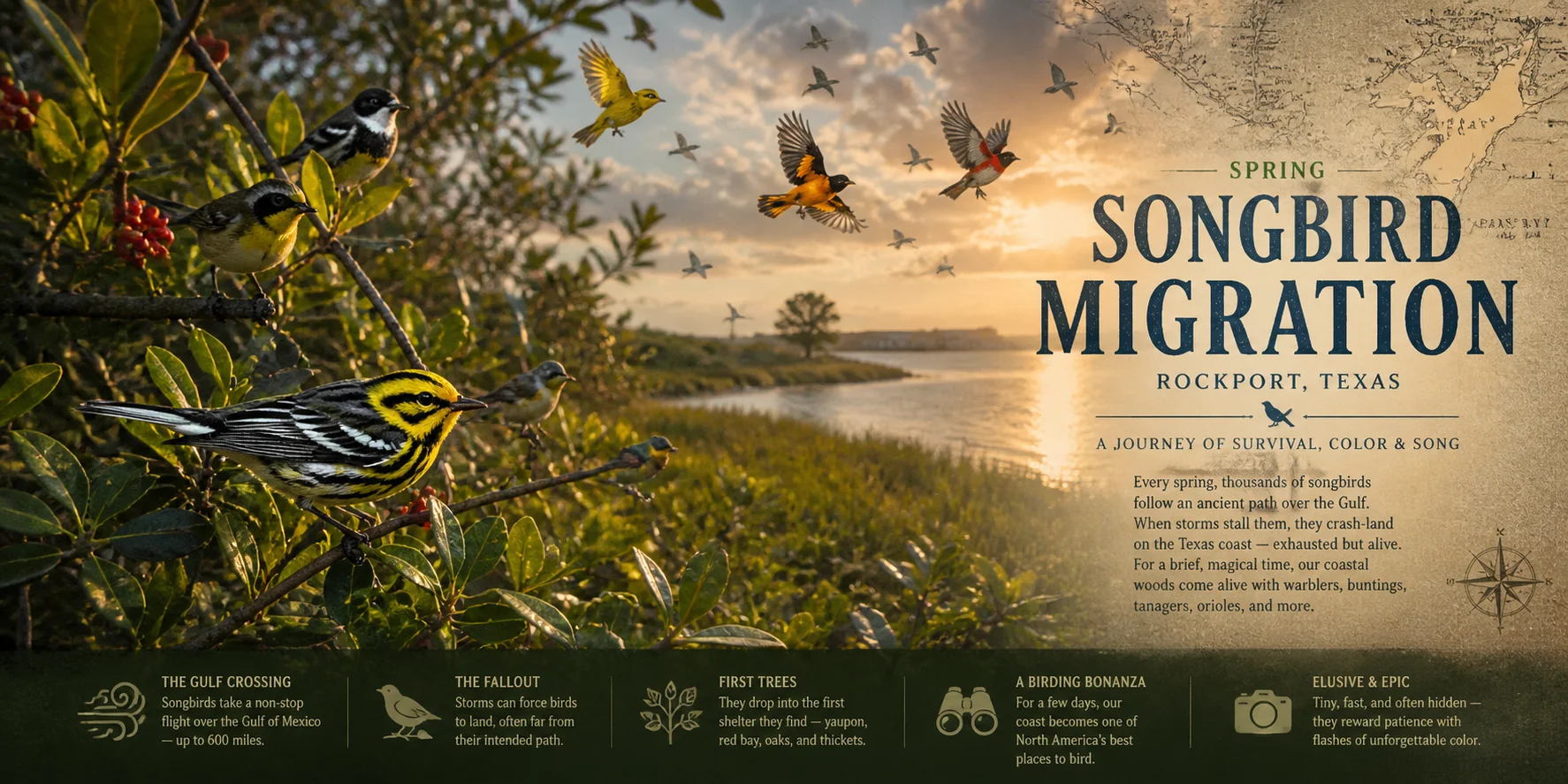
Spring Migration · Texas Coast
Spring Songbird Migration
Every spring, hundreds of thousands of tiny birds cross 600 miles of open Gulf of Mexico — nonstop, overnight, on reserves of fat the size of a grape. When they reach the Texas coast, they drop into the first trees they find. Sometimes those trees are right here in Rockport.
A Morning Walk. A Tiny Bird. A 2,000-Mile Story.
On a morning walk along the Lamar Peninsula, something stopped us. A tiny bird — brilliant yellow and black — lying on the gravel. Smaller than a house sparrow. Feathers perfect. No sign of injury.
It was a Black-throated Green Warbler (Setophaga virens). A bird that weighs less than three pennies. It had just crossed the Gulf of Mexico — a nonstop overwater flight of up to 600 miles — on its way from Central America to the forests of the northeastern US and Canada.
It didn't make it. Window strikes, exhaustion, and disorientation claim thousands of migrants every season. But finding one like this, and knowing what it is and where it came from, changes how you see every flash of color in the coastal brush.
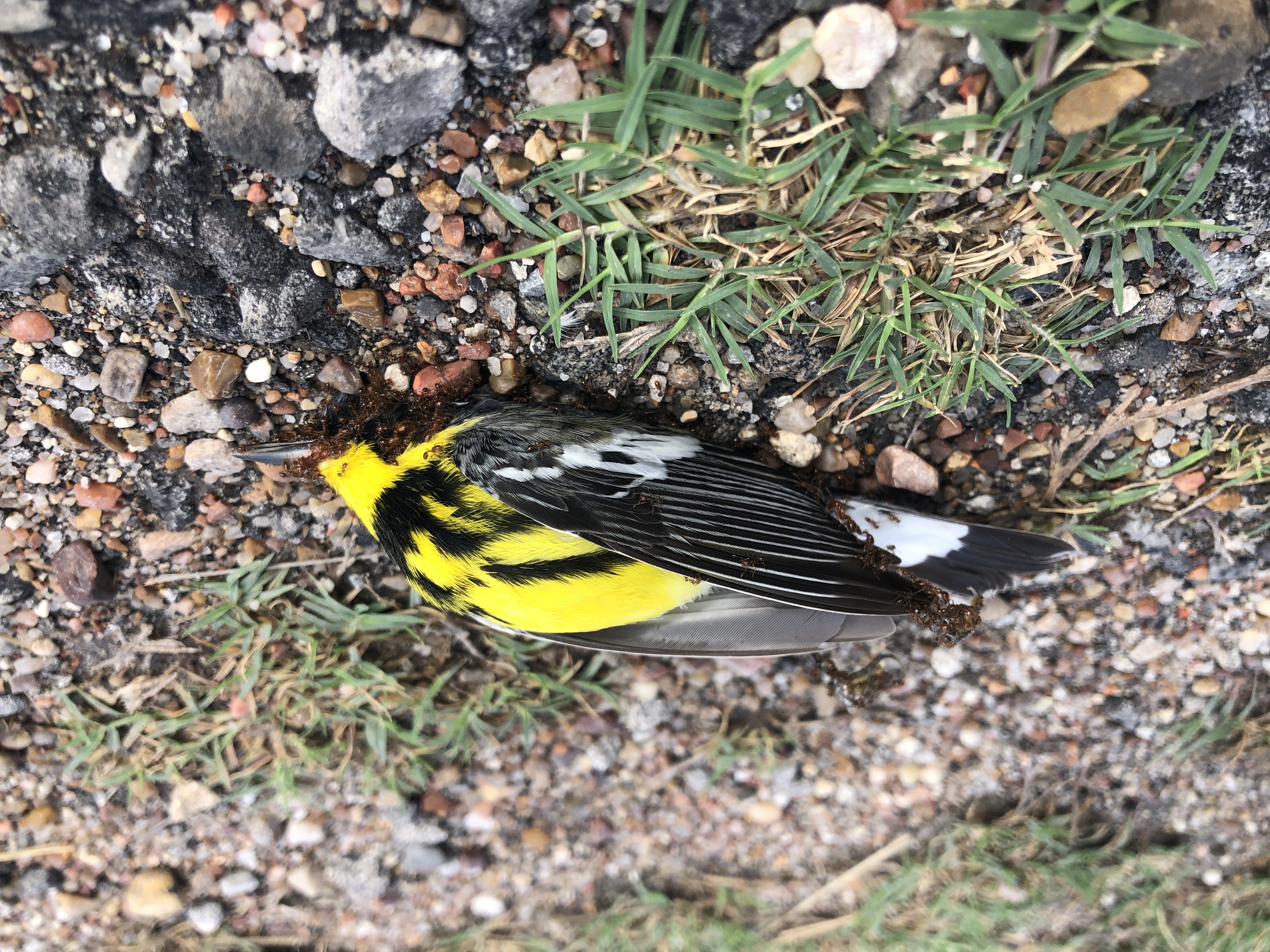
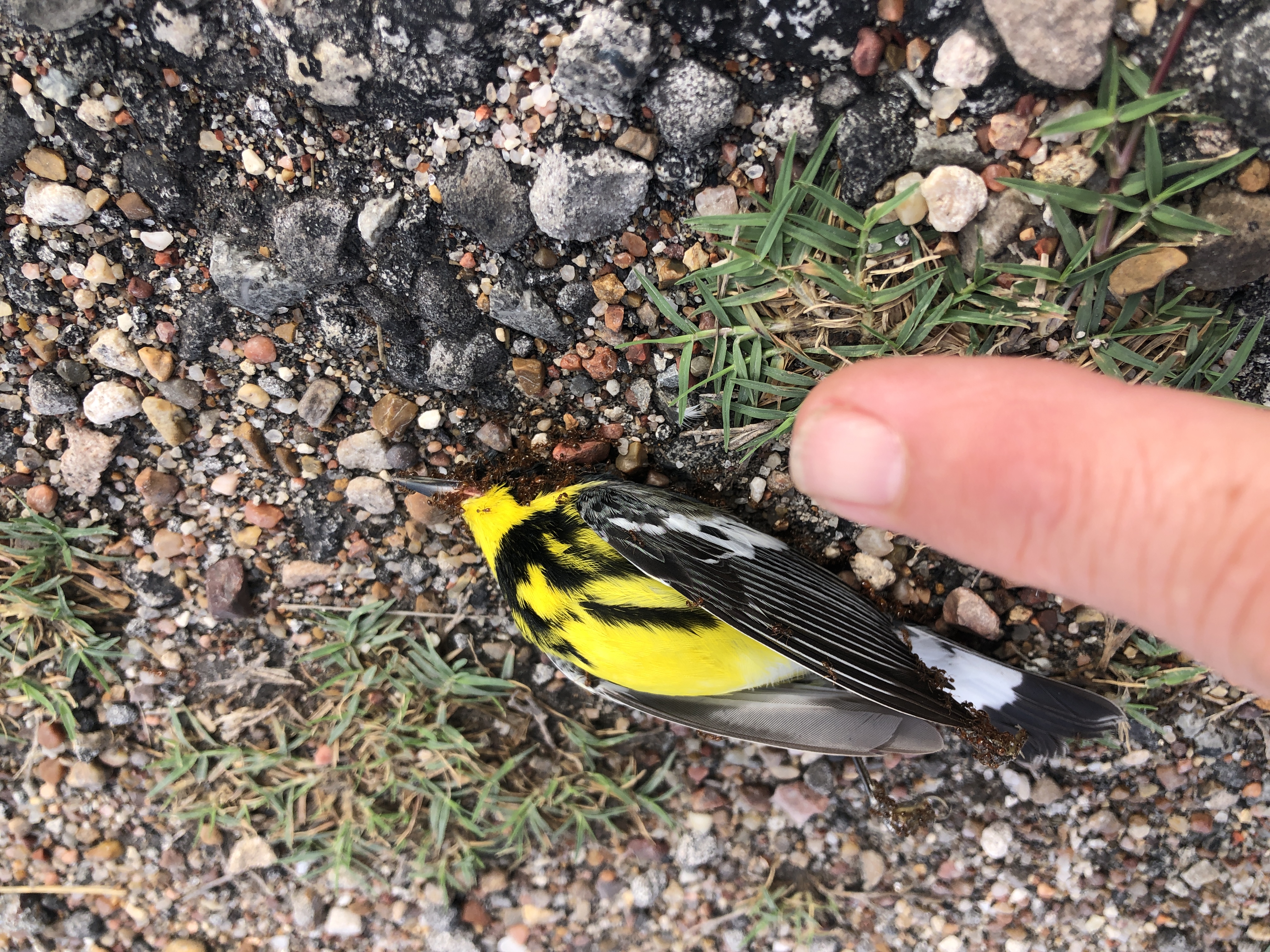
A Black-throated Green Warbler found on the Lamar Peninsula — likely a Gulf-crossing casualty. Weighs less than three pennies.
The Gulf Crossing — One of Nature's Great Gambles
Every spring, neotropical migrants face a choice: fly around the Gulf of Mexico (safe but slow) or fly straight across it (fast but brutal). Millions choose to cross. They depart the Yucatán Peninsula at dusk and fly through the night and into the next day — 18–24 hours of nonstop flight over open water with nowhere to land.
A warbler weighing half an ounce burns through body fat at a furious rate. Birds that depart in good condition and hit favorable tailwinds arrive on the Texas coast exhausted but alive. They drop into the first vegetation they see and sleep.
When a cold front stalls migrants mid-Gulf or pushes them off course, the results are dramatic. Birds arrive in desperate condition — "fallout" events where the coastal trees literally drip with exhausted birds. A single live oak can hold dozens of warblers. The ground may have birds on it. It's one of the most extraordinary wildlife spectacles in North America.
Rockport and the Lamar Peninsula sit directly on the Central Flyway — the first significant vegetation many birds encounter after crossing. On a fallout morning, the coastal thickets around Aransas Bay can be otherworldly.
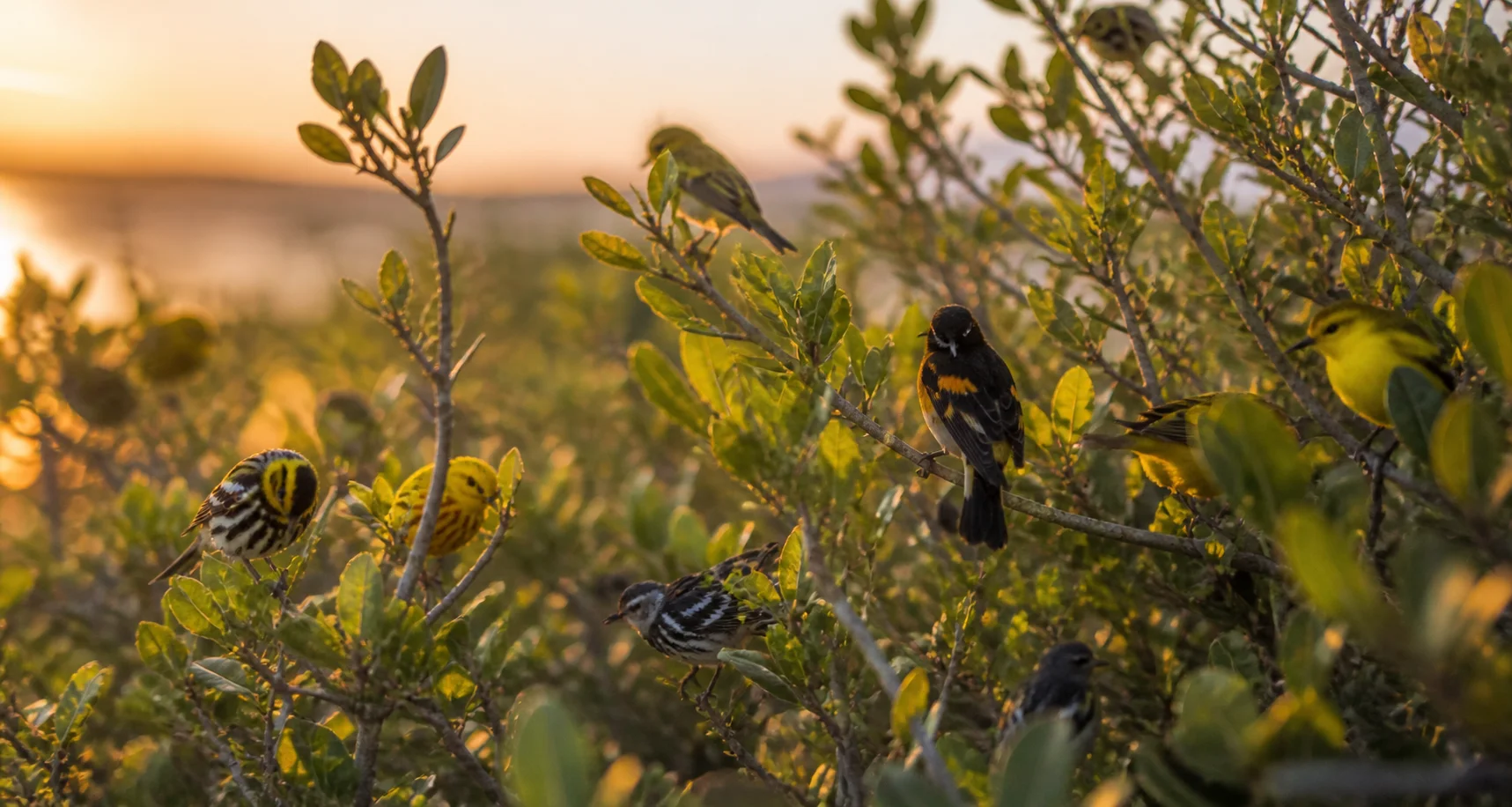
A fallout morning — multiple warblers resting in coastal scrub after crossing the Gulf. On the best days, every bush holds a bird.
You Saw It But Couldn't Identify It
Spring migration means flashes of color in places you don't expect. Here's what you probably saw:
⚡ Yellow flash in the brush
→ Yellow Warbler or Common Yellowthroat
Bright yellow, fast-moving, low in dense vegetation. Yellow Warbler has reddish streaks on chest. Yellowthroat male has a bold black mask.
⚡ Tiny bird, black & yellow, moving fast
→ Warbler — likely Yellow-rumped or Black-throated Green
The most common migrating warblers through Rockport. Often traveling in mixed flocks, picking insects from live oak leaves.
⚡ Electric blue-red-green bird
→ Painted Bunting — 100%
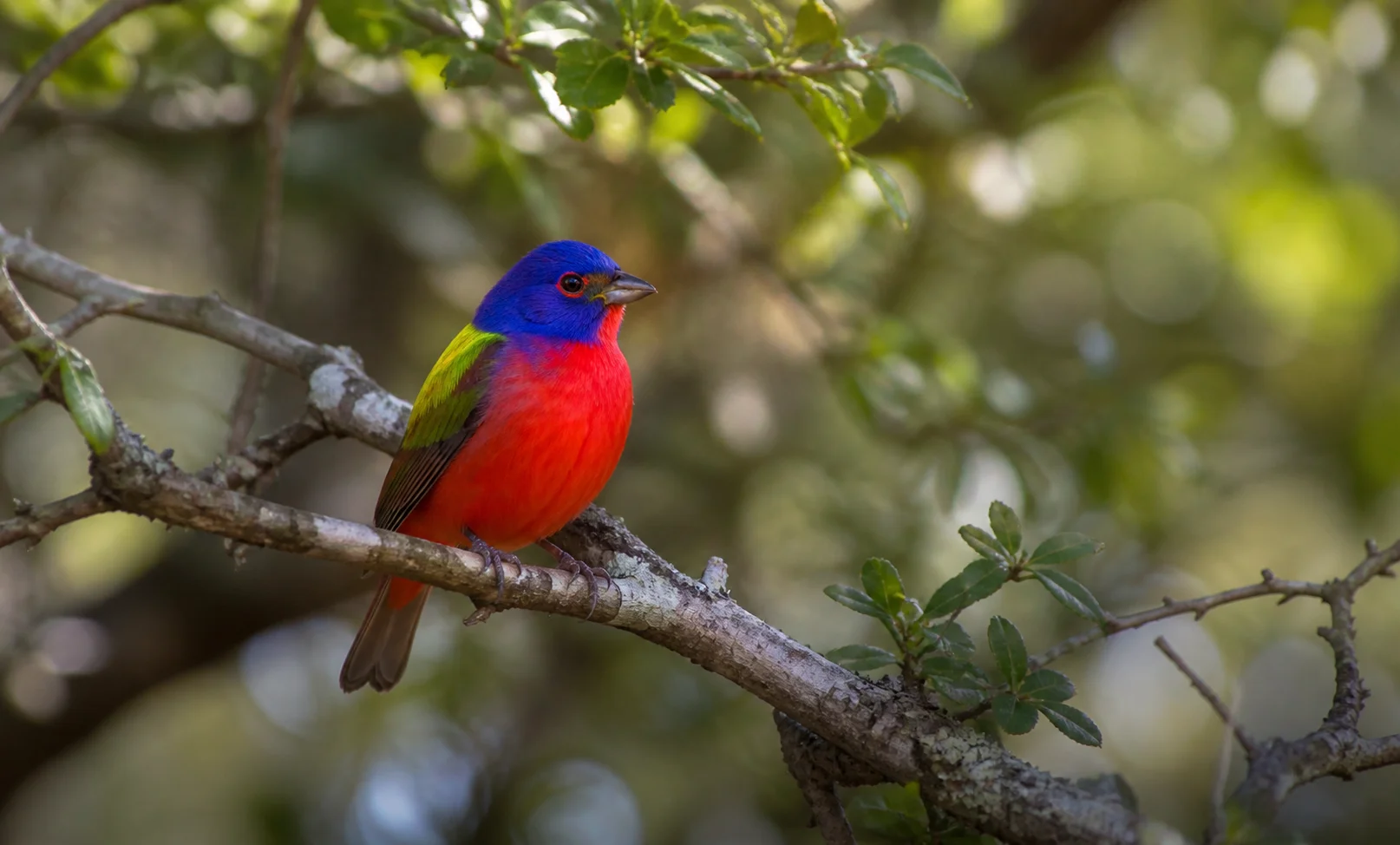
Nothing else in North America looks like a male Painted Bunting. Blue head, red chest, green back. If you saw it, you'll never forget it.
⚡ Brilliant orange bird in the oaks
→ Baltimore Oriole or Hooded Oriole
Orioles pass through in good numbers in spring. They love pecans, live oaks, and flowering plants. Check for a black hood (Hooded) or orange-and-black (Baltimore).
⚡ Scarlet bird with black wings
→ Scarlet Tanager
Males are unmistakable — fire-engine red with jet black wings. They travel with mixed flocks and often pop into the open briefly before disappearing.
⚡ Brown bird, loud song in dense brush
→ Probably a Wren or Vireo
Carolina Wrens and House Wrens are year-round here, but migrants like Ruby-crowned Kinglets and various vireos pass through. Loud song from dense cover = wren or vireo.
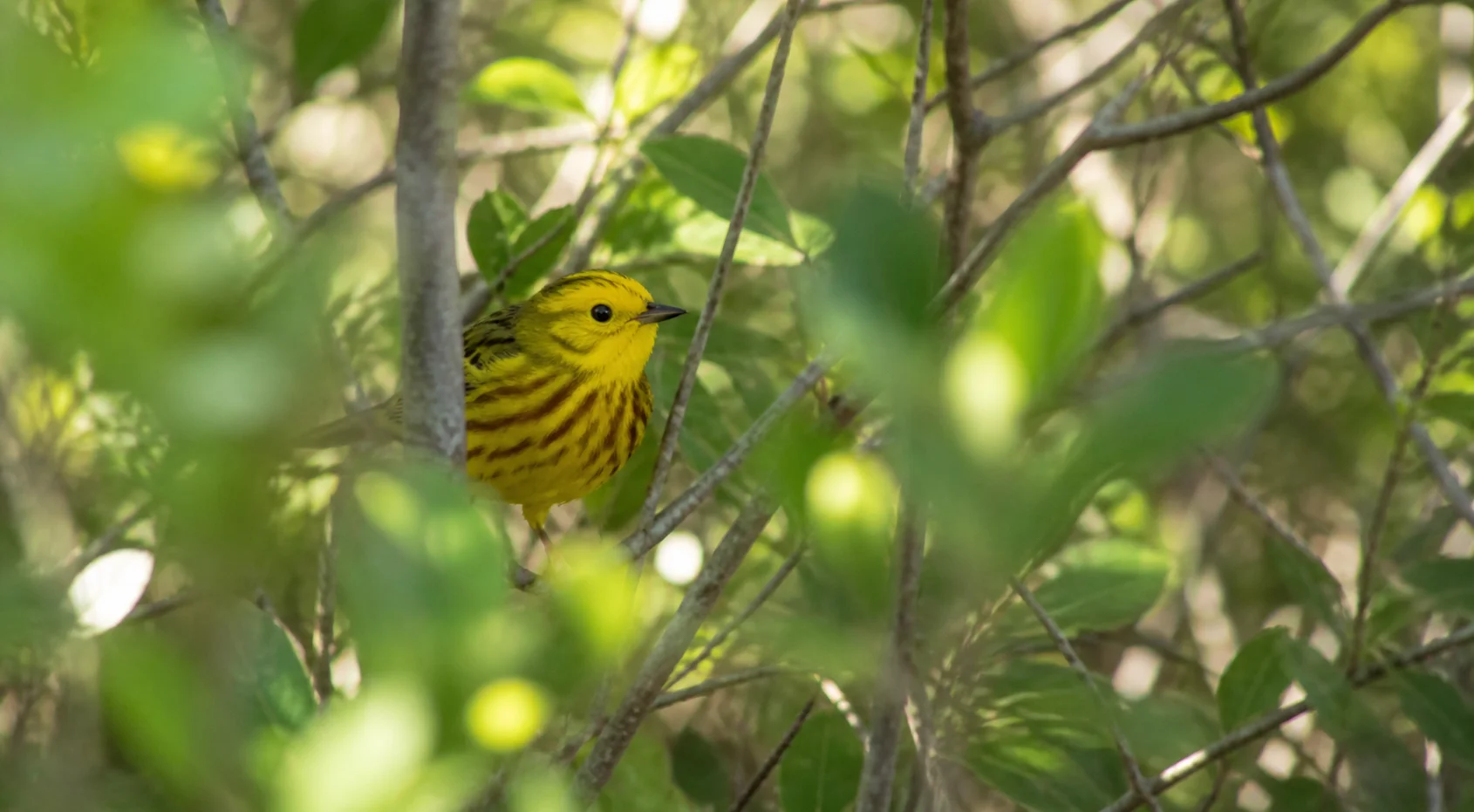
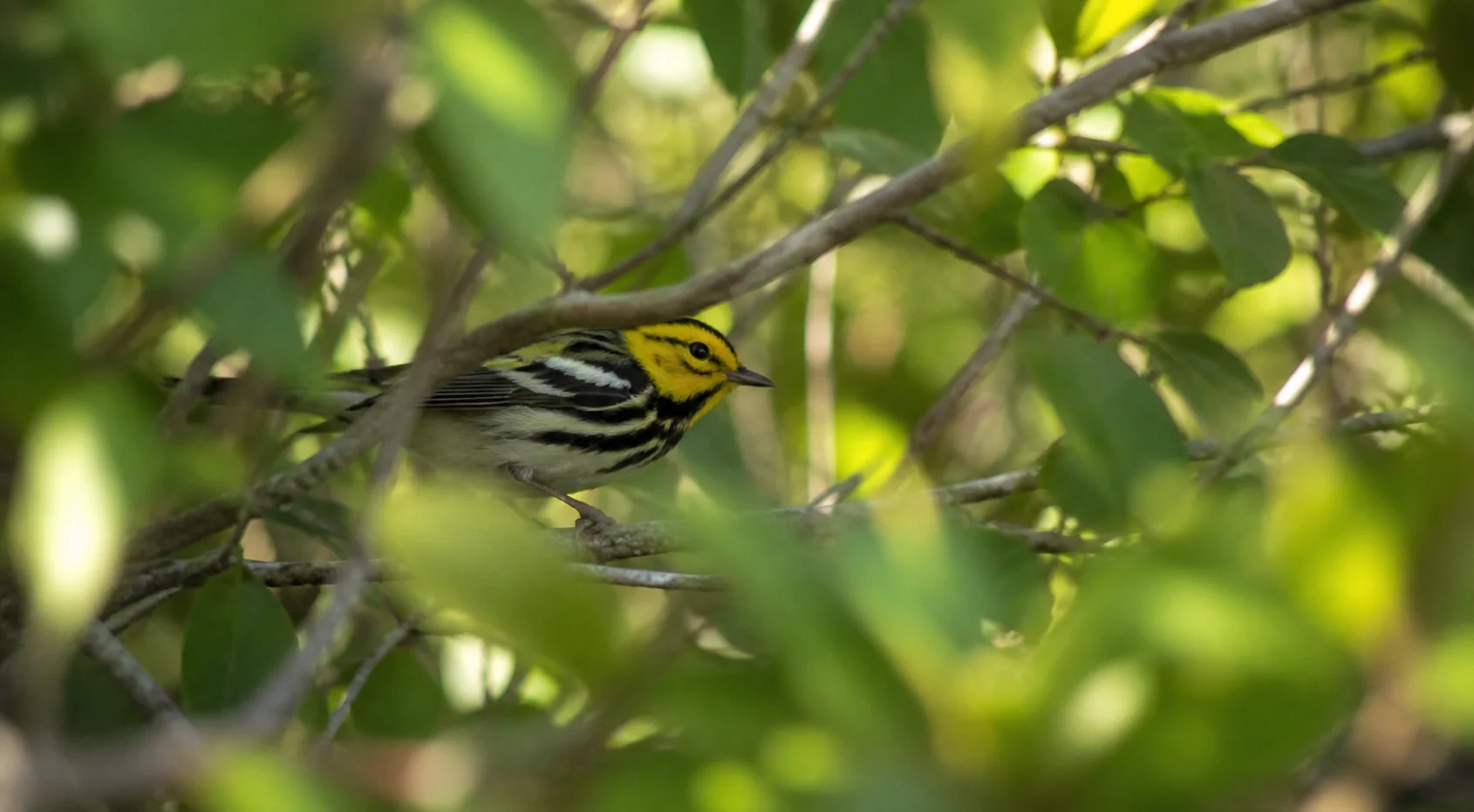
This is what most warblers look like in the field — a flash of color, partially hidden, gone before you can focus. Patience and stillness are the only strategy.
The Painted Bunting — Rockport's Most Wanted
No bird on the Texas coast stops people in their tracks like the male Painted Bunting (Passerina ciris). Electric blue head. Vivid red chest. Green back. Roger Tory Peterson called it "the most gaudily colored North American bird."
Painted Buntings breed along the Texas coast and winter in Central America and the Caribbean. Spring migration brings them back through Rockport in April and May — and some stay to nest in the coastal brush.
Females are a bright, clear lime-green — unusual for a songbird and equally beautiful once you know what you're looking at. Find a brush pile near water at dawn and wait. Buntings come to drink.
🎯 Best Chance
April–May at dawn near fresh water. The Connie Hagar Cottage Sanctuary and Goose Island brushy areas are reliable spots. Sit still, be quiet, wait.
What to Watch For — Spring Migration Highlights
Warblers
Yellow, Black-throated Green, Blackburnian, Wilson's, Common Yellowthroat, Yellow-rumped, Magnolia, Chestnut-sided
Buntings & Grosbeaks
Painted Bunting, Indigo Bunting, Rose-breasted Grosbeak, Blue Grosbeak
Tanagers
Scarlet Tanager, Summer Tanager, Western Tanager
Orioles
Baltimore Oriole, Orchard Oriole, Hooded Oriole, Bullock's Oriole
Flycatchers
Eastern Kingbird, Scissor-tailed Flycatcher, Great Crested Flycatcher, various Empidonax
Thrushes & Others
Veery, Swainson's Thrush, Gray-cheeked Thrush, Ruby-crowned Kinglet
When & Where to Go
Peak Timing
Best Spots
- 📍Connie Hagar Cottage Sanctuary — dense brush, reliable buntings
- 📍Goose Island State Park — live oak mottes, dawn chorus
- 📍Lamar Peninsula thickets — Red Bay and Yaupon habitat
- 📍Little Bay waterfront — orioles and tanagers in the trees
- 📍Linda Castro Nature Sanctuary — sheltered coastal habitat
- 📍Any coastal live oak motte after a cold front
Window Strikes & Migration Mortality
The Black-throated Green Warbler found on the Lamar Peninsula likely died from a window strike — one of the leading causes of bird mortality in North America. An estimated 600 million to 1 billion birds die from window collisions in the US each year. Exhausted migrants fresh off the Gulf crossing are especially vulnerable.
Simple fixes make a real difference: window decals, screens, or applying tape in a grid pattern breaks up the reflection that birds can't distinguish from open sky. During migration season (April–May, September–October), turning off unnecessary lights at night also helps — many migrants navigate by stars and artificial light disorients them.