Rockport, Texas · Free · Open Daily
Linda S. Castro Nature Sanctuary
A 4.5-acre urban oasis hiding in plain sight on Hwy 35 — native plant gardens, an ephemeral pond, a rare coastal forest, and one of the best butterfly spots on the Texas Gulf Coast.
The Best-Kept Secret on Hwy 35
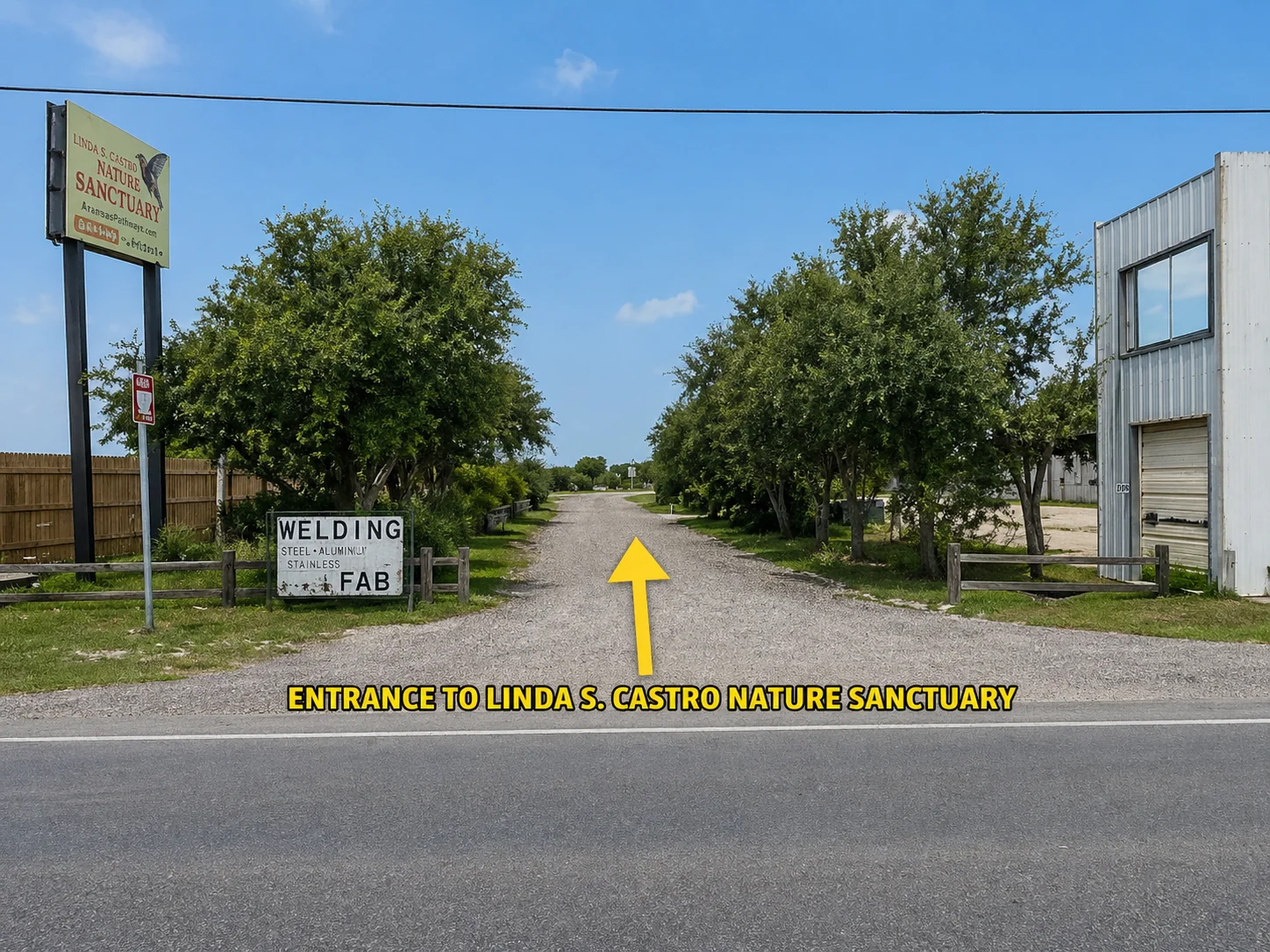
Drive past it and you’d never know it was there. The entrance to the Linda S. Castro Nature Sanctuary is a gravel drive tucked between a welding fabrication shop and an old abandoned restaurant on Highway 35 — easy to miss, impossible to forget once you’ve been inside.
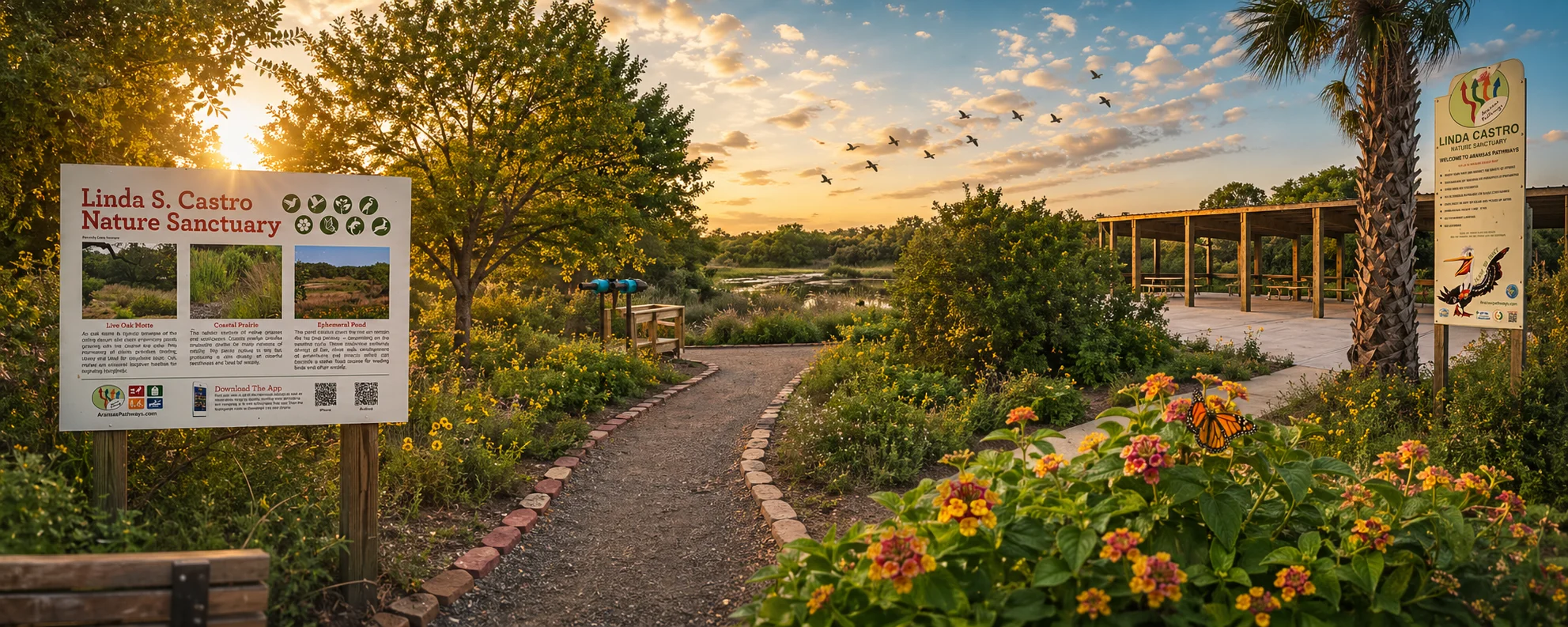
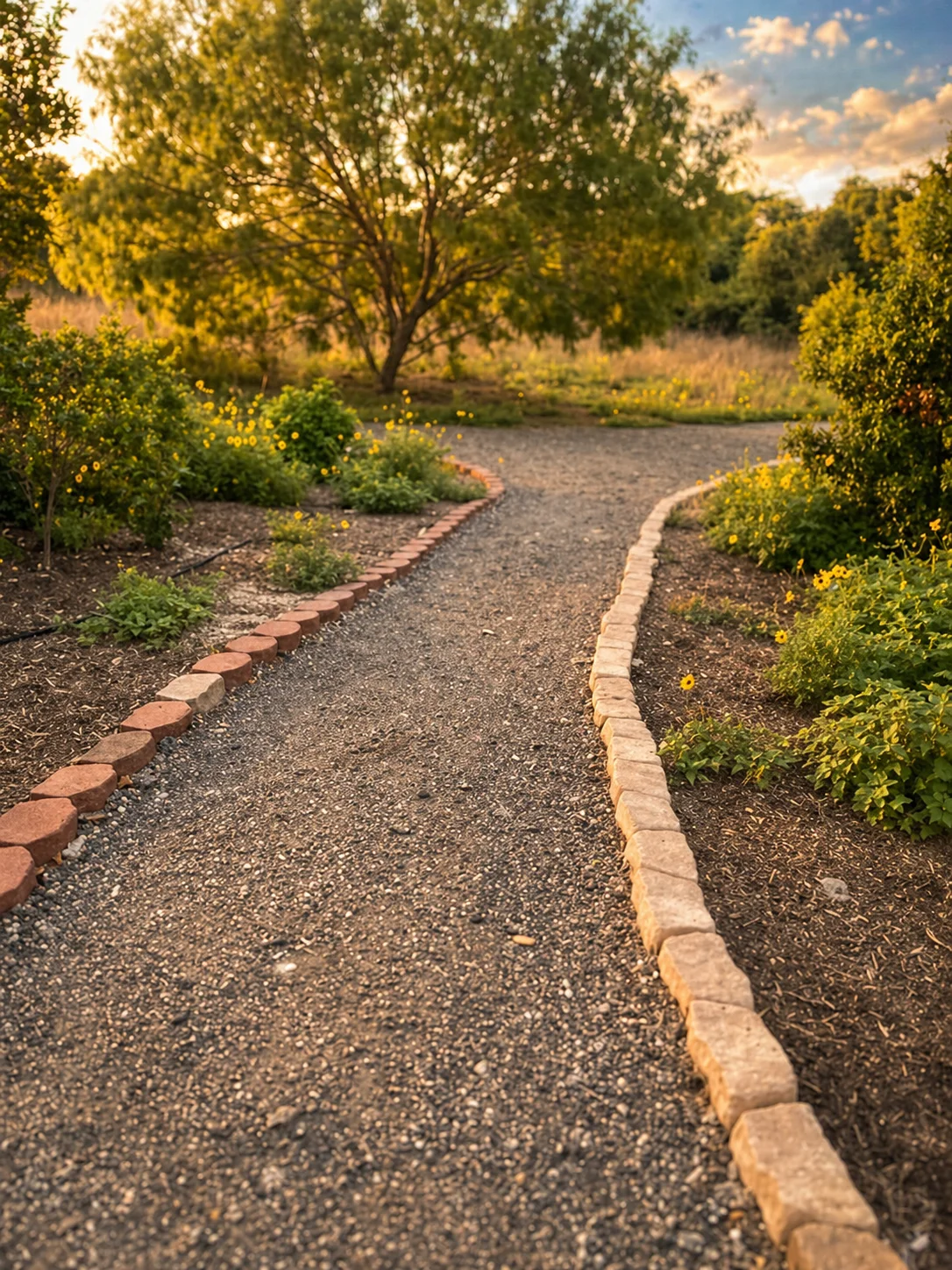
What’s behind that gravel drive is remarkable: 4.5 acres of meticulously maintained native Texas habitat with brick-edged garden paths winding through wildflowers, a viewing platform with mounted binoculars overlooking a wetland pond, a covered pavilion, hummingbird feeders, and trails into one of the rarest forest types in the state.
Managed by Aransas Pathways and the Mid-Coast Chapter of Texas Master Naturalists, the sanctuary has been called a birding “hotspot” — but it’s just as valuable for butterflies, pollinators, and anyone who wants to understand what the Texas coast looked like before everything else was built over it.
The Woman Behind the Name
Who Was Linda S. Castro?
Linda S. Castro was a child psychologist with a deep love of nature. She owned this property on Hwy 35 and spent weekends here, dreaming of one day retiring to the land she loved. She passed away before that dream could be realized.
After her death, her mother Mary Jo Castro and sister Sandra Castro Richards held the property. Aransas Pathways eventually approached the family about acquiring it as a nature sanctuary. According to Sandra, the family agreed because Linda’s lifelong love of nature made this the right way to honor her memory.
The sanctuary broke ground in fall 2013 and opened in May 2014 — built largely by volunteers. Every native plant, every garden path, and every bird that passes through is part of a legacy her family chose to share with the public.
“It will become one of the premier birding attractions on the Texas coast and will draw nationwide interest.”
— Debra Corpora, Aransas Pathways Birding Technical Committee
Source: Coffee News Corpus Christi, May 2, 2014
How to Find It
On Hwy 35 North — look for the gravel drive between the welding fab shop on the left and the building on the right. The small sanctuary sign is easy to miss at road speed. 4041 Hwy 35, Rockport, TX
Three Habitats in 4.5 Acres
Live Oak Motte
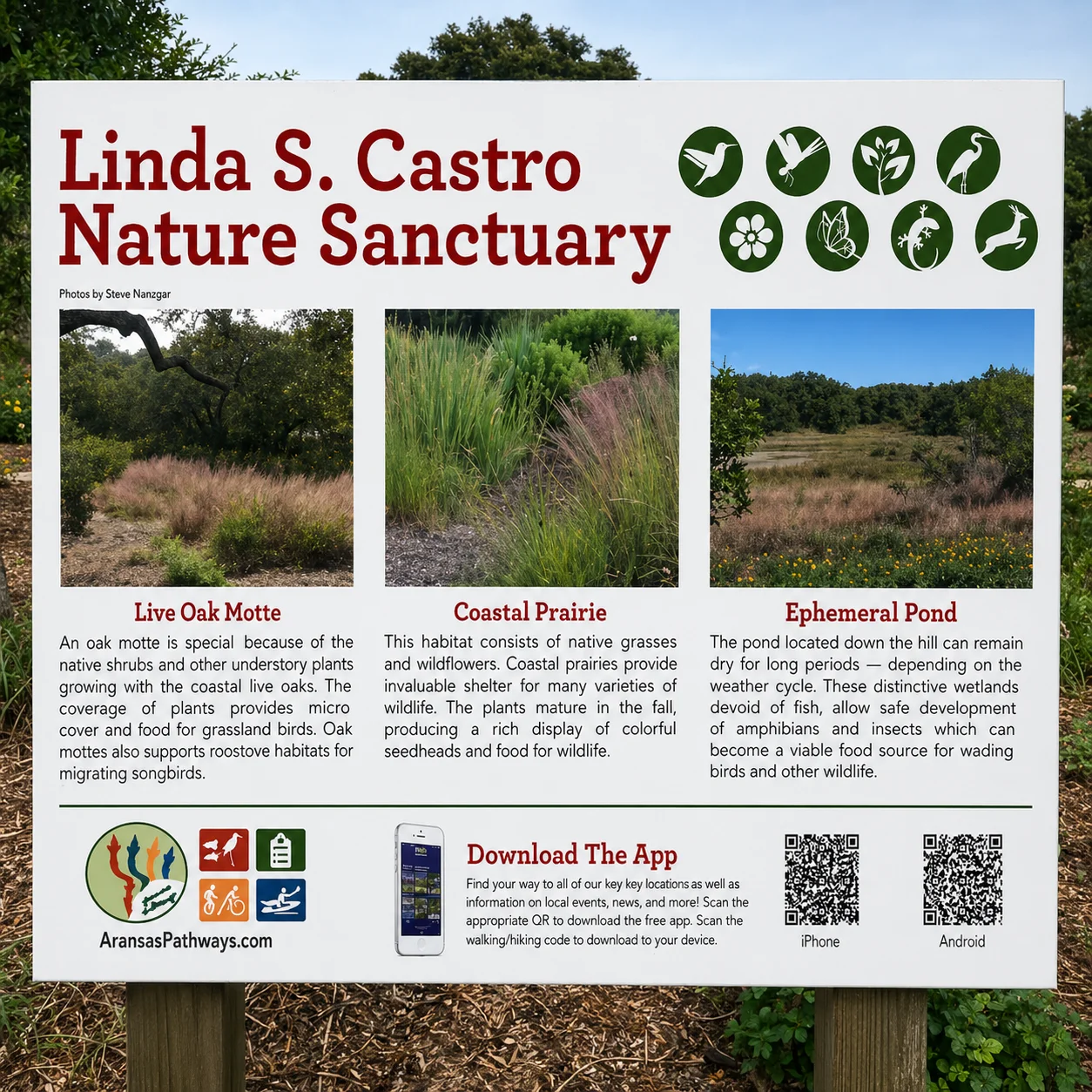
A coastal live oak forest with native understory shrubs and plants providing dense micro-cover and food for grassland birds. Oak mottes are among the most valuable stopover habitats for migrating songbirds — small, dense, and packed with insects after a cold front. During spring migration, this grove concentrates warblers, tanagers, and orioles.
Coastal Prairie
A remnant of the native grassland that once covered most of coastal Texas. The sanctuary’s “pocket prairie” trail winds through native grasses and wildflowers that explode with color in fall — and with pollinators year-round. Coastal prairie is one of the most endangered habitat types in North America; less than 1% of the original Texas coastal prairie survives.
Ephemeral Pond
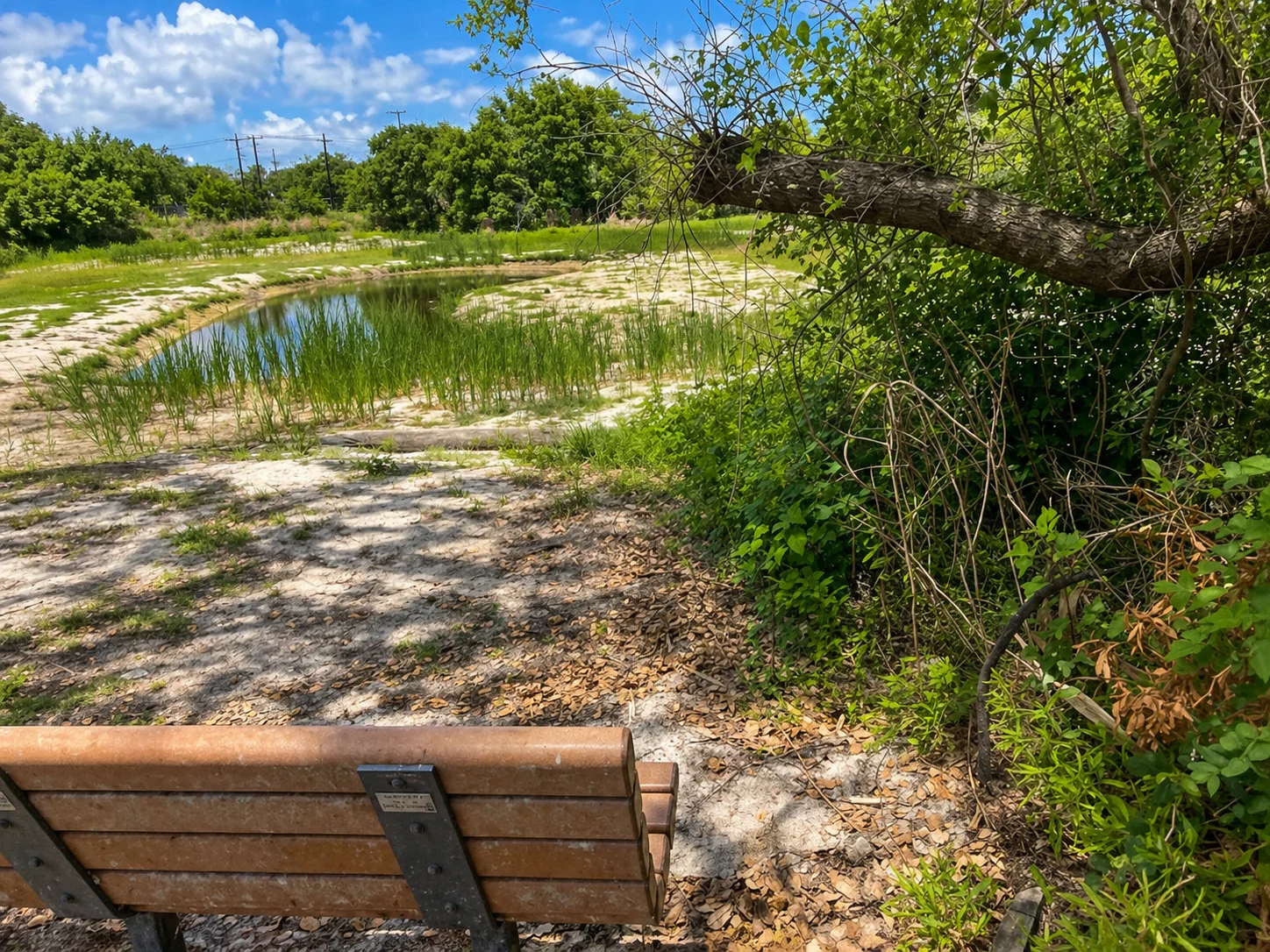
A seasonal wetland that fills with the weather cycle and dries during drought. Because it has no fish, the pond is safe for amphibians and aquatic insects to develop — which makes it a rich food source for wading birds. From the viewing platform above, scan for herons, egrets, and shorebirds working the shallow edges.
The Rarest Thing Here
A Forest Found in Only 5 Texas Counties
Walk the trail along the south side of the ephemeral pond and you enter something most Texans have never seen: a native Live Oak-Redbay Forest — a rare coastal woodland type found in only five counties in the entire state of Texas. Aransas County is one of them.
The Redbay tree (Persea borbonia) is a broadleaf evergreen that was once common in the understory of Gulf Coast forests. It produces small dark-blue fruits that migratory birds — particularly warblers and thrushes — rely on during fall migration. The sanctuary preserves one of the few intact examples of this forest type anywhere on the Texas coast.
A Monarch Waystation & Butterfly Garden
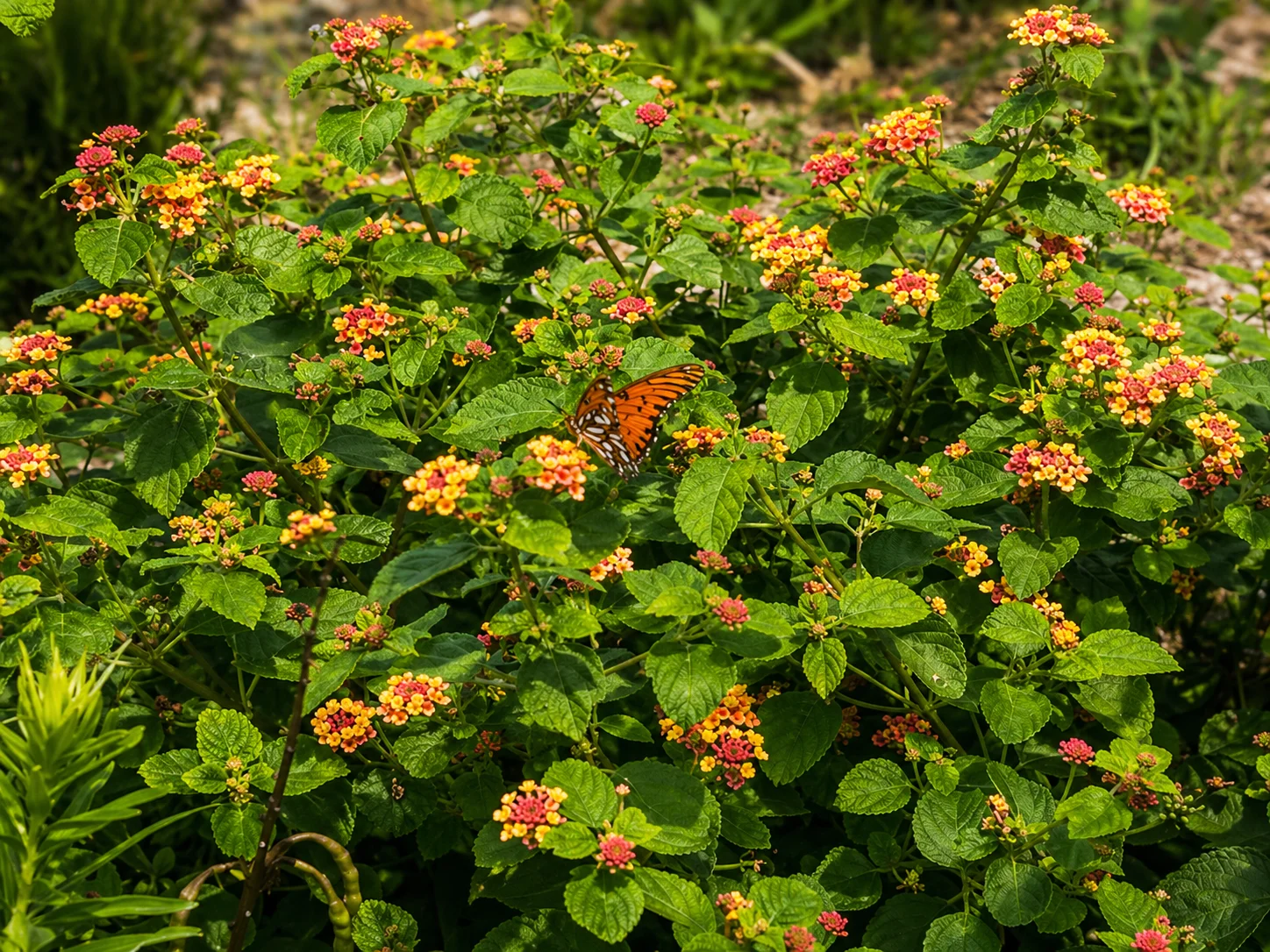
The sanctuary is a certified Monarch Waystation — one of a network of sites across North America that provide milkweed and nectar plants essential for the Monarch butterfly migration. Every October, Monarchs funnel through the Texas coast on their way to Mexico, and the sanctuary’s lantana, milkweed, and native wildflowers give them fuel for the journey.
Gulf Fritillaries, Queen butterflies, and Black Swallowtails are present most of the year. The landscaping was designed specifically to support pollinators — over 200 native plant species have been documented on the 4.5-acre property, an extraordinary density of plant diversity for such a small urban site.
Visit Information
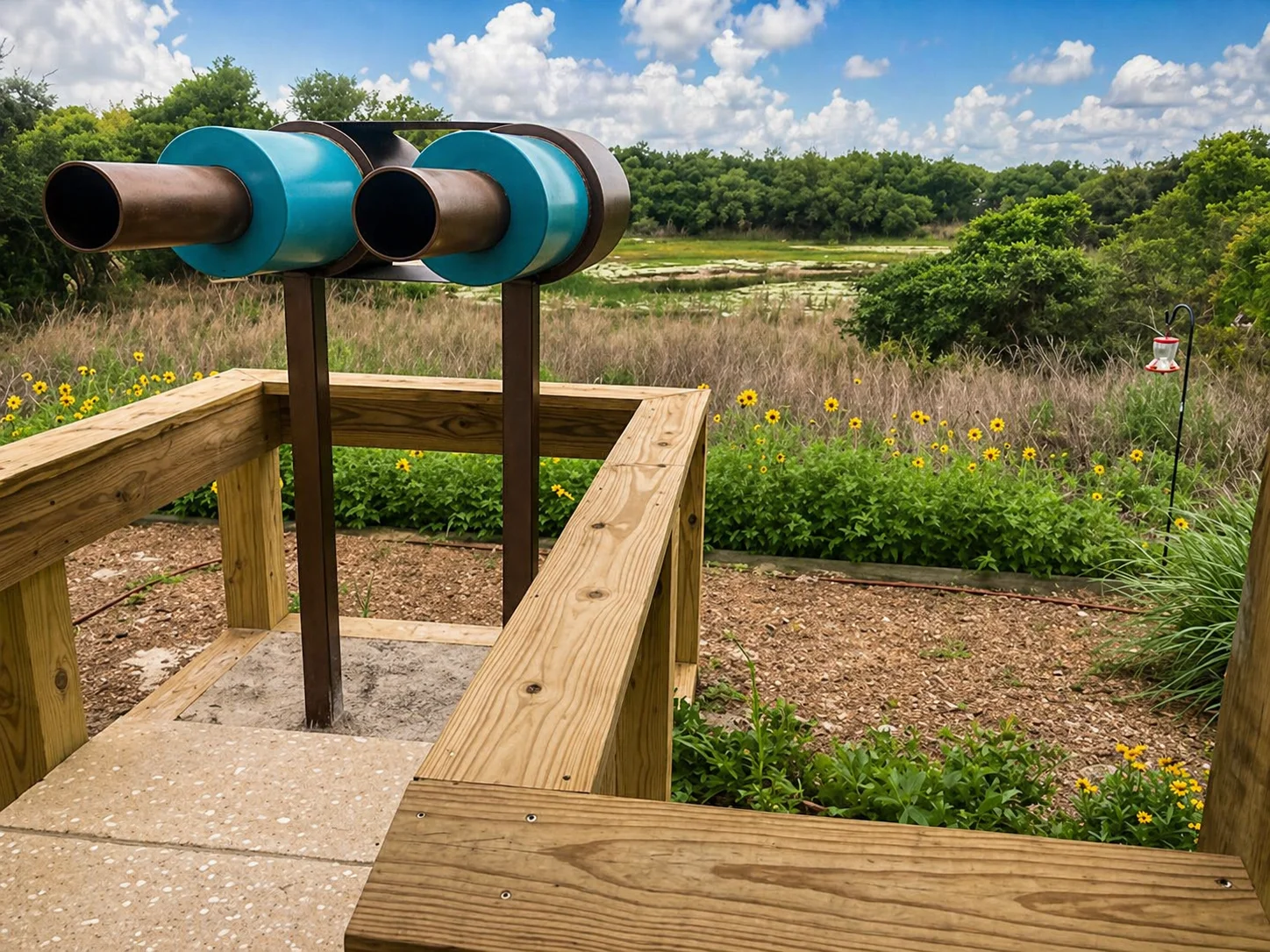
Elevated viewing platform with mounted binoculars overlooking the ephemeral pond. Hummingbird feeders on the railing.
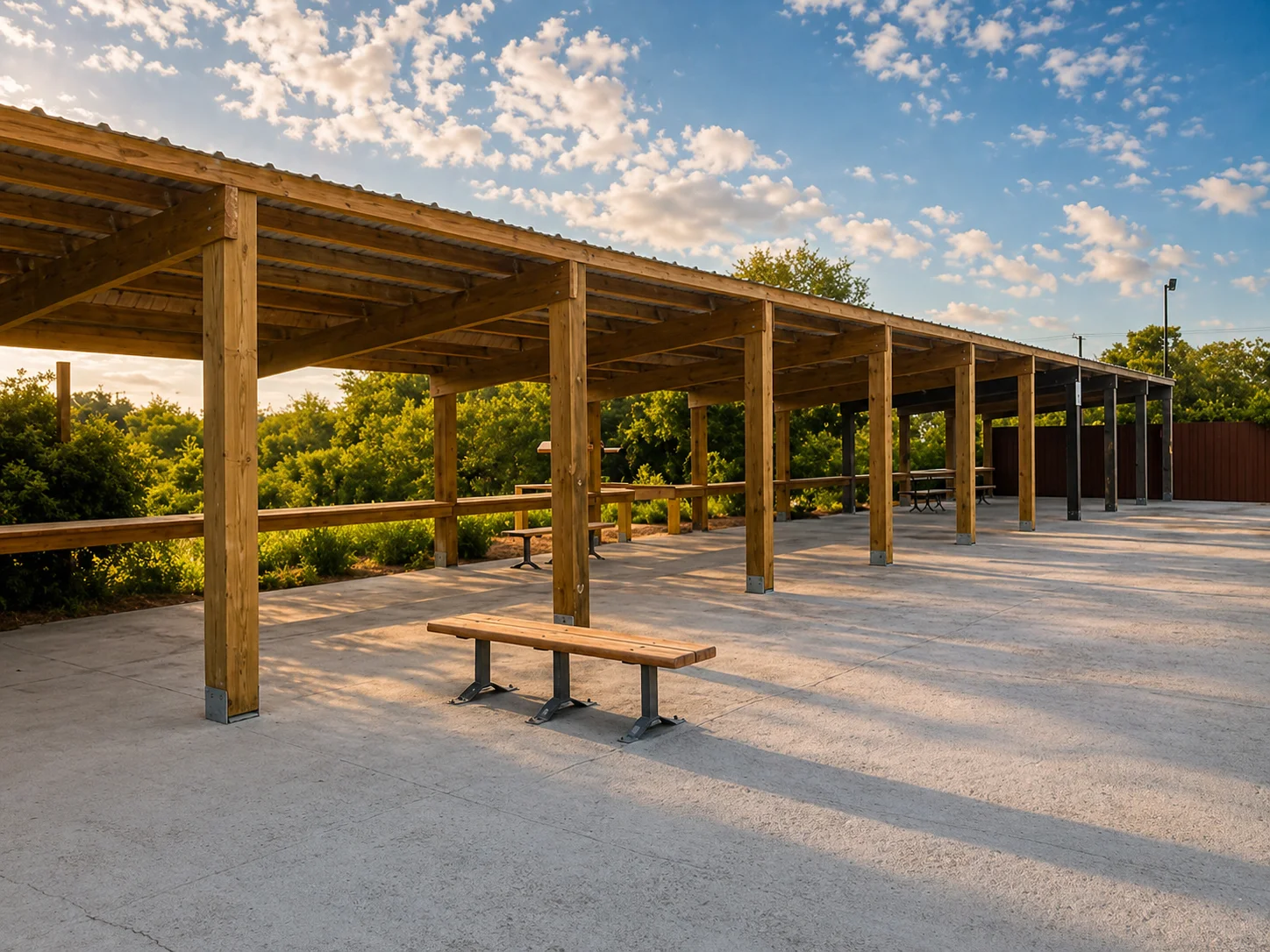
The covered pavilion — a full-length open-air structure ideal for group visits and education programs.
What to Bring
- · Binoculars (scopes provided on platform)
- · Water — no facilities on site
- · Camera for butterflies and wildflowers
- · iNaturalist app for plant ID
“No visit to Rockport is complete without visiting Linda Castro.”
— Aransas Nature Fest Guide