Native Plants of Coastal Texas
Yaupon — America’s Forgotten Tea
The only caffeinated plant native to North America grows wild right here on the Texas coast — and it once threatened to upend the entire British tea trade.
The Story You Were Never Told
They Named It “Black Vomit” to Kill It
By the mid-1700s, American colonists had discovered something remarkable: a native holly shrub growing along the southeastern coastline produced leaves that, when dried and roasted, made a smooth, richly flavored tea with a clean caffeine lift. Indigenous peoples had known this for thousands of years. The colonists packaged it, shipped it from Charleston to London, and called it Cassina Tea. It was becoming fashionable in England.
The East India Company — which held a monopoly on the enormously profitable trade in Chinese and Indian tea — was not pleased. What happened next is one of the more brazen acts of botanical sabotage in history: English botanists gave the American plant the Latin name Ilex vomitoria. Not because it caused vomiting in ordinary use — it doesn’t. But the name stuck, the reputation spread, and Cassina Tea quietly disappeared from English parlors.
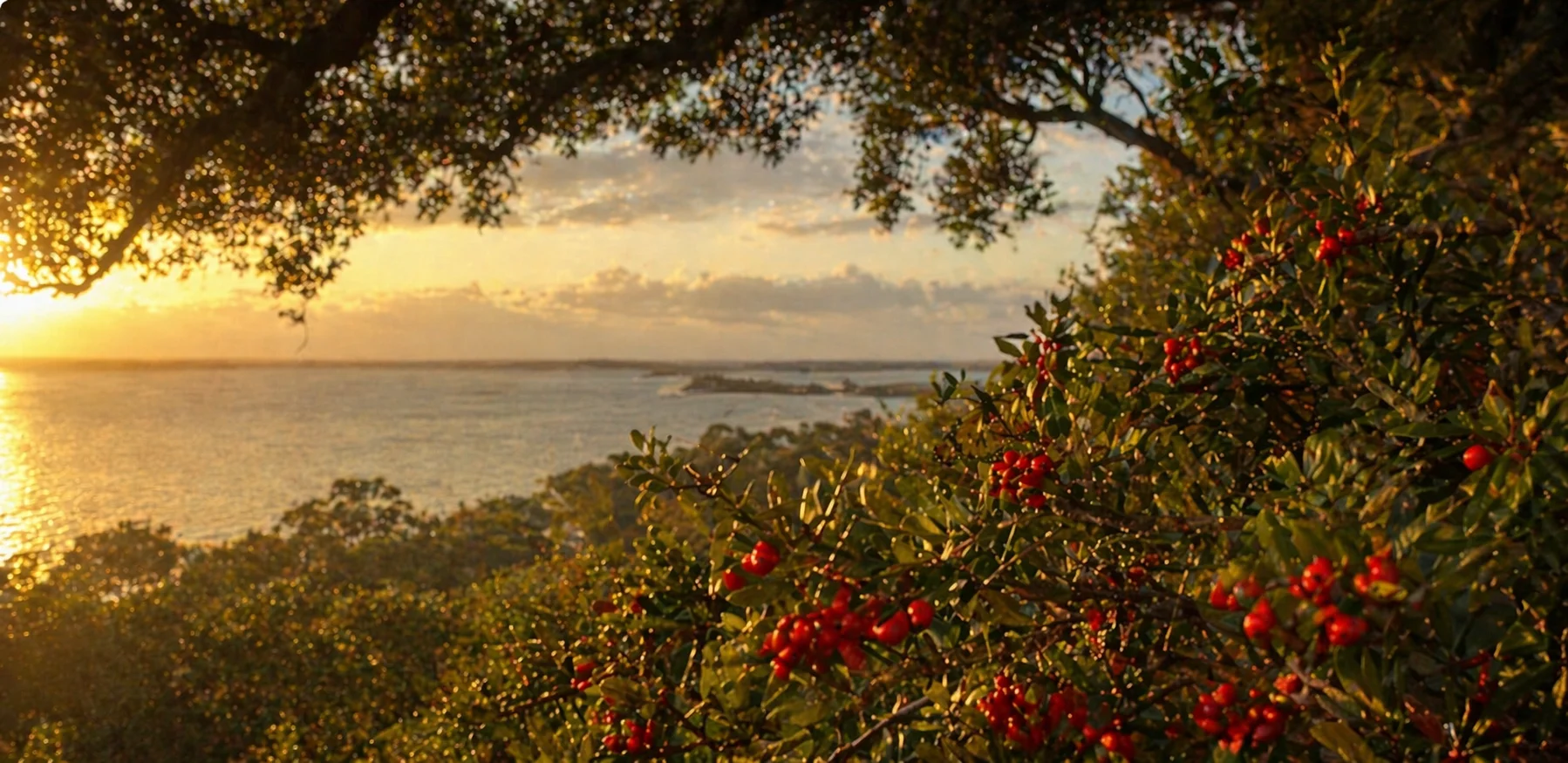
The plant didn’t disappear. It kept growing — right here on the Texas coast, under the live oaks, producing berries that birds have been eating for millennia. It just lost its name.
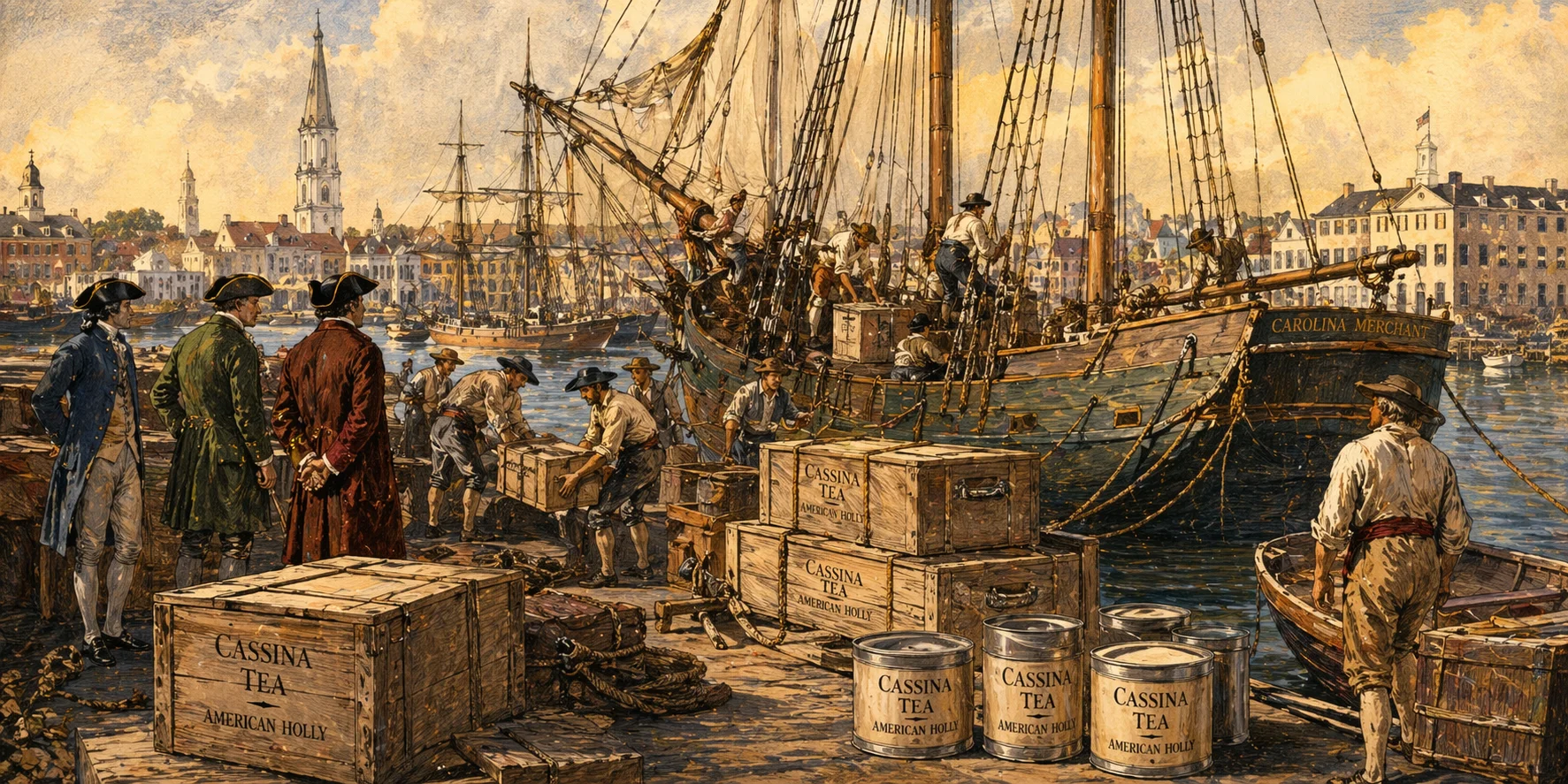
Charleston harbor, circa 1750 — Cassina Tea was loaded onto merchant schooners bound for London before the East India Company moved to suppress it
The Plant Growing in Your Backyard
Yaupon Holly (Ilex vomitoria) is a small to medium native shrub that grows as understory beneath the live oaks all along the Texas Gulf Coast. It’s so common and so well-adapted to the coastal environment that many people walk past it every day without a second glance. Landscapers use cultivated hybrid varieties as decorative hedges — but those clipped suburban versions are a far cry from the wild, leggy plants growing in the coastal thickets of Aransas County.
Yaupon is dioecious — meaning there are separate male and female plants. Only the female produces the clusters of small, bright red berries that ripen in fall and persist through winter. The male plants produce the pollen needed to fertilize them. Both have small, oval, slightly toothed leaves with a waxy surface.
The leaves contain caffeine, theobromine (the same compound found in dark chocolate), and chlorogenic acids — a combination that produces a smooth, sustained energy without the jittery edge of coffee. Modern yaupon tea companies have begun reviving the tradition, but the wild plant has been here all along.
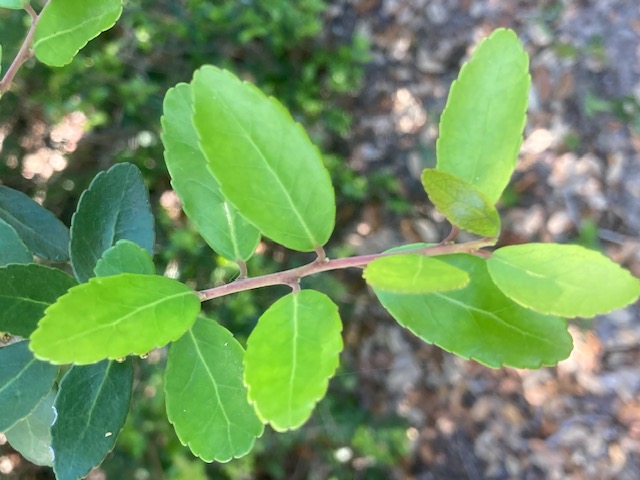
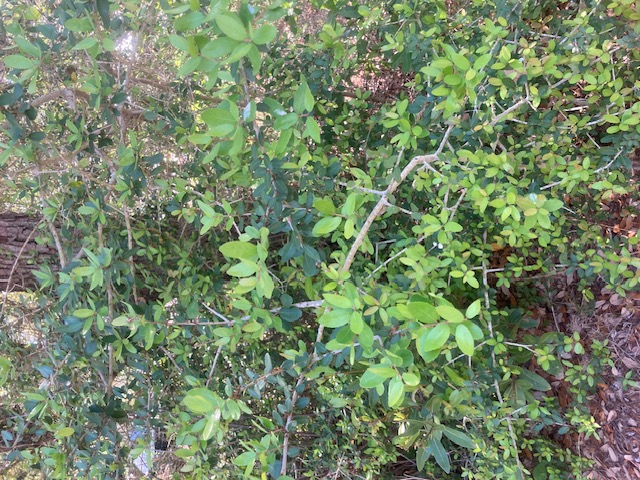
Wild yaupon growing as understory beneath live oaks — exactly as it has for thousands of years along the Texas coast
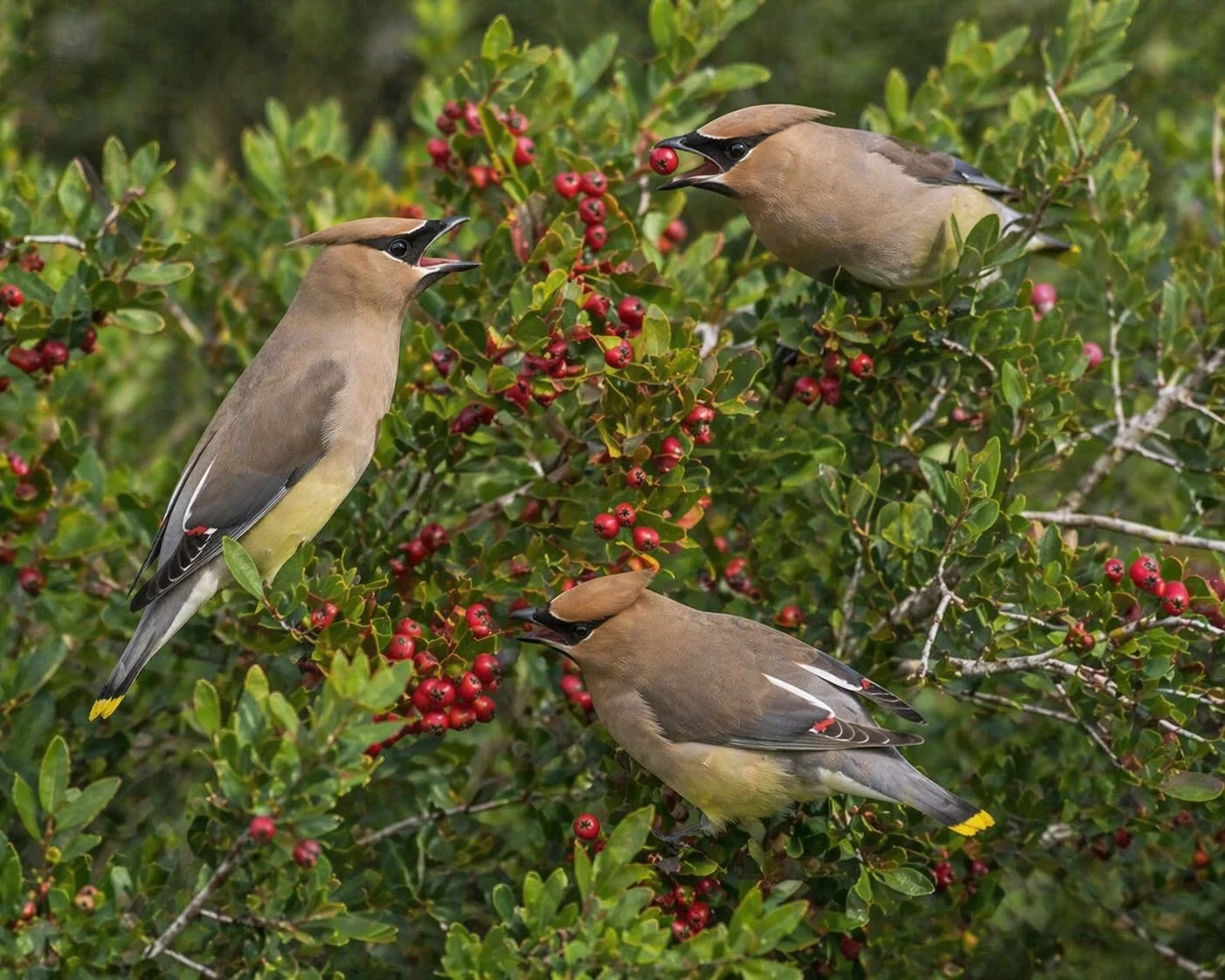
Cedar Waxwings descend on yaupon berries in winter — sometimes stripping an entire shrub in an afternoon
The Plant That Feeds the Birds
The red berries that ripen on female yaupon plants each fall are one of the most important food sources for wintering songbirds on the Texas coast. Cedar Waxwings arrive in flocks of dozens and descend on a loaded yaupon like a feathered harvest crew — methodical, efficient, and breathtaking. American Robins, Northern Mockingbirds, Hermit Thrushes, and Yellow-rumped Warblers all rely heavily on yaupon berries through the winter months.
This is why native plants matter. The birds aren’t here by accident — they evolved alongside these plants over thousands of years. Remove the yaupon understory, and you remove the food source that keeps these species alive through January and February.
Making Yaupon Tea
The Karankawa people who lived on this coast for thousands of years used yaupon in ceremony and daily life long before European contact. The process they used — harvesting leaves, roasting them over fire, then steeping in hot water — is essentially the same method used today.
One distinction worth noting: most commercial yaupon tea producers harvest from wild or semi-wild plants, not the clipped ornamental cultivars sold at nurseries. Those landscape varieties were selected for compact growth and appearance, not leaf quality. Whether that difference matters to your cup is something you can test yourself — wild-harvested yaupon is what you’ll find in every commercial producer’s product.
Lightly roasting the dried leaves before steeping reduces any bitterness and develops a smooth, slightly toasty flavor that surprises most first-time drinkers. It tastes nothing like what the name Ilex vomitoria suggests — it tastes, frankly, quite good.
⚠ Know Your Plant Before You Brew
The key identifier: yaupon leaves grow in an irregular, staggered pattern along the stem. Chinese Privet — a common Texas shrub with similar-looking leaves — grows its leaves in neat, paired rows directly opposite each other, and is mildly toxic.
The forager’s mnemonic: Chaos = Caffeine. If the leaves look too neat and organized, it’s not yaupon.
When in doubt, don’t brew it. Confirm your identification before harvesting.
Simple Yaupon Preparation
- 1.Harvest young leaves from wild native yaupon — not the ornamental cultivars sold at nurseries
- 2.Spread leaves on a baking sheet and roast at 350°F for 8–12 minutes until lightly browned
- 3.Steep 1–2 teaspoons of roasted leaves in hot water (not boiling) for 3–5 minutes
- 4.Strain and drink — no sweetener needed on a good batch
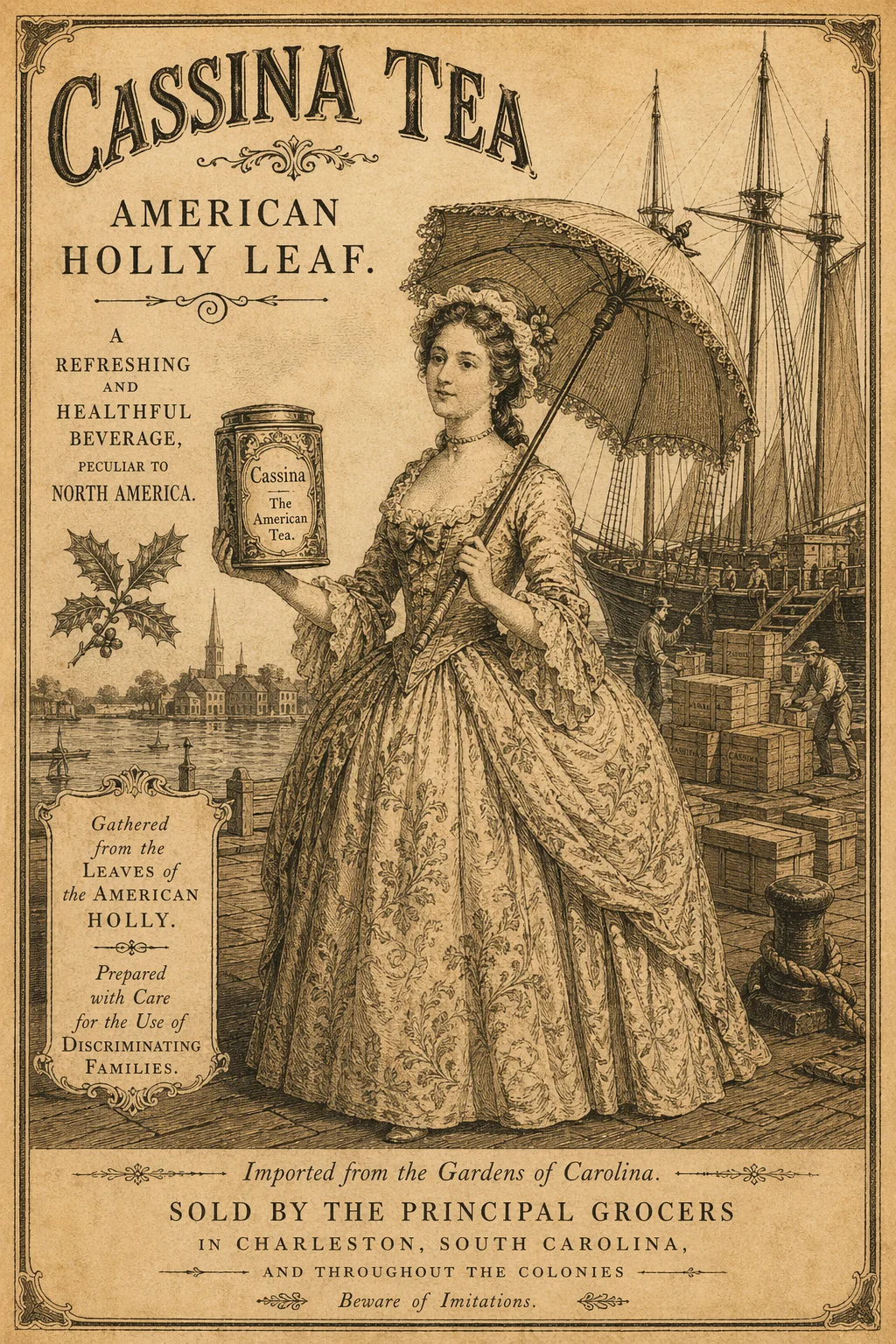
Historical Record
Cassina Tea — The American Holly
Period advertisements for Cassina Tea promoted it as a healthful alternative to imported teas, emphasizing its American origin and gentle character. The marketing was effective — which is precisely what made it a threat.
The same plant advertised in these broadsides grows wild today along Lamar Beach Road, under the live oaks at Goose Island, and in the coastal thickets throughout Aransas County.
Native Plant Companions
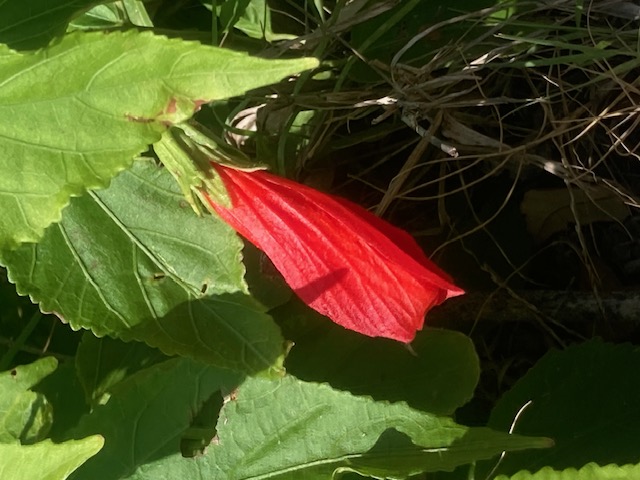
Turk’s Cap
Malvaviscus arboreus
A native Texas hibiscus with small, distinctively drooping red flowers that never fully open. Blooms spring through frost and attracts Painted Buntings, hummingbirds, and butterflies simultaneously. Thrives in coastal shade under live oaks — often growing alongside yaupon in the same understory.
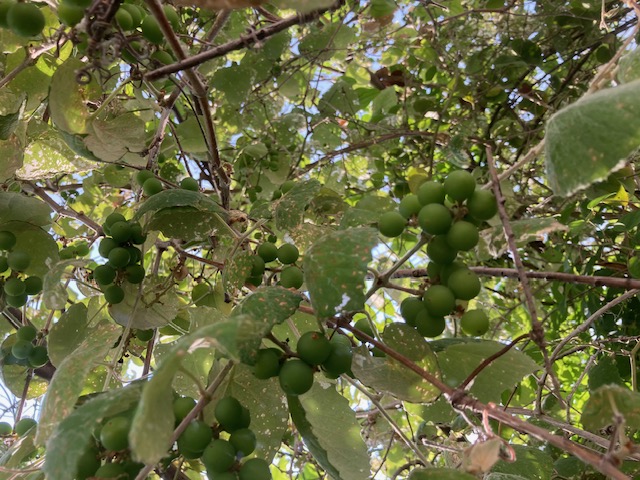
Mustang Grape
Vitis mustangensis
A vigorous native vine that drapes over live oaks and coastal shrubs throughout Aransas County. The tart purple grapes ripen in summer and are a favorite of mockingbirds, cardinals, and a dozen other species. Intensely flavored — the basis of traditional Texas mustang grape jelly — and an important component of the coastal wildlife habitat.