
October Migration
Monarch Butterflies in Rockport
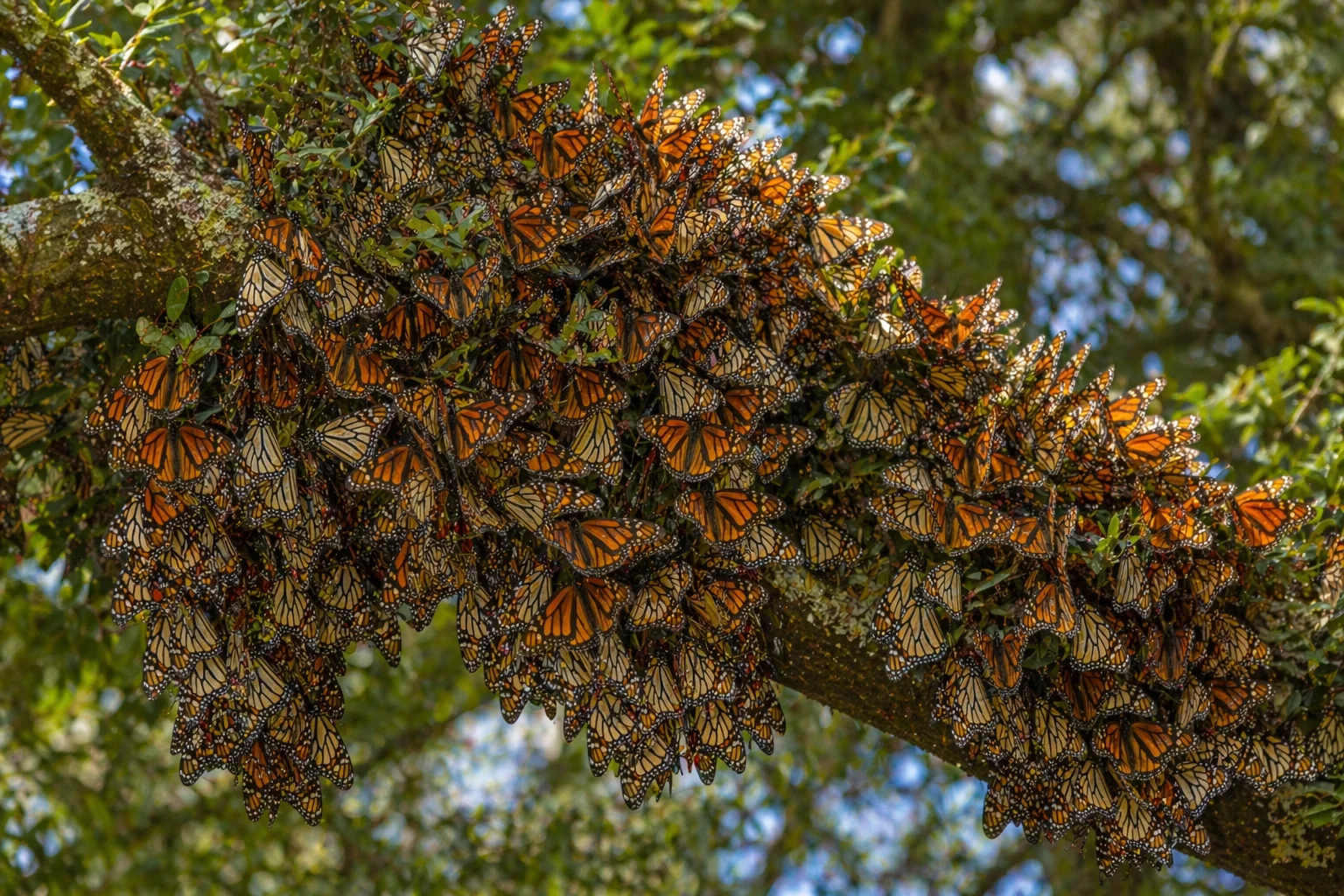
Millions of Danaus plexippus funnel through the Texas coast each fall — and the live oaks of Rockport are a front-row seat.
The Greatest Insect Migration on Earth
Every fall, hundreds of millions of Monarch Butterflies make a journey of up to 3,000 miles from the northern United States and Canada to a small cluster of mountain forests in central Mexico — the same forests their great-grandparents left the previous spring. No individual butterfly has ever made the round trip. They navigate by the sun and Earth’s magnetic field to a place they have never been.
Rockport sits directly on the primary eastern migration corridor. The Gulf Coast acts as a funnel — butterflies traveling south and west converge on the Texas coast before crossing into Mexico. During peak migration, a single live oak tree in Rockport can hold thousands of butterflies roosting overnight, their wings folded like dead leaves until the morning sun warms them into flight.
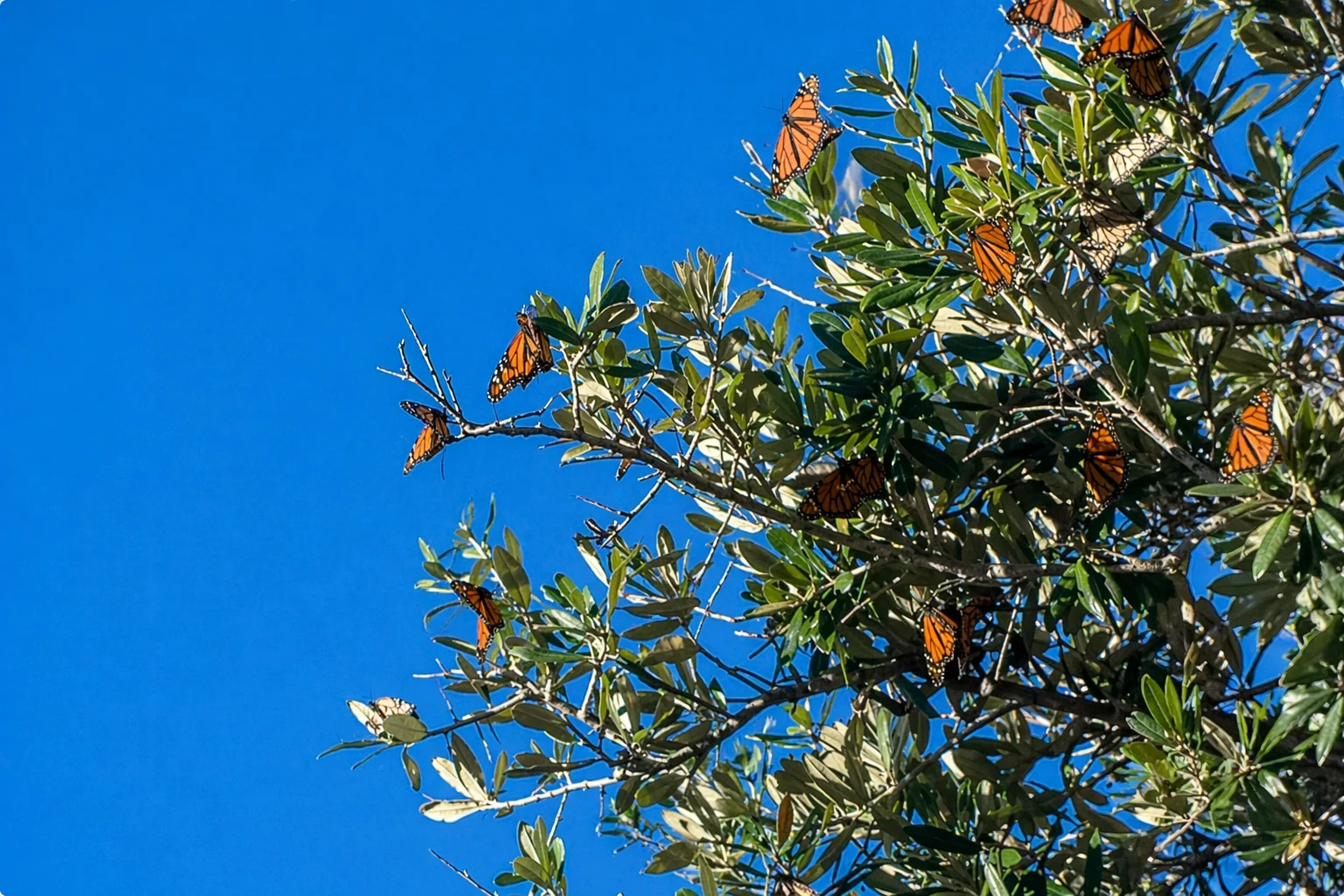
A live oak loaded with Monarchs — a common October sight along the Rockport waterfront
When & Where to See Them
Peak window: Early to mid-October
Migration intensifies after the first cold front pushes through — butterflies move in waves. Watch the forecast.
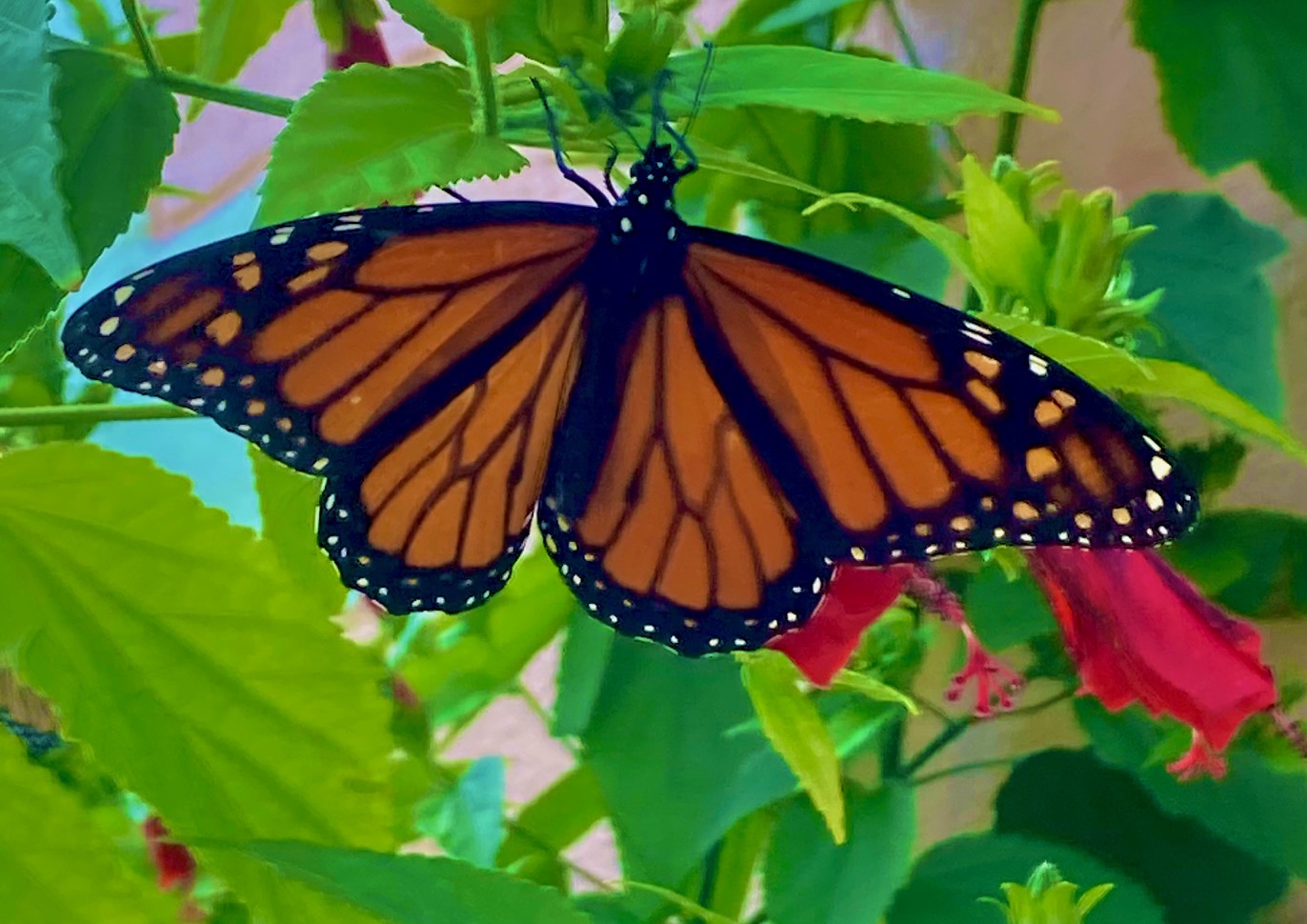
Monarch nectaring on Turk’s Cap — a native Texas plant that provides critical fuel for the journey south
Why Native Plants Matter
Monarch caterpillars can only eat milkweed — and adult butterflies need nectar-rich native plants to fuel a 3,000-mile journey. Coastal Texas wildflowers, native sunflowers, and plants like Turk’s Cap provide critical refueling stops that determine whether a butterfly reaches Mexico or doesn’t make it.
The Monarch population has declined over 80% in the last two decades, driven by habitat loss and milkweed elimination. Every native plant garden along the Texas coast is genuinely conservation work.
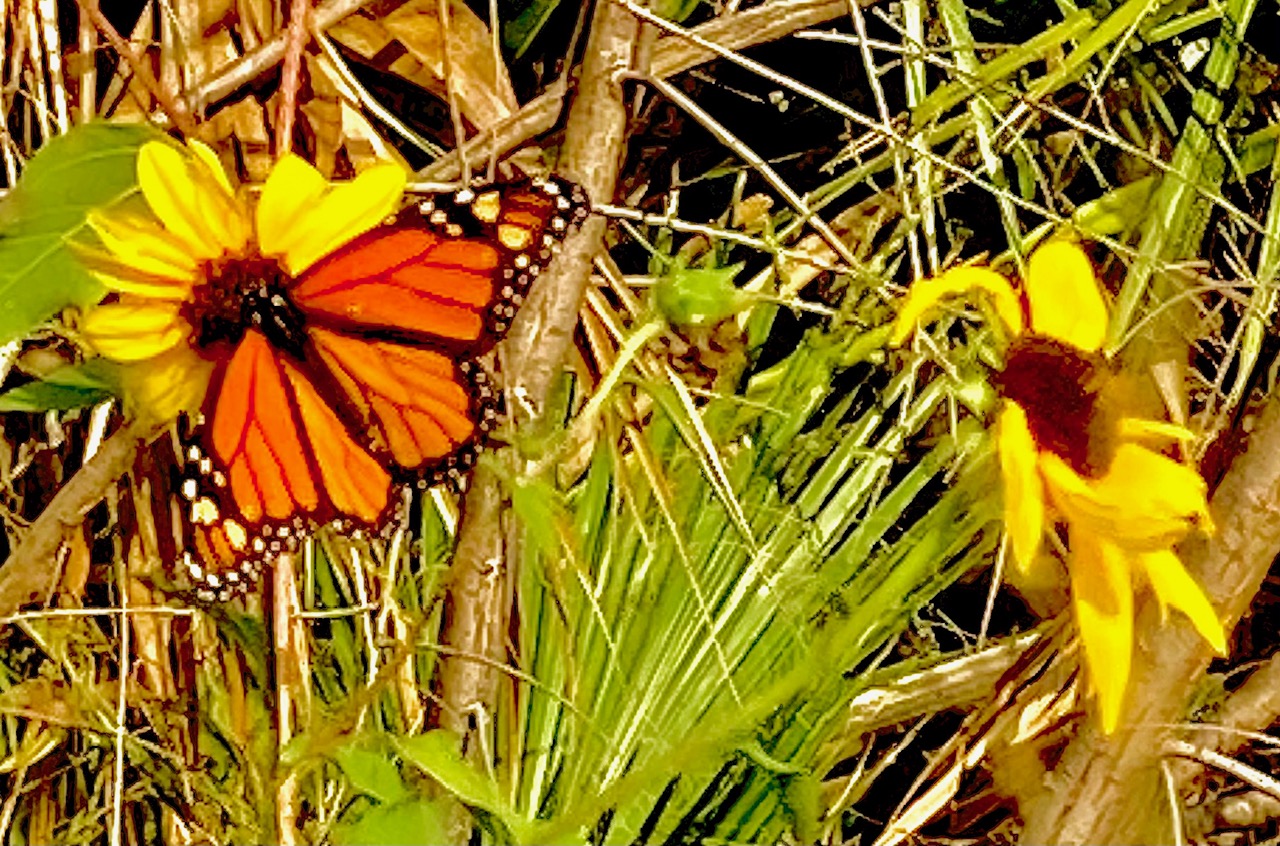
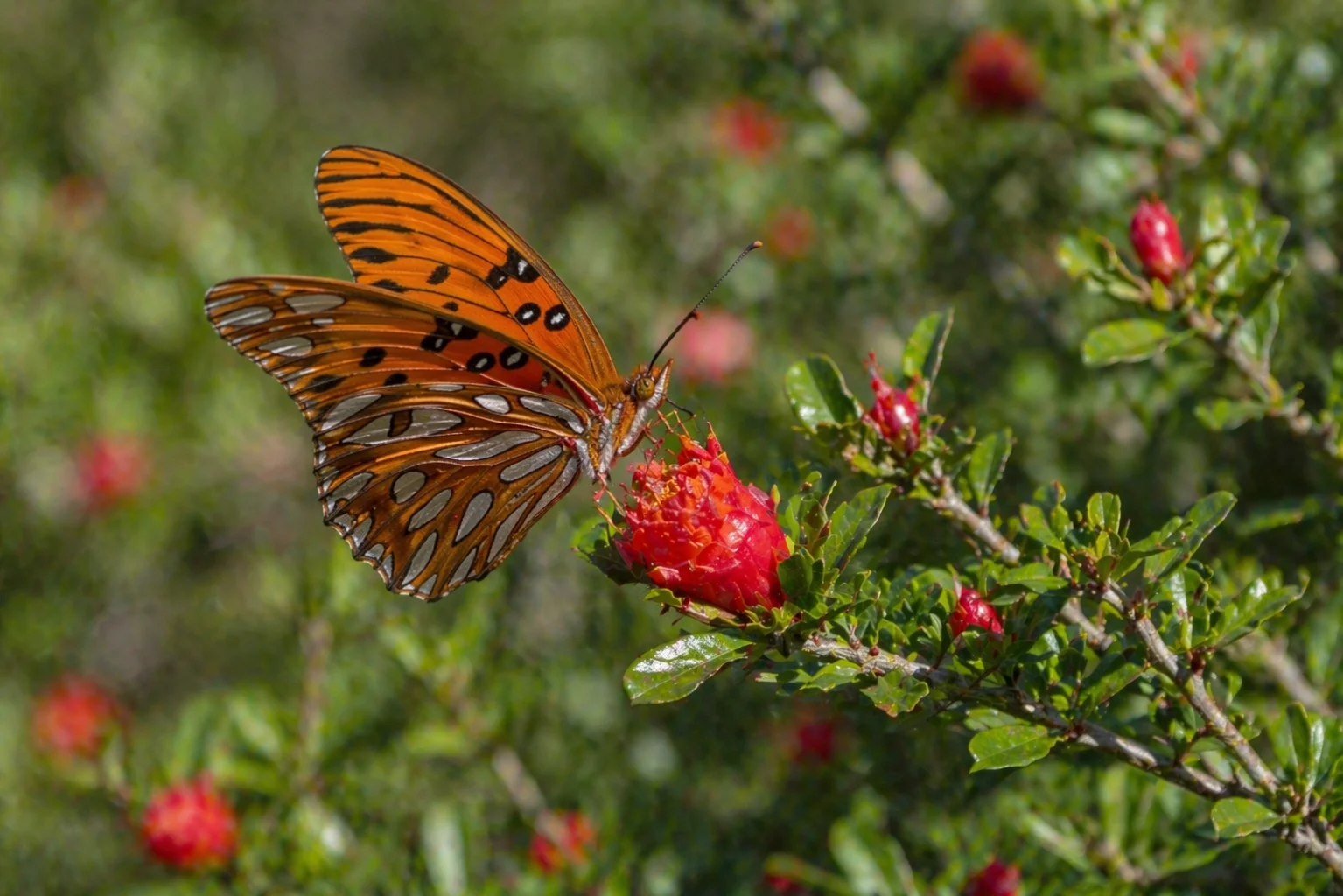
Gulf Fritillary (right) — another stunning orange butterfly common in Rockport alongside the Monarch