Rockport Songbirds
Red Birds of Texas
Rockport is home to some of North America’s most stunning red birds — and sorting them out is half the fun.
The word “redbird” is used loosely in Texas — it covers several completely different species that share little beyond their color. Sorting them out is part of what makes birding in Rockport so rewarding. The Northern Cardinal is the one everyone knows. The Vermilion Flycatcher is the one that stops people in their tracks. And the Painted Bunting is the one that makes experienced birders reach for their cameras.
All three are found in Rockport, often within a mile of each other.
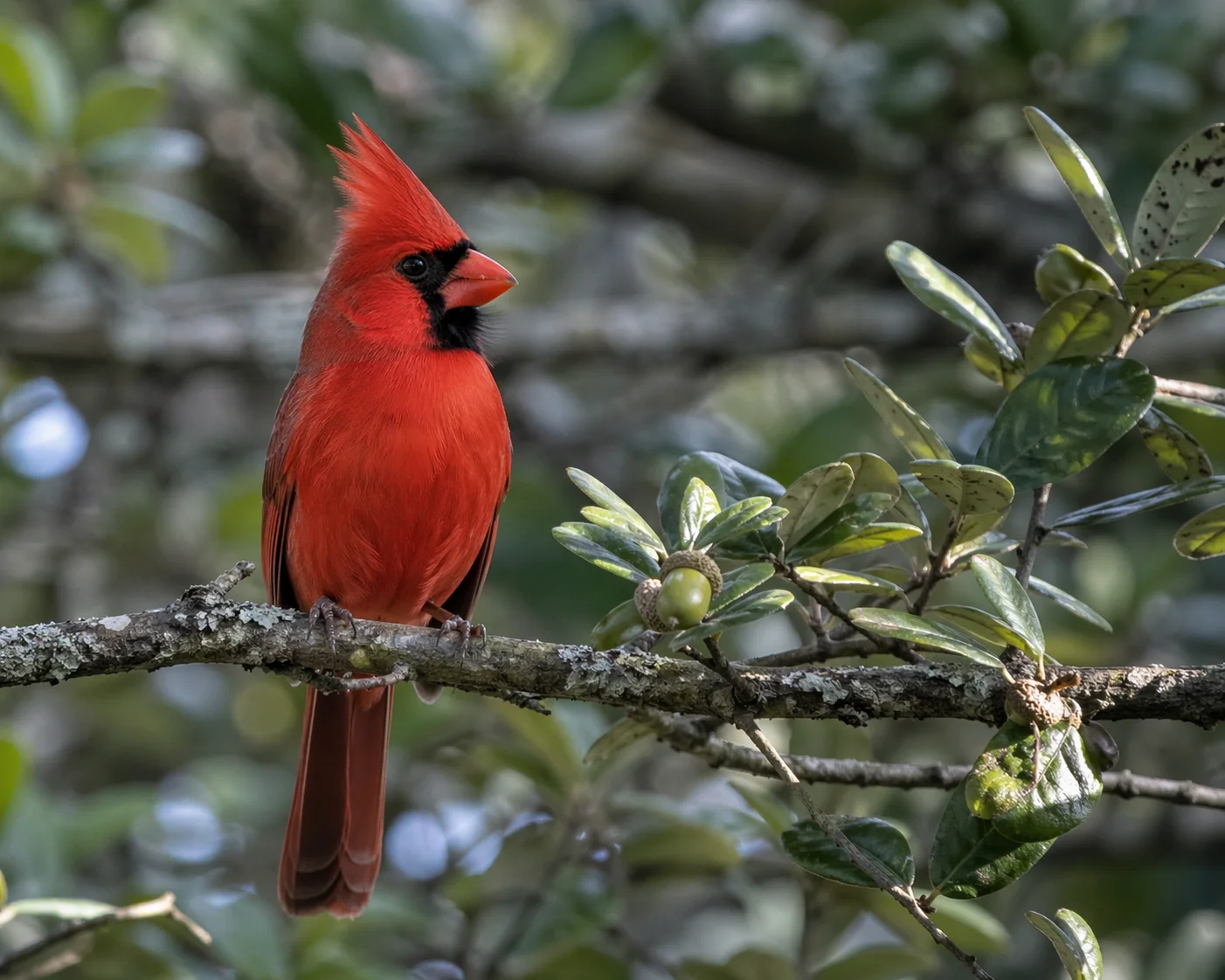
Cardinalis cardinalis
Northern Cardinal
The classic "redbird" of the American South. The male is unmistakably brilliant red from crest to tail with a black mask and heavy orange bill. Common in Rockport's live oak thickets, backyard feeders, and native shrub borders year-round. The female is a warm buff-brown with red tinges on the wings, crest, and tail — elegant in her own right.
Field Tip
Attract them with sunflower seeds — cardinals are feeder regulars and one of the easiest red birds to photograph.
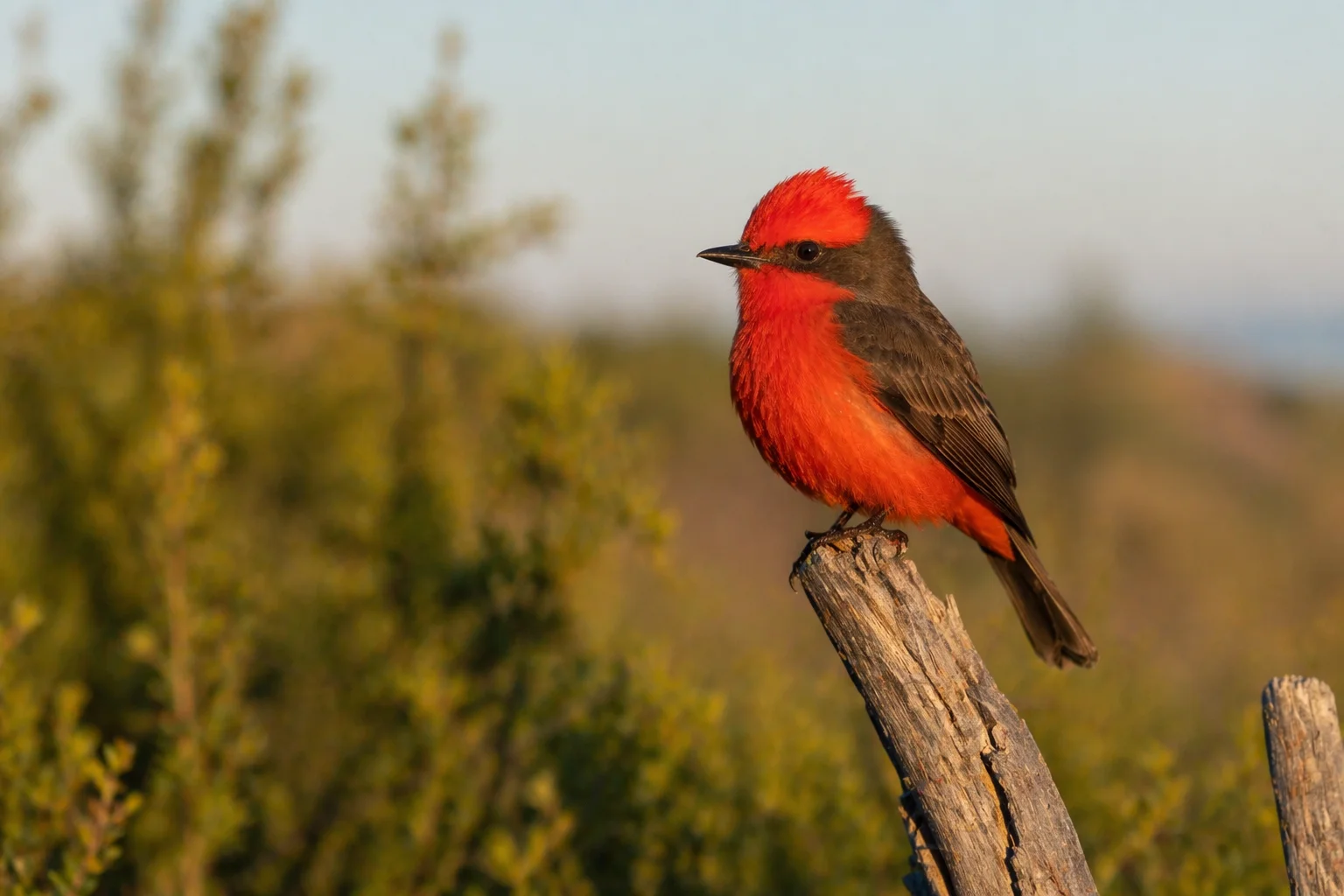
Pyrocephalus rubinus
Vermilion Flycatcher
The bird that stops visitors in their tracks. The male Vermilion Flycatcher is an almost unreal shade of crimson-red on the crown and chest, set against a dark chocolate-brown back and wings. Smaller and more compact than a cardinal, it perches conspicuously on fence posts and open branches — then darts out to snatch insects mid-air before returning to the same perch. Common in coastal Texas from fall through spring.
Field Tip
Look for them perched in the open on wire fences, low shrubs, and the outer branches of live oaks — they're not shy.
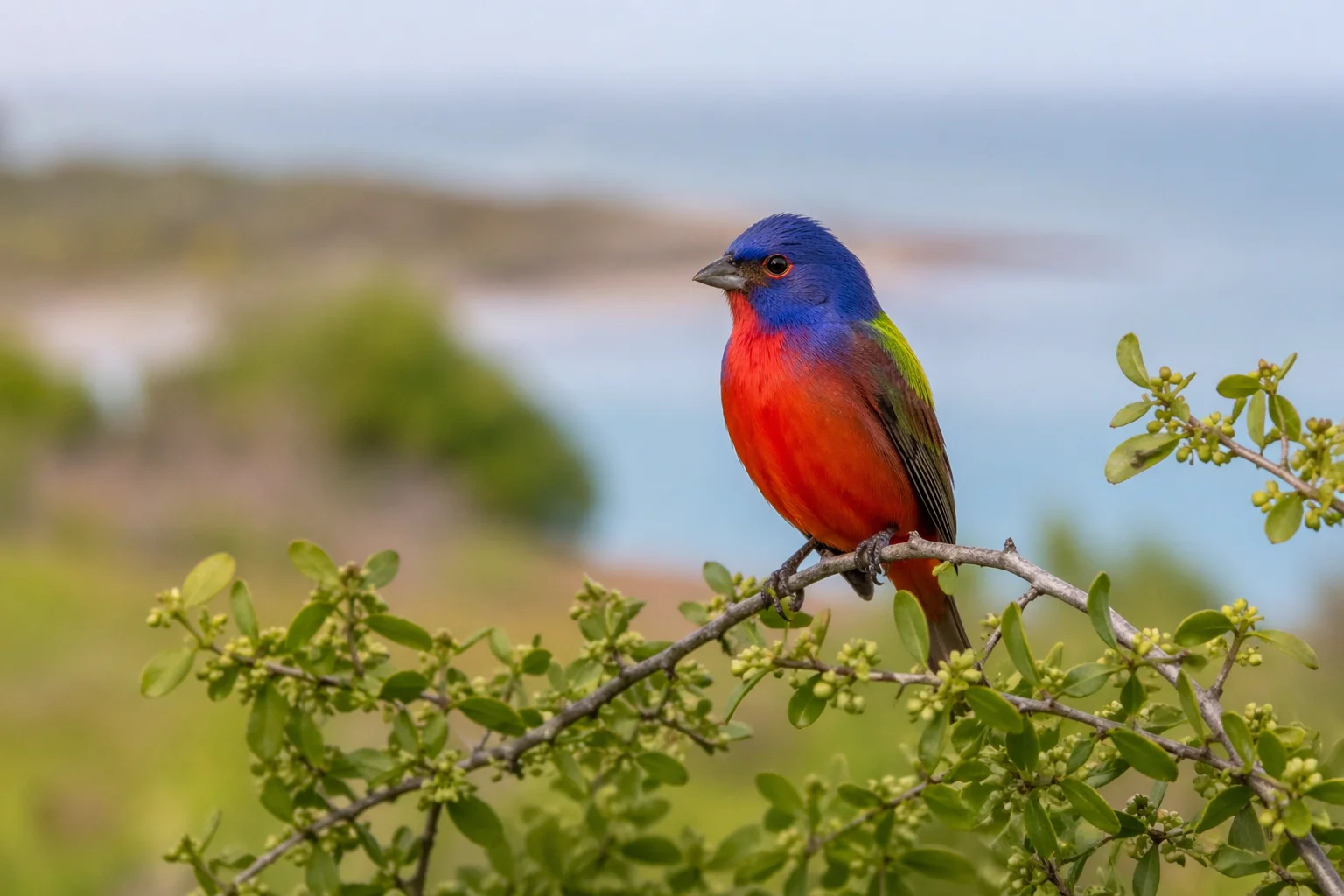
Passerina ciris
Painted Bunting
The male Painted Bunting looks like someone colored a tiny bird with all the best crayons — brilliant blue head, emerald green back, and a vivid red chest and belly. It is one of the most sought-after birds by visiting birders and is reliably found in Rockport from spring through early fall. They nest in dense coastal shrubs and love native plants like Turk's Cap and yaupon. The female is a soft lime-green — inconspicuous, but watch for her on feeders in late summer.
Field Tip
White millet in a tube feeder attracts Painted Buntings reliably. They're most common April through August.
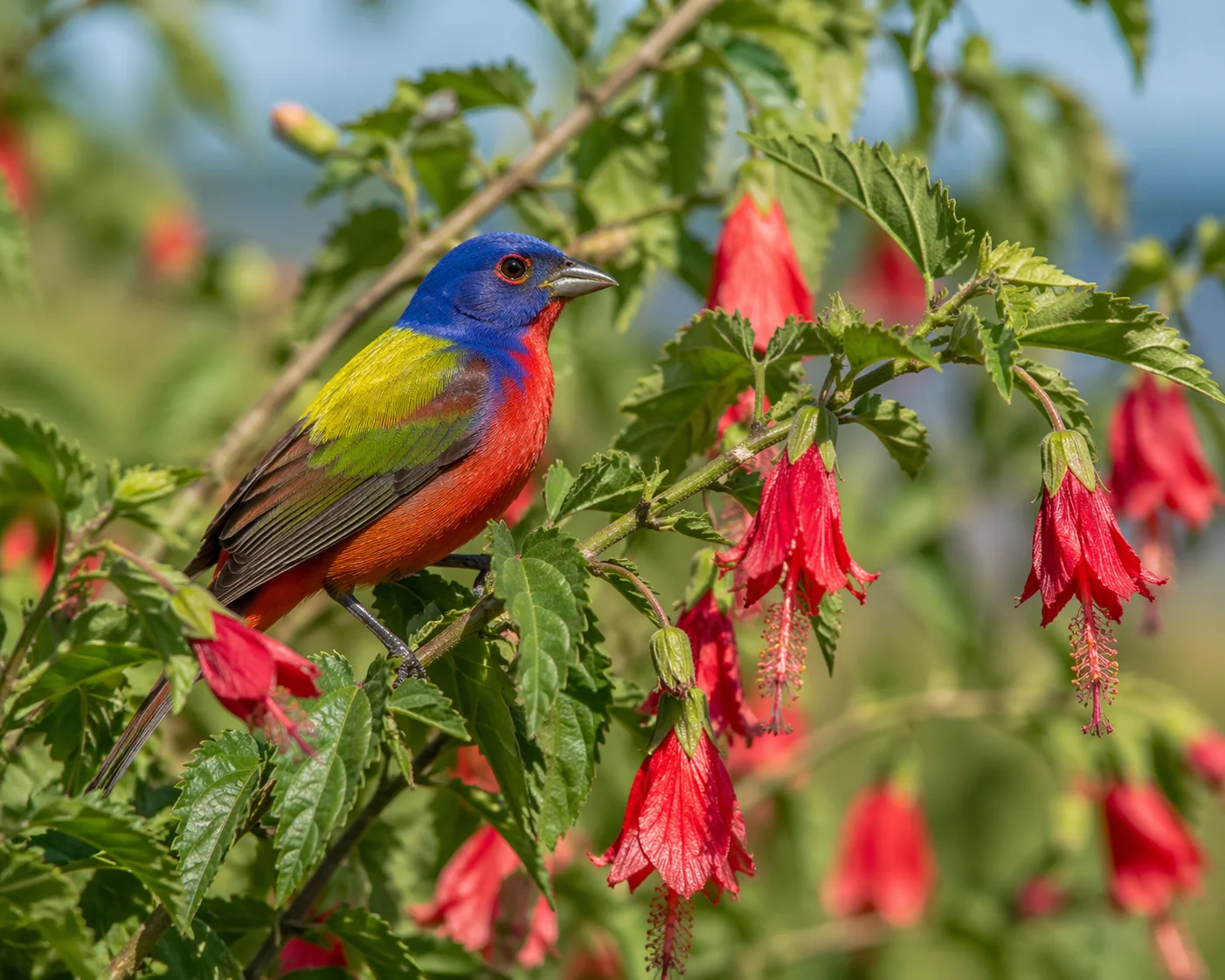
Passerina ciris
Painted Bunting on Turk's Cap
Painted Buntings have a special relationship with native coastal plants. Turk's Cap (Malvaviscus arboreus) — a native Texas hibiscus with drooping red flowers — is one of their favorite foraging plants. Seeing a male Painted Bunting in a blooming Turk's Cap is one of Rockport's signature wildlife moments. This is exactly why native plant gardens matter: the right plants bring the right birds.
Field Tip
Plant Turk's Cap in your yard if you want to attract Painted Buntings. It's drought-tolerant, native, and blooms all summer.
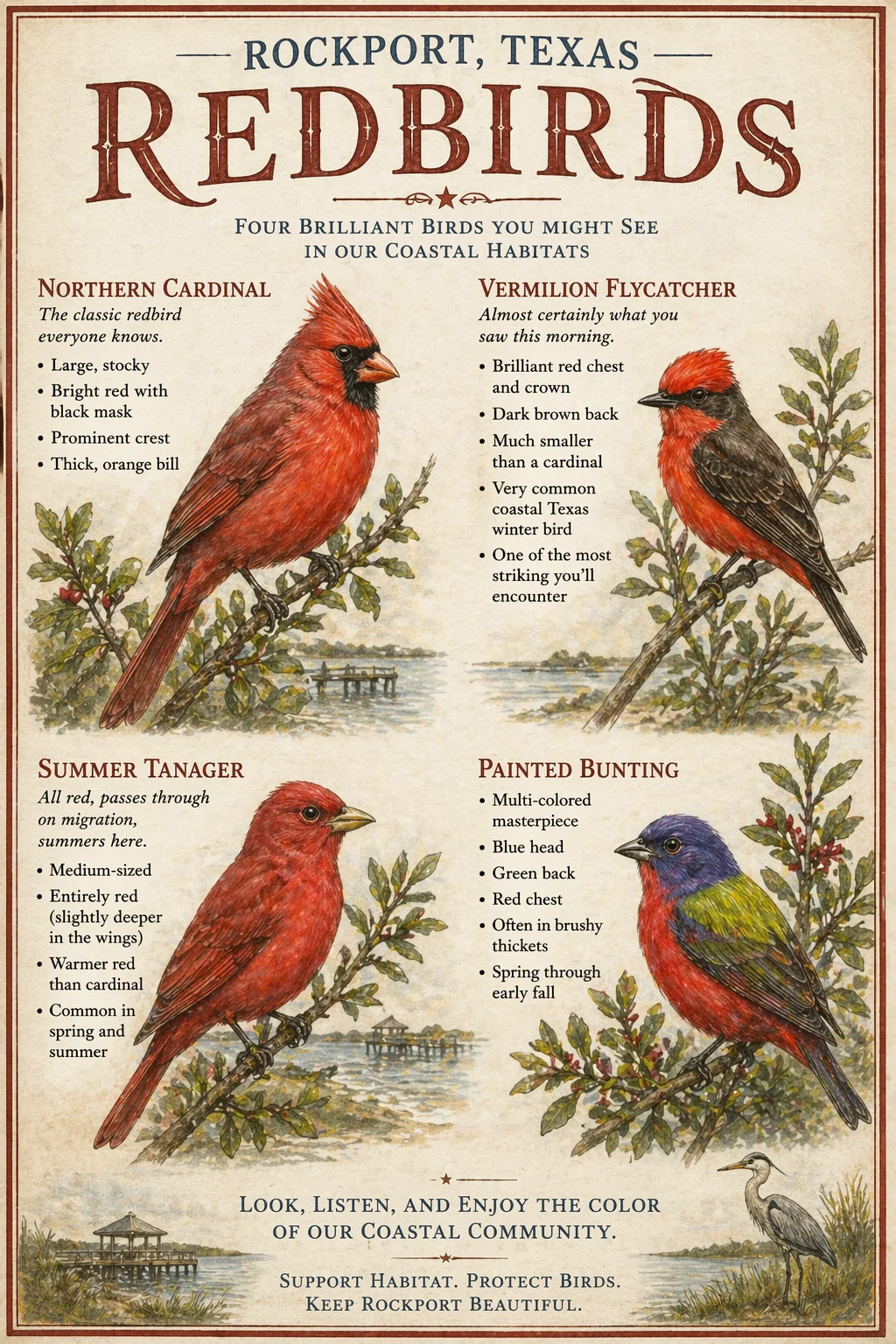
Rockport Red Birds — Field Guide
A quick visual reference for identifying the red birds you’ll encounter in coastal Texas.
Also Watch For
Summer Tanager & Pyrrhuloxia
The Summer Tanager (Piranga rubra) — the only all-red bird in North America without a crest — passes through Rockport during spring and fall migration and summers in the region. The male is a deep rose-red. Females are olive-yellow.
The Pyrrhuloxia (Desert Cardinal) is a gray bird with dramatic red accents — crest, wings, and tail. It’s more common in the dry brush country of South Texas but occasionally appears in Rockport during winter irruptions. If your redbird looks gray with a curved parrot-like bill, that’s your bird.
Native Plants & Habitat
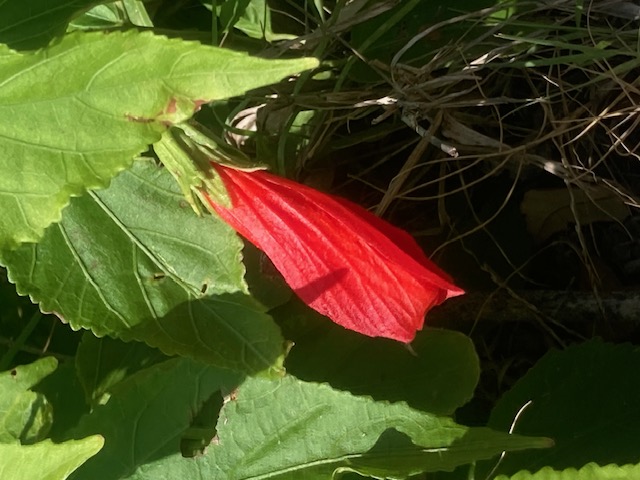
Turk’s Cap — The Red Bird Magnet
Turk’s Cap (Malvaviscus arboreus) is a native Texas hibiscus with small, drooping red flowers that attract Painted Buntings, hummingbirds, and butterflies simultaneously. It thrives in Rockport’s coastal conditions, blooms from spring through frost, and requires almost no maintenance once established.
Explore Native Plants & Habitat →