
Rare Wading Bird
Reddish Egret
Egretta rufescens — One of the rarest herons in North America, and Rockport is one of the best places on the continent to find one.
Explore with the Coastal Crew

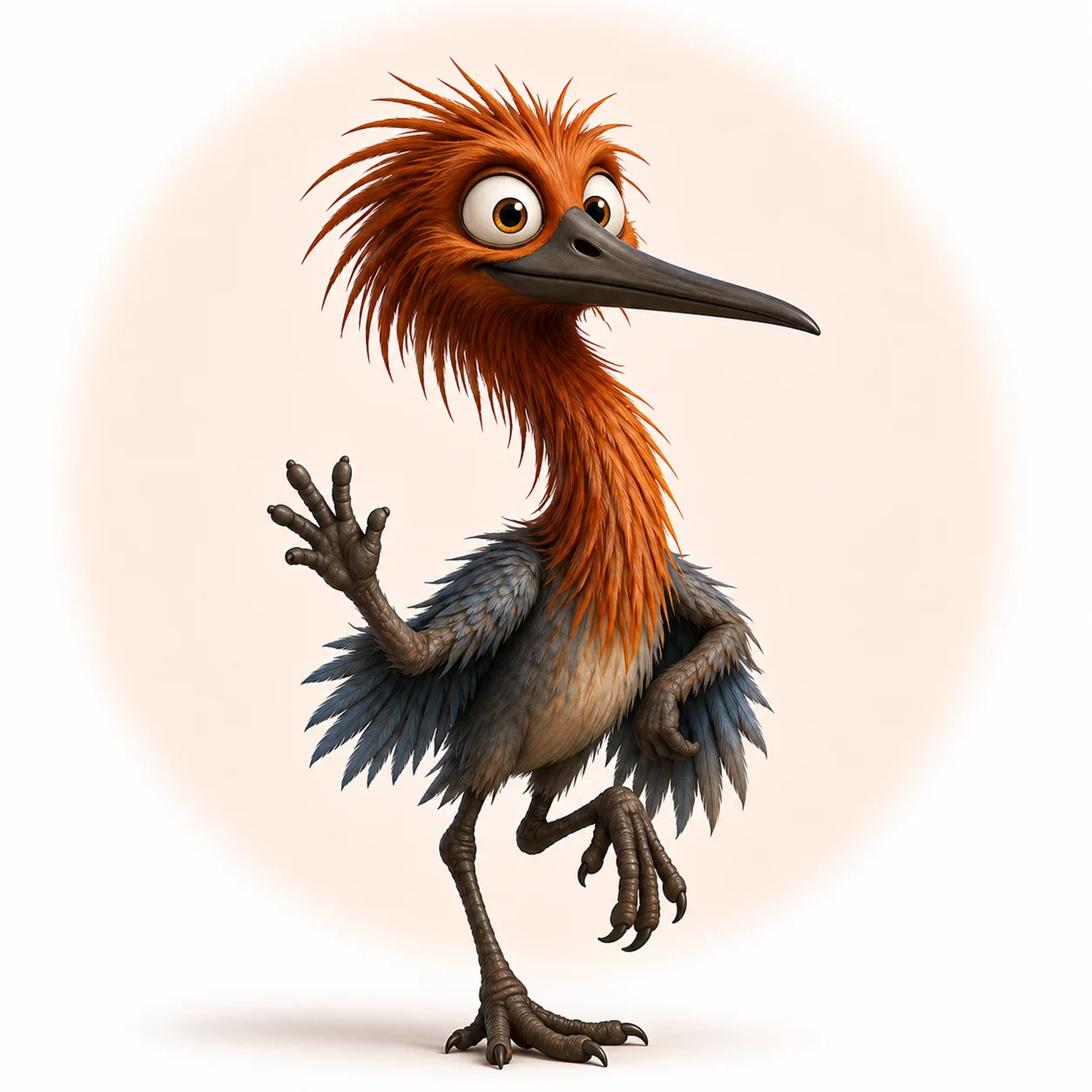


The Bird That Dances to Hunt
No heron hunts like the Reddish Egret. They run, spin, stumble, and lurch through shallow water with wings spread wide — a chaotic-looking display that is actually a precise hunting strategy. The spread wings create shade that reduces glare on the water surface, making fish easier to spot. Once a fish is corralled, the strike is lightning fast.
Birders call this the “dance,” and watching it for the first time is genuinely startling. It looks like the bird has lost its mind — until the fish disappears down its throat.
Dark Morph & White Morph
The Reddish Egret comes in two color forms. The dark morph — the more common form in Texas — has a slate-gray body with a distinctly reddish-brown head and neck, and a shaggy, disheveled look around the throat. The white morph is entirely white and can be confused with other egret species, but its pink-and-black bicolored bill and the same frenetic hunting behavior give it away.
Seeing both morphs hunting the same flat on the same morning is one of those Rockport moments that stays with you.
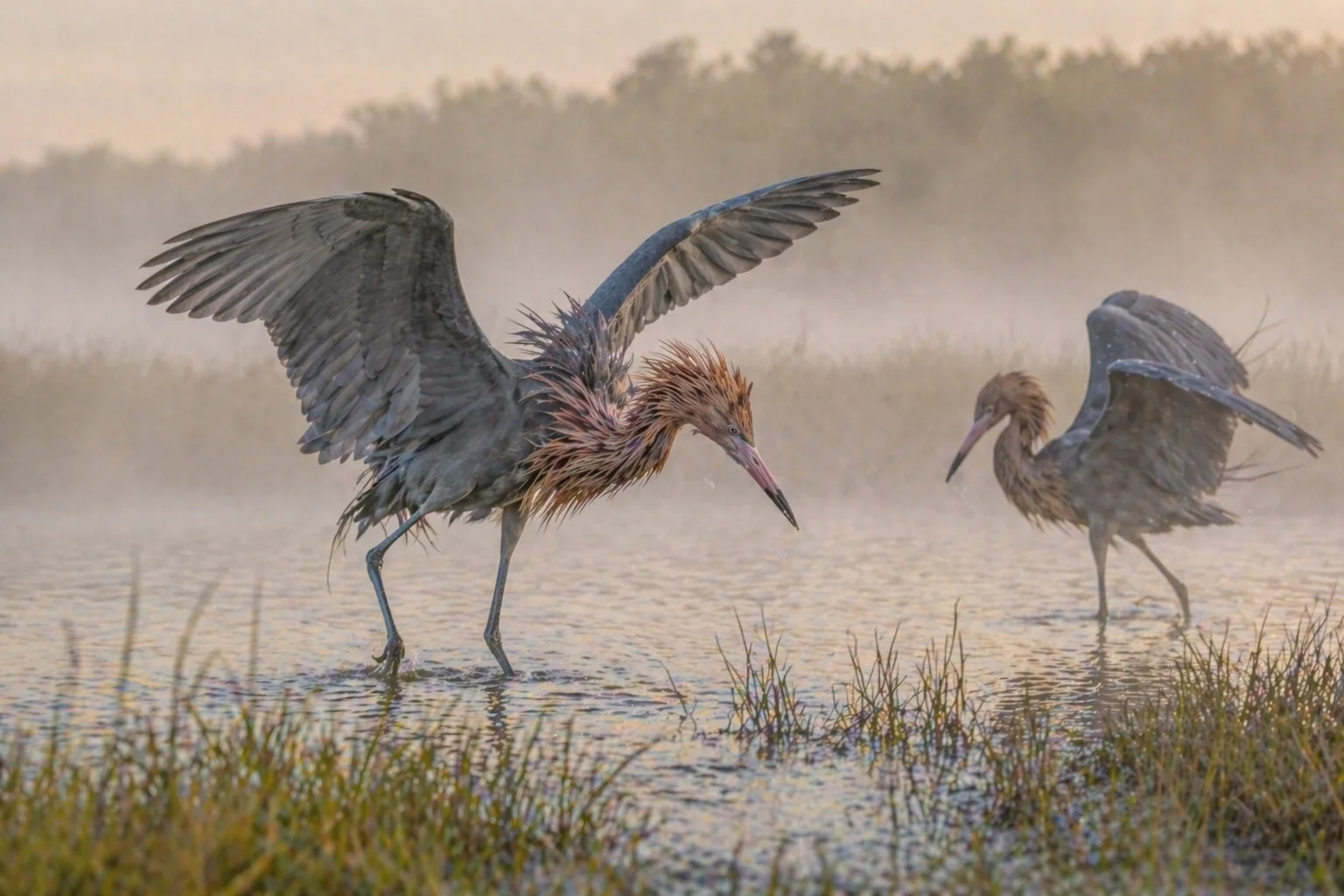
Morning light on the coastal flats — prime Reddish Egret hours