Mar – Oct · Rockport Waterfront & Aransas Bay
Roseate Spoonbill
Your brain says flamingo. Your brain is wrong. And honestly? What’s standing in that marsh is even better.
Explore with the Coastal Crew
The Bird Everyone Mistakes for Something It’s Not
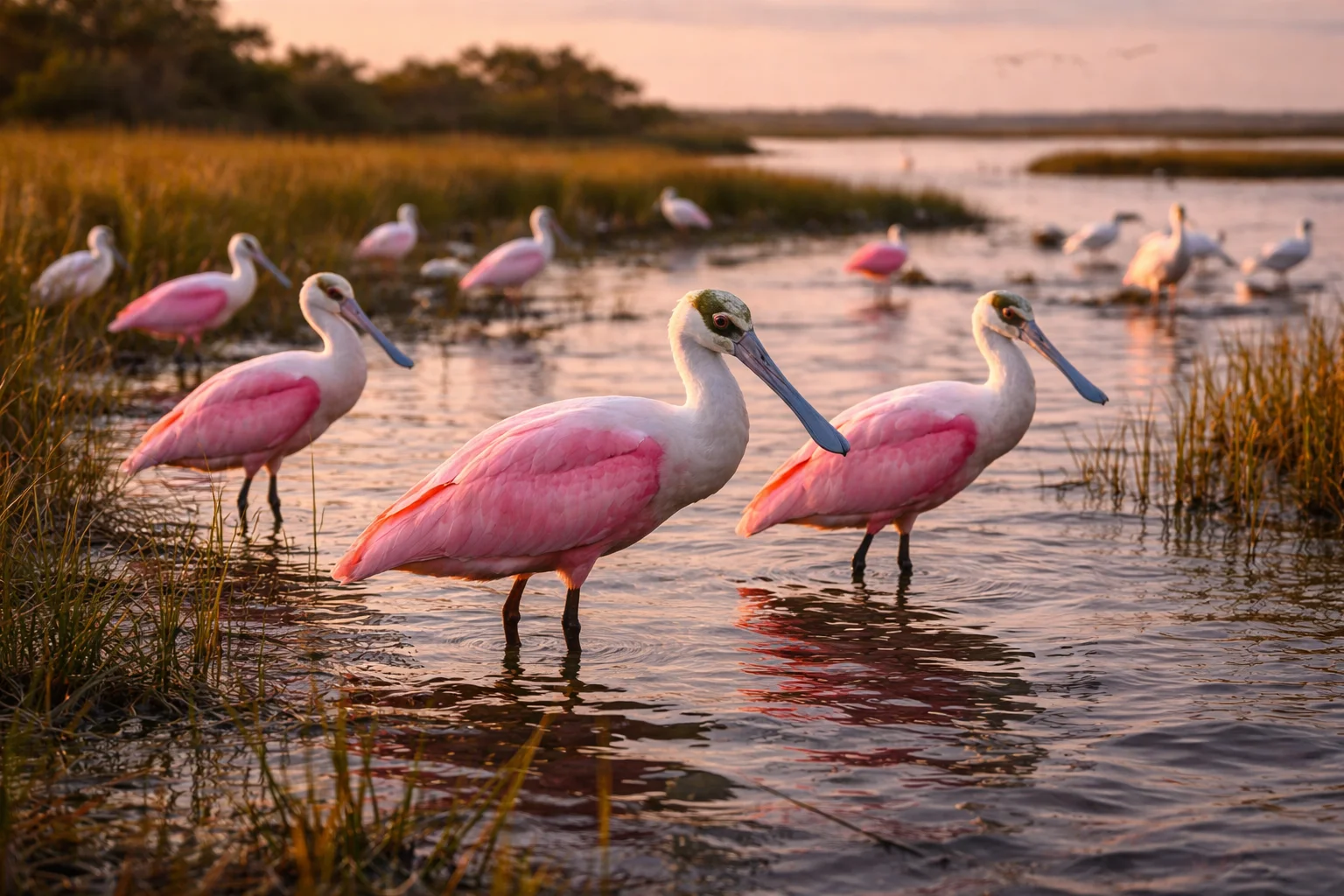
You’re driving along the Rockport waterfront when something stops you cold. Something pink. Shockingly, vibrantly, almost aggressively pink — wading through the shallows like it owns the place.
Your brain says flamingo. Your brain is wrong. And honestly? What’s actually standing in that marsh is even better.
Welcome to the Roseate Spoonbill — the crown jewel of the Texas coastal marsh, the bird that has been fooling tourists for generations, and arguably the most visually dramatic creature you’ll encounter on the entire Gulf Coast.
“Obviously, they think the only pink bird in the world is a flamingo.”
— Gene Blacklock, co-author of Birds of Texas, on the calls he fielded at Coastal Bend Audubon from people reporting “flamingo sightings” around Corpus Christi. They meant spoonbills, of course.
We don’t blame them. But once you know the difference, you’ll never forget it.
.webp)
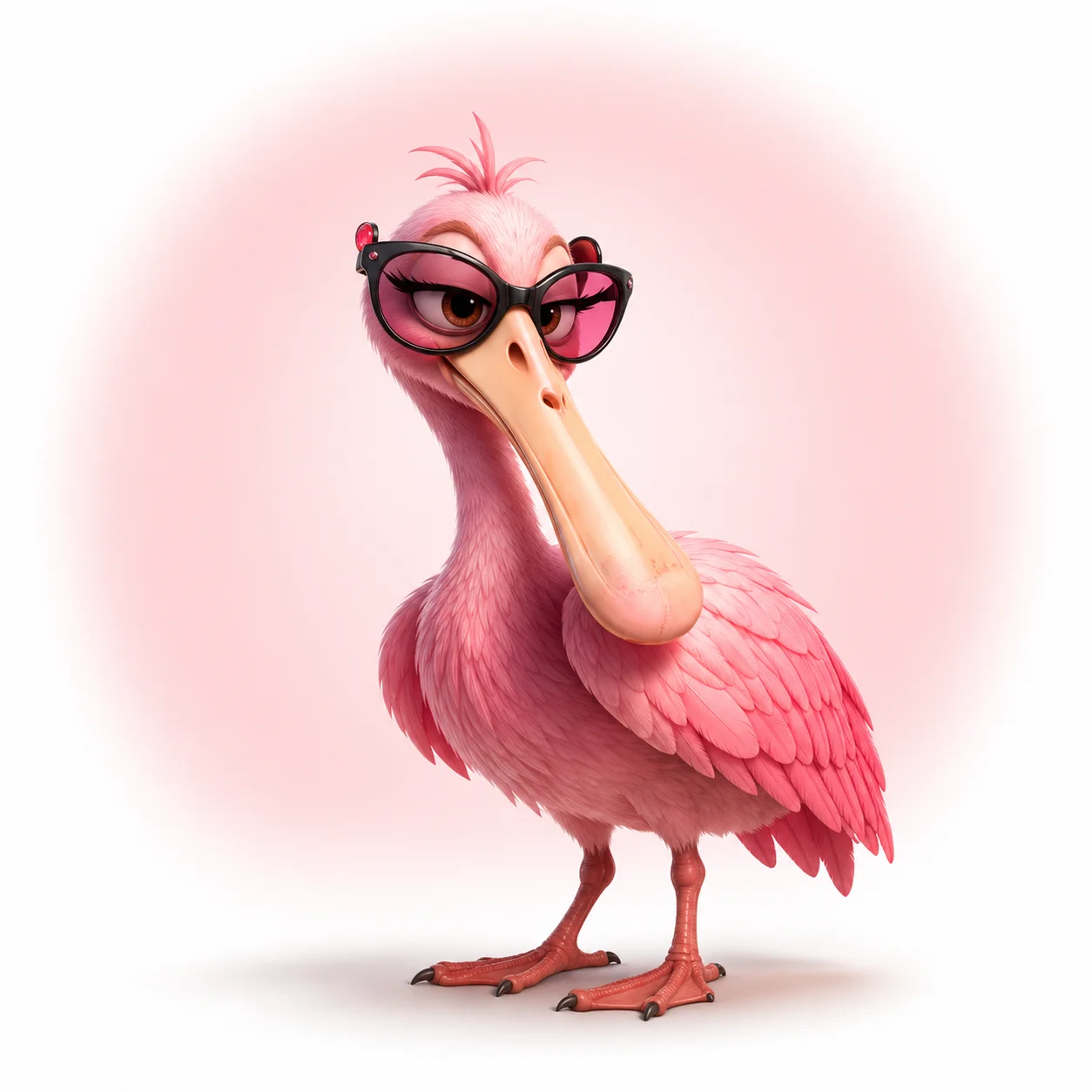
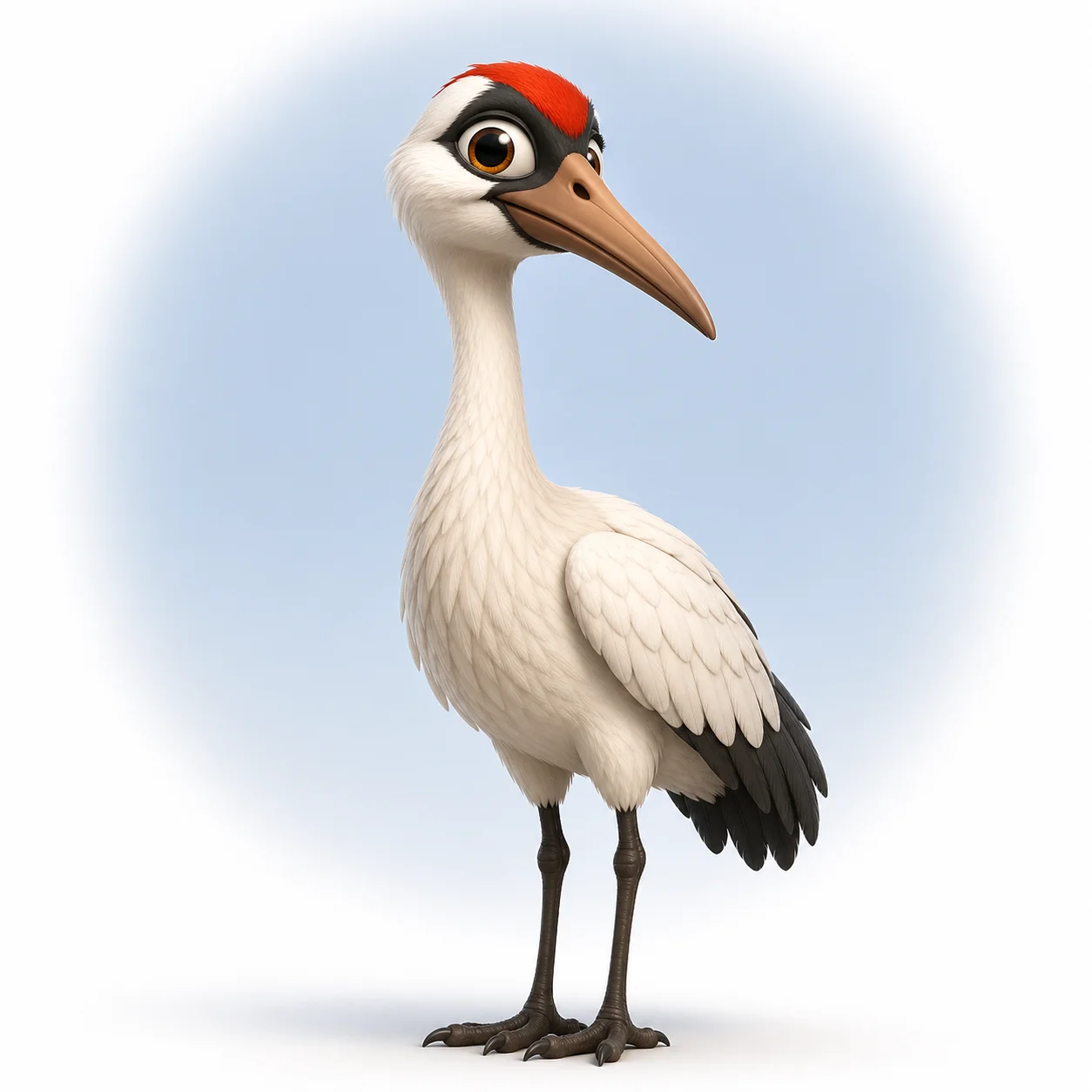
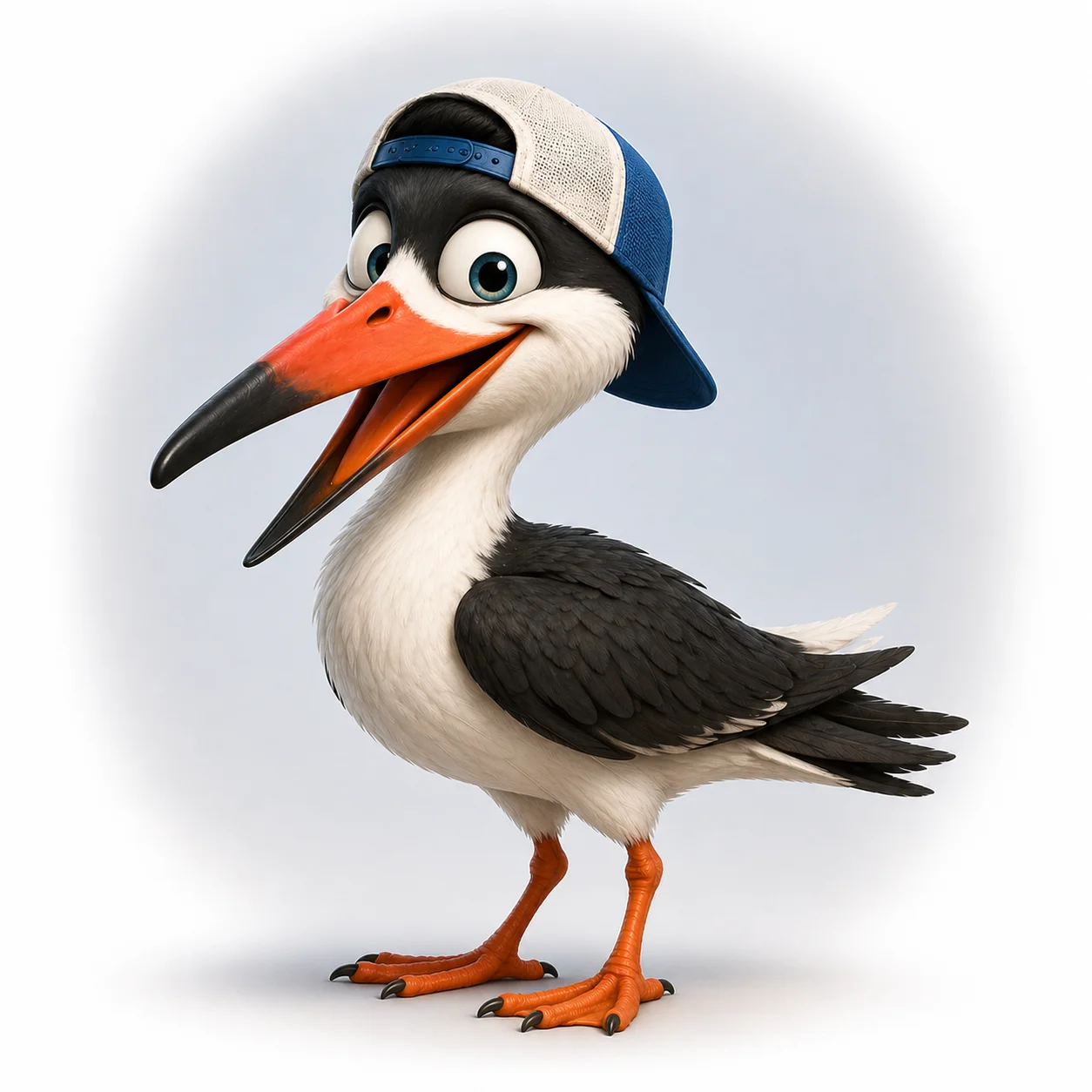
“I told Sally Spoonbill when she got her own page I was happy for her.”
I LIED.
— Zuzu
That Bill, Though
The spoonbill’s secret weapon — and its most ridiculous, wonderful feature — is right there in the name. That bill is literally spoon-shaped: wide and flat at the tip, like a kitchen spatula that got a little too ambitious.
To feed, it sweeps its open bill from side to side through the water, sifting up small fish, shrimp, and mollusks in a motion that looks less like elegant wildlife behavior and more like someone frantically searching for their car keys at the bottom of a murky puddle. It is absolutely ridiculous. It is absolutely effective. It is one of the great joys of watching these birds.
Unlike most wading birds, roseate spoonbills are remarkably silent and often feed alone — which means you can watch this entire performance in peaceful, slightly bewildered silence.
You Are What You Eat — Literally
Here’s the science behind that jaw-dropping color:
Spoonbills eat shrimp. Shrimp eat algae. Algae produce their own red and yellow pigments called carotenoids. Those carotenoids pass up the food chain — and into the feathers. The more the spoonbill eats, the pinker it gets.
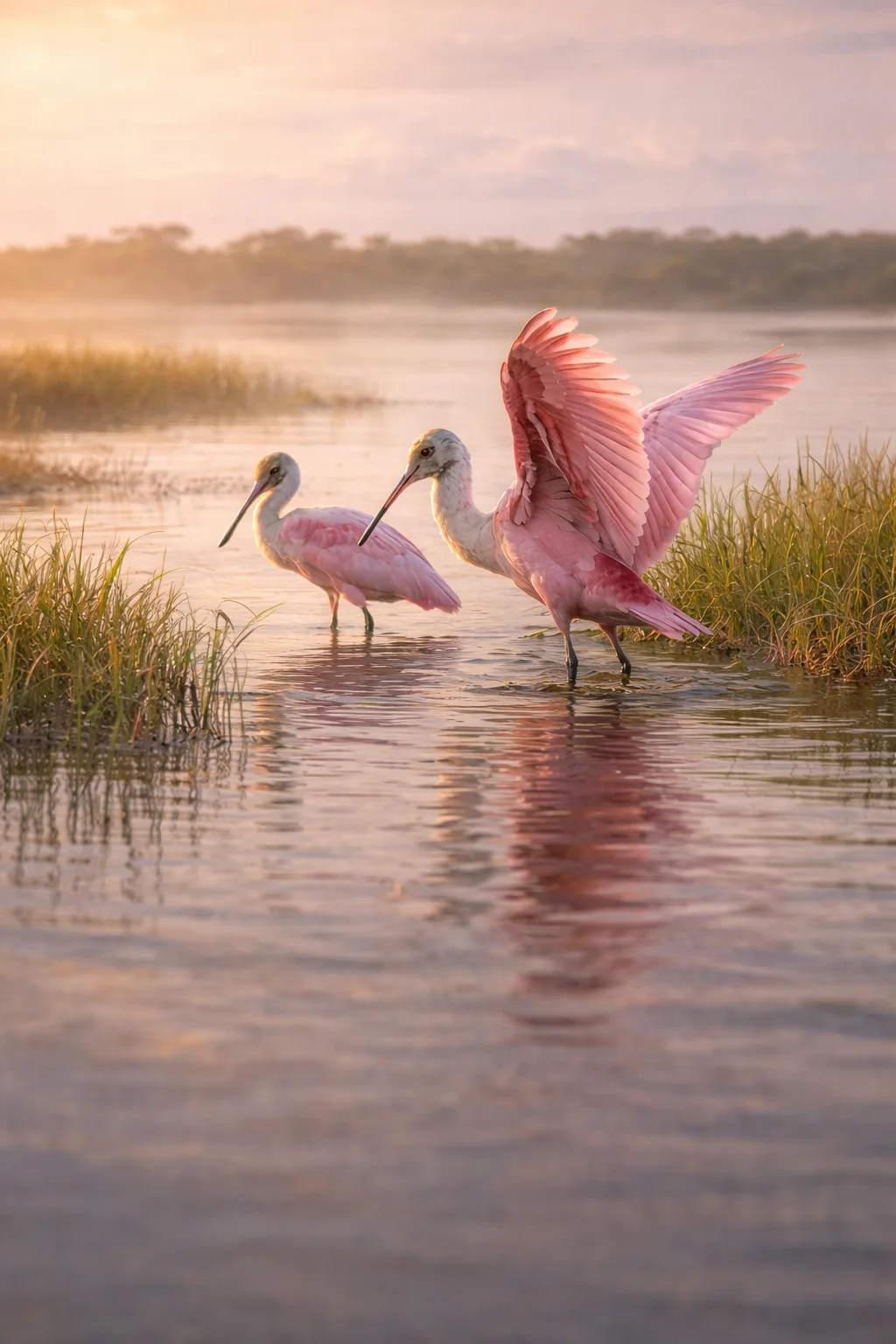
Every blazing hot-pink spoonbill you see glowing in the golden hour light over Aransas Bay is essentially a bird that ate so many shrimp it turned into a sunset. That’s not a metaphor. That’s biology.
A Near-Miss with History
The spoonbill’s story has a dark chapter worth knowing.
Like many birds with beautiful plumage, roseate spoonbills were nearly hunted to extinction during the 1800s. Their striking pink feathers were fashionable — decorating women’s hats across the United States, and hunters competed aggressively for spoonbill plumes.
Fashion nearly erased them entirely. It took decades of conservation work and federal hunting bans to bring them back. Today when you see a spoonbill wading through the shallows at Rockport Beach Park or Cove Harbor, you’re seeing a comeback story — feathers that almost disappeared from this coastline forever.
Where to Find Them Around Rockport
Spoonbills are not shy about showing up. From March through October, they prefer the bays, marshes, and estuaries along the Gulf Coast.
- Rockport Beach Park: Spoonbills regularly work the islands on the west side of the beach area, alongside blue herons, egrets, and pelicans. Easy parking, great light in the morning.
- Cove Harbor: The shallows here concentrate wading birds throughout the warmer months — scan any exposed mudflat.
- Shell ridge road marshes south of town: Less visited, consistently productive.
- Aransas NWR: Spoonbills are year-round residents of the refuge marshes. The observation tower and Wildlife Drive both offer regular sightings, especially in spring and summer.
- Bay tours: Any boat operating out of Rockport will pass spoonbill territory — from the water you get eye-level views that no road can match.
Early morning is prime time. Catch them in the golden hour light and they absolutely glow.
The Shot Every Photographer Dreams Of
With a 50-inch wingspan, spoonbills are substantial birds in flight. They fly with their necks stretched straight out and work thermals the way hawks do — flap and sail, flap and sail — sometimes in formation, sometimes in a straight line low over the water.
A flock of spoonbills banking in formation over Aransas Bay at sunrise, wings catching the light, that improbable pink blazing against a blue Texas sky — that is the kind of shot that ends up framed on living room walls. Plan your early mornings accordingly.
The Takeaway
The whooping crane gets the headlines. The hummingbird gets the festival. But the roseate spoonbill? The spoonbill just shows up, wades into the shallows, sweeps that ridiculous magnificent bill through the water, and glows pink like it has absolutely nothing to prove.
It is the Texas coast’s most underrated superstar. And it’s waiting for you right here in Rockport.
Ready to See That Pink for Yourself?
Spoonbills are reliable, accessible, and absolutely photogenic. Plan your Rockport trip around low tide, early morning light, and the right season — and you’ll come home with shots worth framing.