
Year-Round · Rockport Beaches & Aransas Bay Shoreline
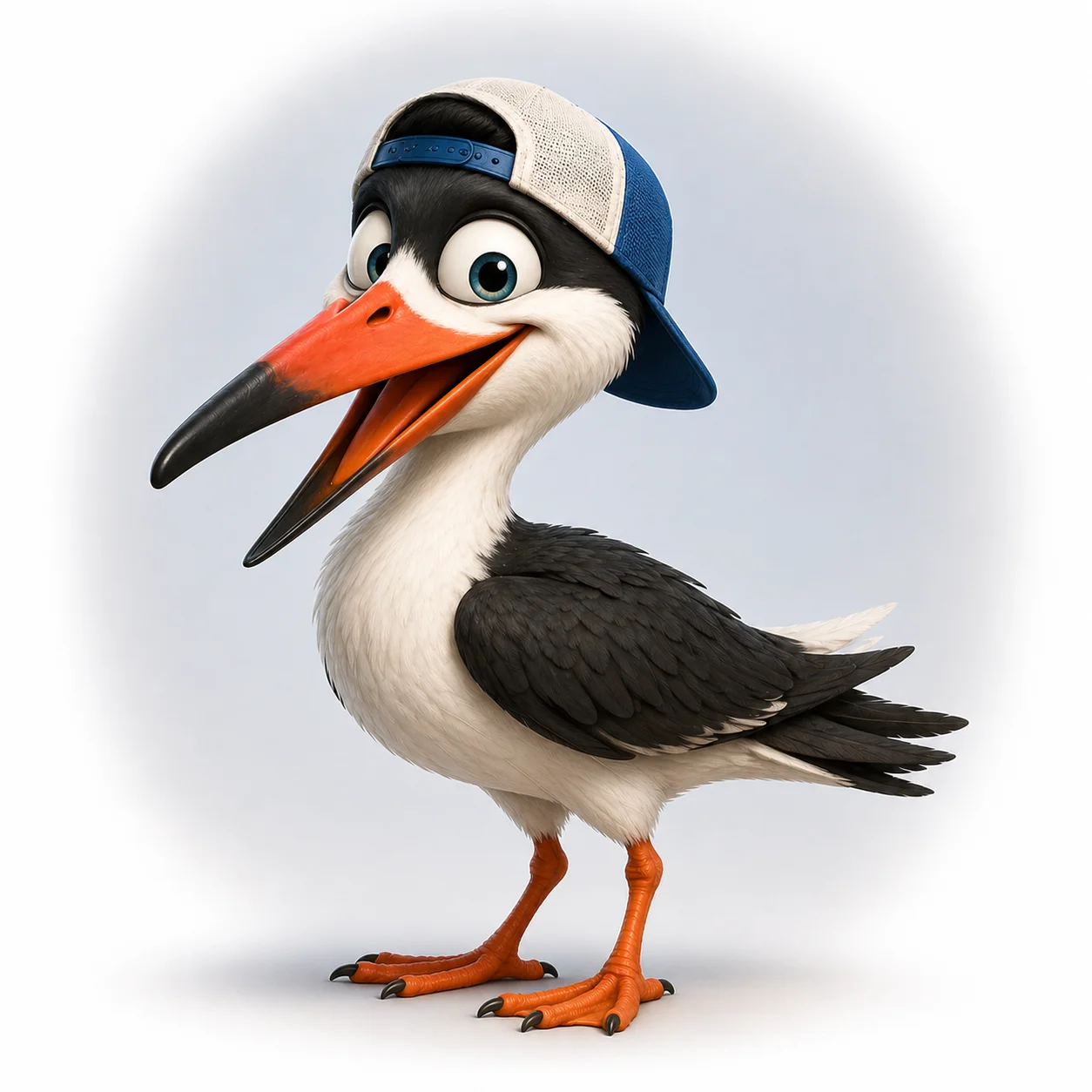
Black Skimmer
Most birds use their eyes to hunt. The black skimmer uses its bill — dragging it through the water until something hits back. It is one of the most specialized hunting techniques in the avian world, and you can watch it happen right here in Rockport.
Explore with the Coastal Crew
Built Differently
Pick up any bird field guide and flip to the black skimmer. Read the bill description. Then read it again, because it sounds like a mistake.
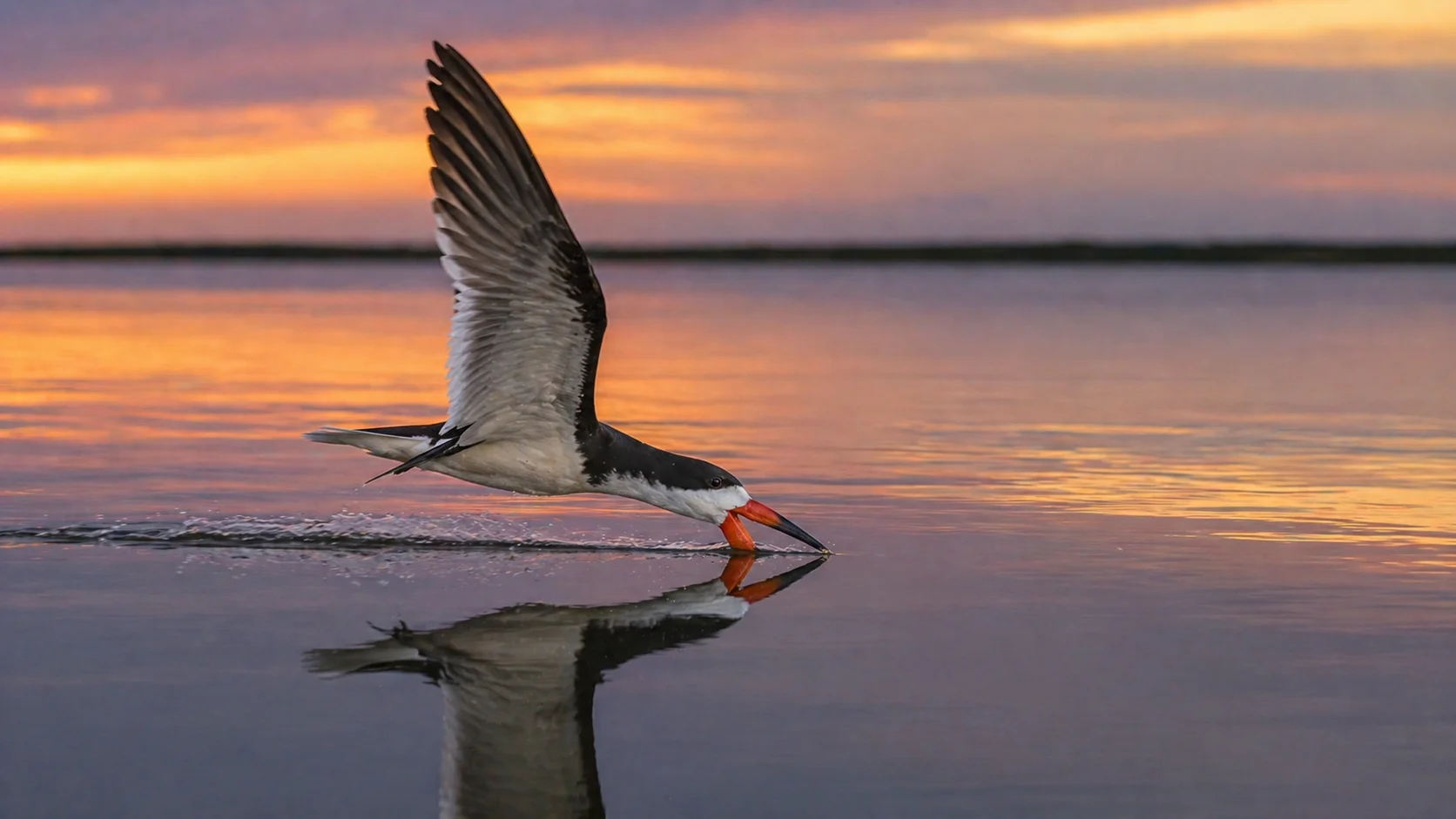
The lower mandible of a black skimmer is significantly longer than the upper — the only bird in North America built this way. It looks asymmetrical, almost wrong. It is, in fact, one of the most precisely engineered hunting tools in the natural world.
To feed, the skimmer flies low and fast over calm water — just above the surface — with its lower bill slicing through like a knife. The moment that lower mandible contacts a fish, the upper snaps down instantly. The whole sequence happens faster than a blink. The bird never slows down, never circles back. It skims, it catches, it keeps moving.
“The black skimmer is the only bird in North America in which the lower mandible is longer than the upper — an adaptation for touch-feeding that allows it to hunt in complete darkness.”
— Cornell Lab of Ornithology
Hunting by Touch — and by Night
The skimmer’s feeding technique is called tactile feeding — it hunts by feel, not sight. This has an extraordinary consequence: the black skimmer can hunt in complete darkness.
While most coastal birds shut down at dusk, skimmers become more active. They prefer the calmest water — which often comes at dawn, dusk, and after dark, when wind drops and the bay surface goes glassy. On a still evening at Rockport Beach, you can hear them before you see them: a low, barking call, then the soft hiss of a bill cutting water.
The technique requires calm conditions. Choppy water makes the surface unreadable. This is why you’ll almost never see skimmers feeding in rough chop — they wait for the bay to settle.
Bold in Black and White
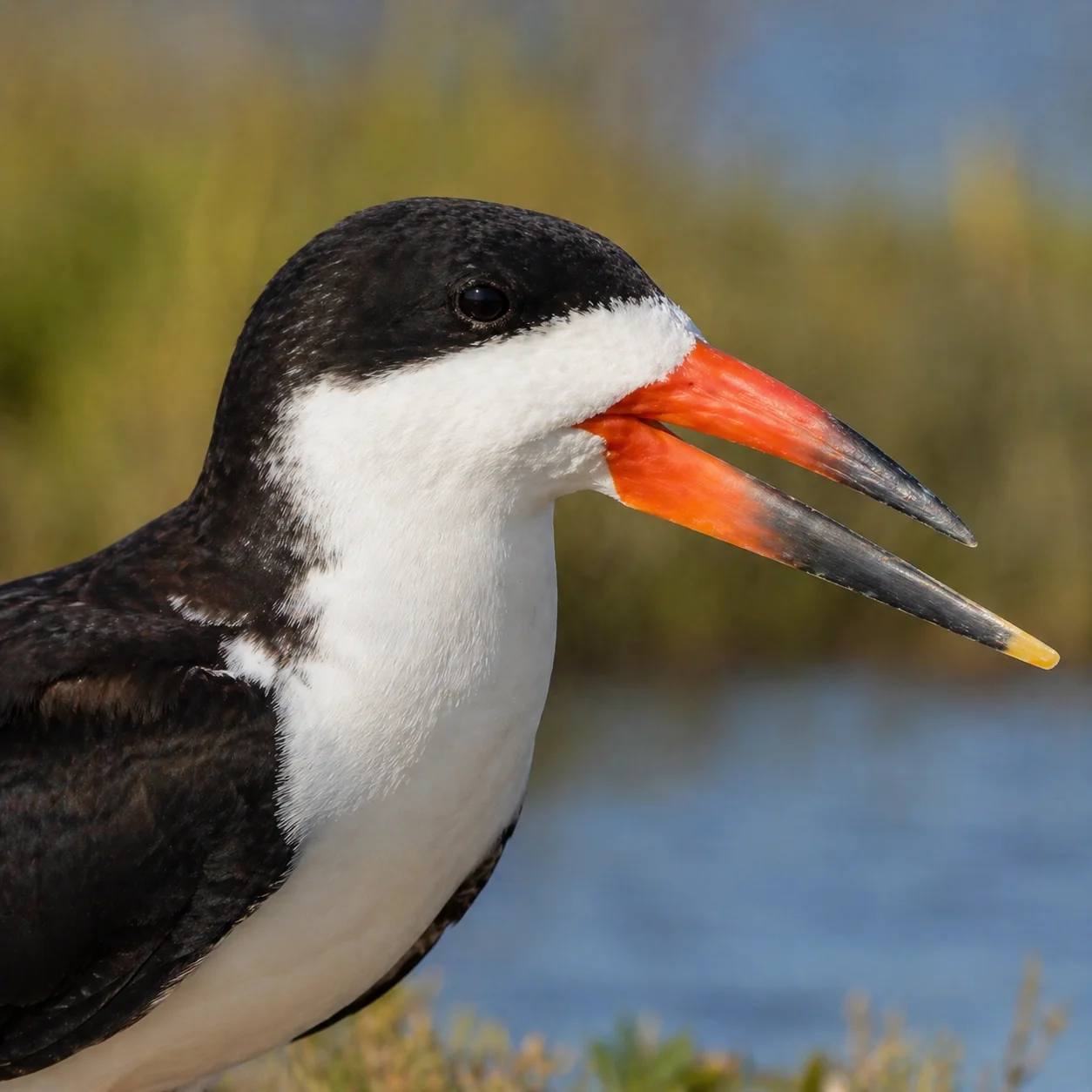
If the bill is the skimmer’s engineering marvel, the plumage is its statement. Crisp black above, clean white below, with a bright orange-red bill tipped in black — the black skimmer is one of the most graphically striking birds on the Texas coast.
In flight, especially at low angles over the water, the contrast is dramatic. A flock of skimmers working a bay at golden hour — black wings catching the light above, white undersides glowing below — is one of the genuinely beautiful sights of a Rockport evening.
A Species Worth Protecting
The black skimmer is listed as a Threatened species in Texas — a designation that reflects real population pressure along the Gulf Coast.
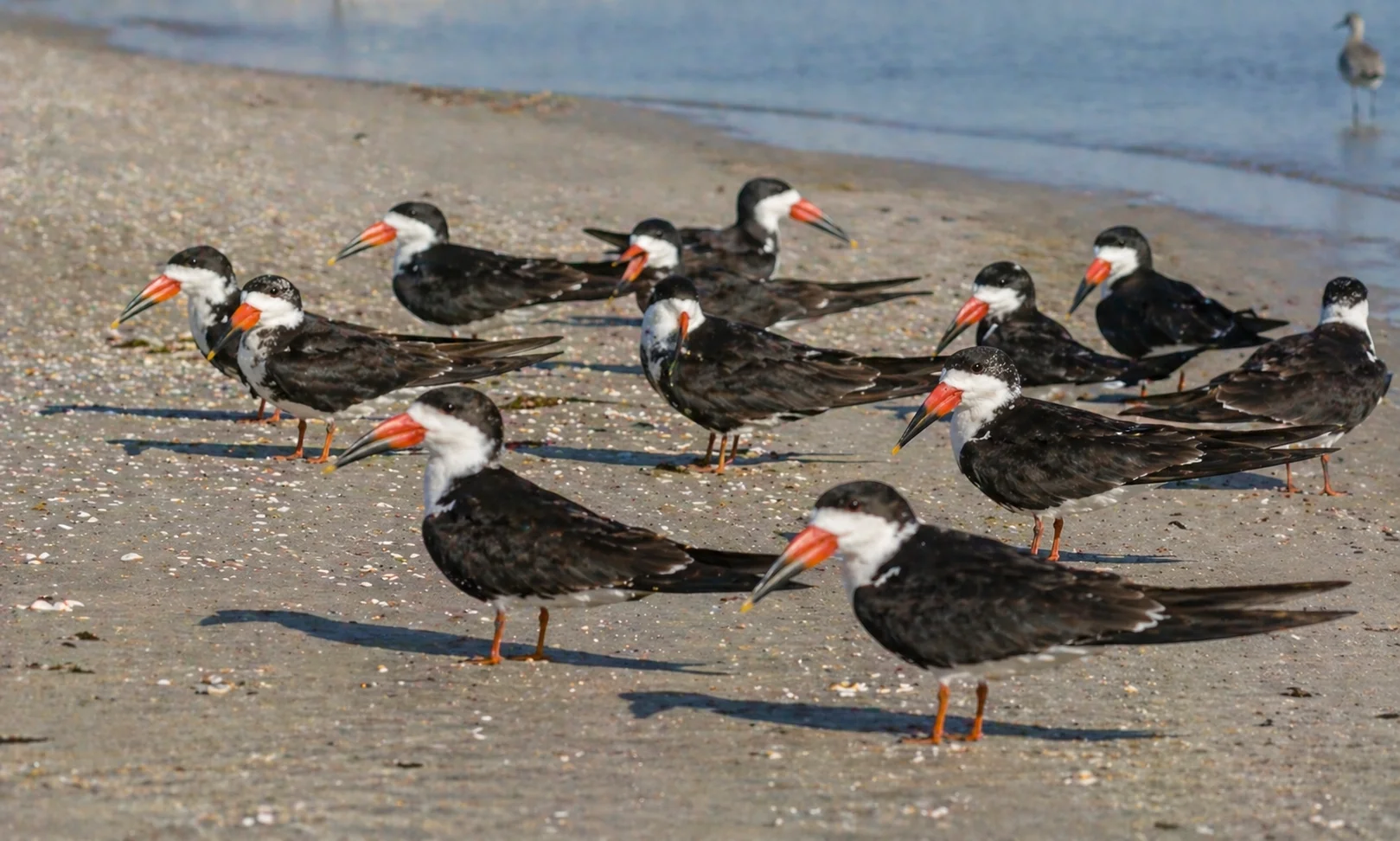
Skimmers nest colonially on open sandy beaches and shell islands, laying eggs directly on the ground with minimal nest structure. This makes their nesting colonies acutely vulnerable to human disturbance. A single person walking through a nesting colony — or a dog running loose on a beach — can cause adults to flush, leaving eggs and chicks exposed to the sun and to predators.
Skimmer colonies along the Texas coast have also been impacted by rising sea levels washing over low-lying nesting sites, increased boat wake erosion on shell beaches, and the simple loss of undisturbed open beach habitat to development and recreational use.
If you encounter a skimmer colony on a beach — identifiable by adults resting in groups, often with terns, on open sand — give them a wide berth. Keep dogs on leash. The birds will tell you if you’re too close: nervous wing-spreading and repeated short flights are a warning. Respect it.
Where to Find Them Around Rockport
- Rockport Beach Park: Skimmers rest on the sandy flats and work the shallows, especially at dawn and dusk.
- Little Bay: Calm, protected water makes this a reliable skimming location when conditions are right.
- Aransas Bay shorelines: Any stretch of calm bay with low-profile sandy or shell shoreline is potential skimmer territory.
- Barrier island flats visible from boat tours: The outer islands hold resting and nesting colonies — boat access puts you closest without disturbing them.
Timing matters: Late afternoon into dusk is peak feeding activity. Calm days after wind drops are best. Early morning before wind picks up is a close second.
The Takeaway
The black skimmer doesn’t get the headlines. It’s not as flashy as a spoonbill or as famous as a whooping crane. But watch one work a calm bay at dusk — bill in the water, wings up, moving fast and low — and you’re watching something that took millions of years to perfect.
It is one of the most specialized birds on the Texas coast. And it is here, in Rockport, every single day.
Catch Skip Before He’s Gone
Head to Rockport Beach or Little Bay at dusk on a calm evening. Listen for the bark. Then watch the waterline.