Year-Round · Rockport Waterfront & Aransas Bay
Brown Pelican
Every other pelican scoops from the surface. This one climbs to 60 feet and drops like a missile. Rockport has them year-round — and once you watch one dive, you’ll never walk past a pelican the same way again.
Explore with the Coastal Crew



The Bird That Drops Like a Stone
Most birds that fish do it delicately — wading, hovering, or snatching from the surface. The brown pelican has no interest in delicate. It climbs to 20–60 feet above the water, tips forward, folds its wings back, and drops headfirst into the Gulf at more than 40 miles per hour.
It hits the water like a thrown spear. The impact would scramble most animals — but the brown pelican has a network of air sacs beneath the skin of its chest and throat that absorb the shock, protecting its skeleton and organs on every single dive. It has been doing this, perfecting this, for millions of years.
Watch one work a school of fish near the Rockport waterfront and you’ll understand immediately why every other bird on the bay stops what it’s doing and pays attention.
“The brown pelican is the only member of its family that plunges from the air to catch fish — a hunting technique so specialized it took millions of years to perfect.”
— Cornell Lab of Ornithology
That Pouch Is Not What You Think
The gular pouch — that enormous, stretchy throat sack — is not a storage device. It’s a net.
When a brown pelican surfaces after a dive, its pouch can hold up to three gallons of water along with whatever fish it caught. Before it can swallow, it has to drain every drop of that water — tilting its bill down, squeezing the pouch, letting the water pour out through the sides. Then it tosses the fish back and swallows.
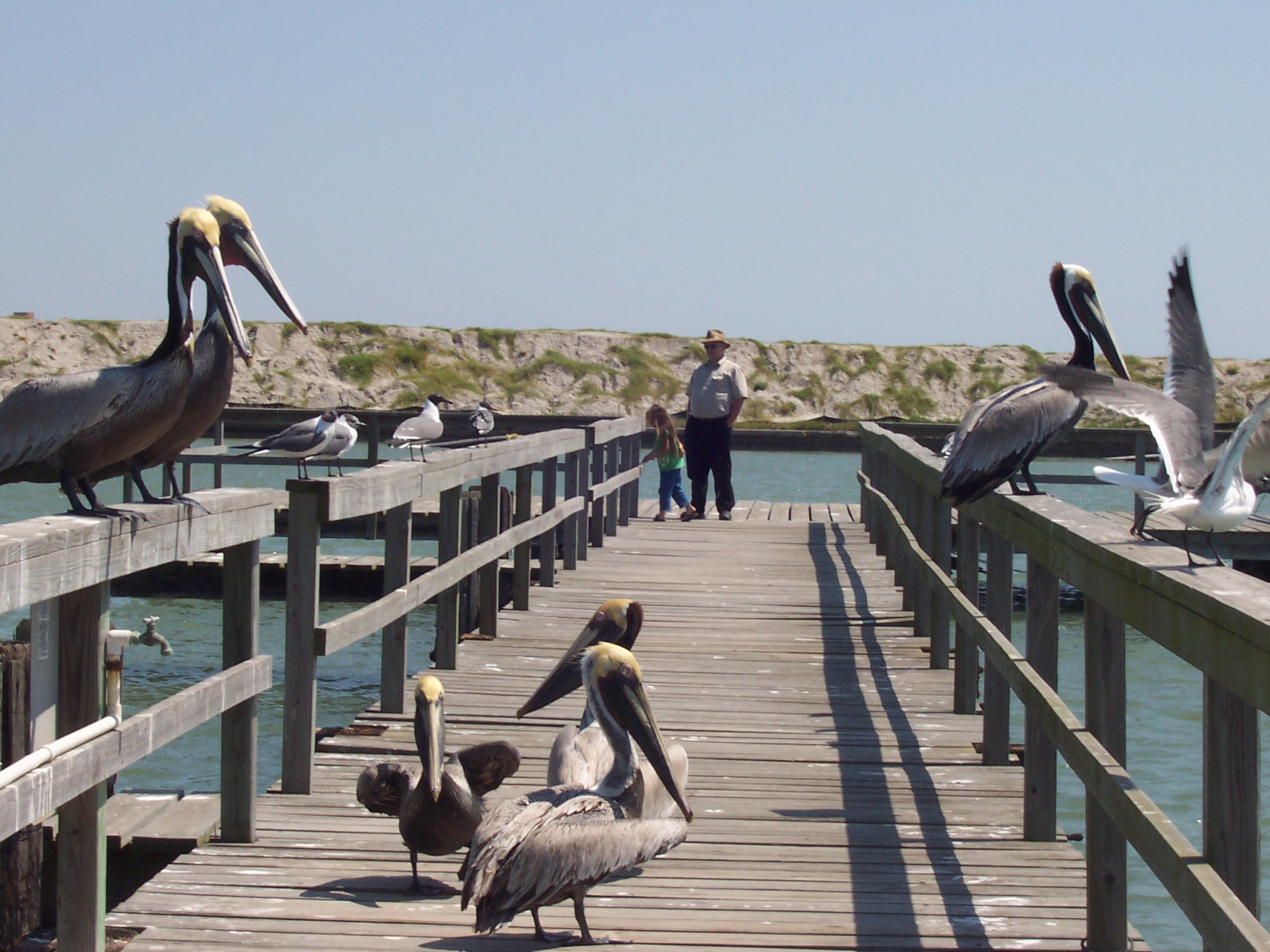
This drainage process takes several seconds and leaves the pelican briefly vulnerable — which is exactly when laughing gulls swoop in to steal the catch right out of an open bill. The gulls have timed it perfectly. The pelicans tolerate it with the patience of something that has seen this trick ten thousand times.
A Near Disaster — and One of Conservation’s Greatest Comebacks
In the 1960s and 70s, brown pelicans nearly vanished from the Gulf Coast entirely.
The culprit was DDT — a pesticide that ran off farmland into waterways, accumulated in fish, and concentrated in the pelicans that ate them. DDT didn’t kill the pelicans directly. It did something subtler and more devastating: it caused their eggshells to thin so severely that nesting adults crushed their own eggs simply by sitting on them. Entire breeding colonies failed year after year.
By 1970, the brown pelican had been declared endangered in Louisiana — the state whose flag it appears on. The species was listed under the Endangered Species Act in 1970.
DDT was banned in the United States in 1972. Pelican populations slowly, steadily recovered. In 2009 — nearly four decades after listing — the brown pelican was officially removed from the endangered species list. It is one of the most celebrated wildlife recoveries in American conservation history.
Every pelican you see perched on a Rockport pier is a descendant of that recovery.
What to Look For
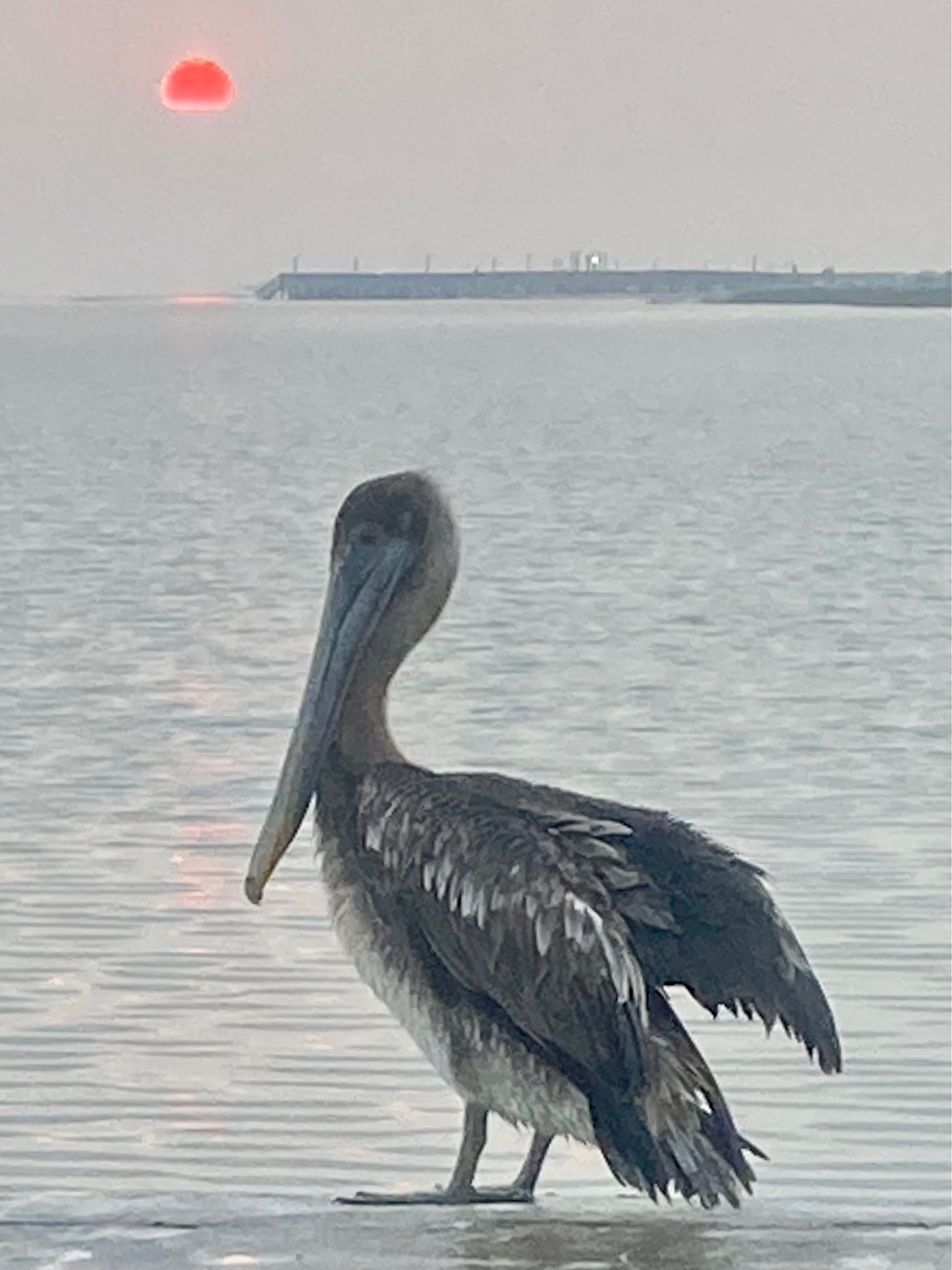
Adult brown pelicans are hard to misidentify — large, heavy-bodied birds with a distinctive long bill and enormous pouch. During breeding season the back of the neck turns deep chestnut brown; in non-breeding plumage the neck is white with a yellow wash on the head.
Immature birds, which take three to five years to reach full adult plumage, are brown overall with a pale whitish belly. Young birds often gather in loose groups on sandbars and piers while they develop the diving skills that adults make look effortless.
Where to Find Them in Rockport
Brown pelicans are year-round residents of the Texas Gulf Coast — which means any morning in Rockport is a pelican morning.
- Rockport Beach Park: Pelicans work the shallows and rest on the breakwater rocks. Easy, reliable sightings at any time of day.
- Rockport Harbor and marina docks: Fish cleaning stations draw pelicans in large numbers — this is where you’ll see the gull-steal-from-the-pouch behavior up close.
- Little Bay: Calm, shallow, and productive. Pelicans hunt here regularly alongside spoonbills and herons.
- Aransas Bay boat tours: From the water you’ll see pelicans diving at eye level — an entirely different experience from shore.
- Any fishing pier: Where there are fish being cleaned, there are pelicans. They have learned exactly where to wait.
The Takeaway
The brown pelican is so common in Rockport that visitors sometimes walk right past them. That would be a mistake. Stop. Watch one hunt. Watch it climb, fold, and drop. Watch it drain that impossible pouch while a gull circles impatiently overhead.
This is a bird that nearly disappeared from this coastline within living memory — and came back. It deserves more than a glance.
Ready to Watch One Dive?
Brown pelicans are waiting at the Rockport waterfront right now. No special equipment, no early alarm — just show up and look for the bird dropping out of the sky.