Rockport, Texas · Conservation in Action
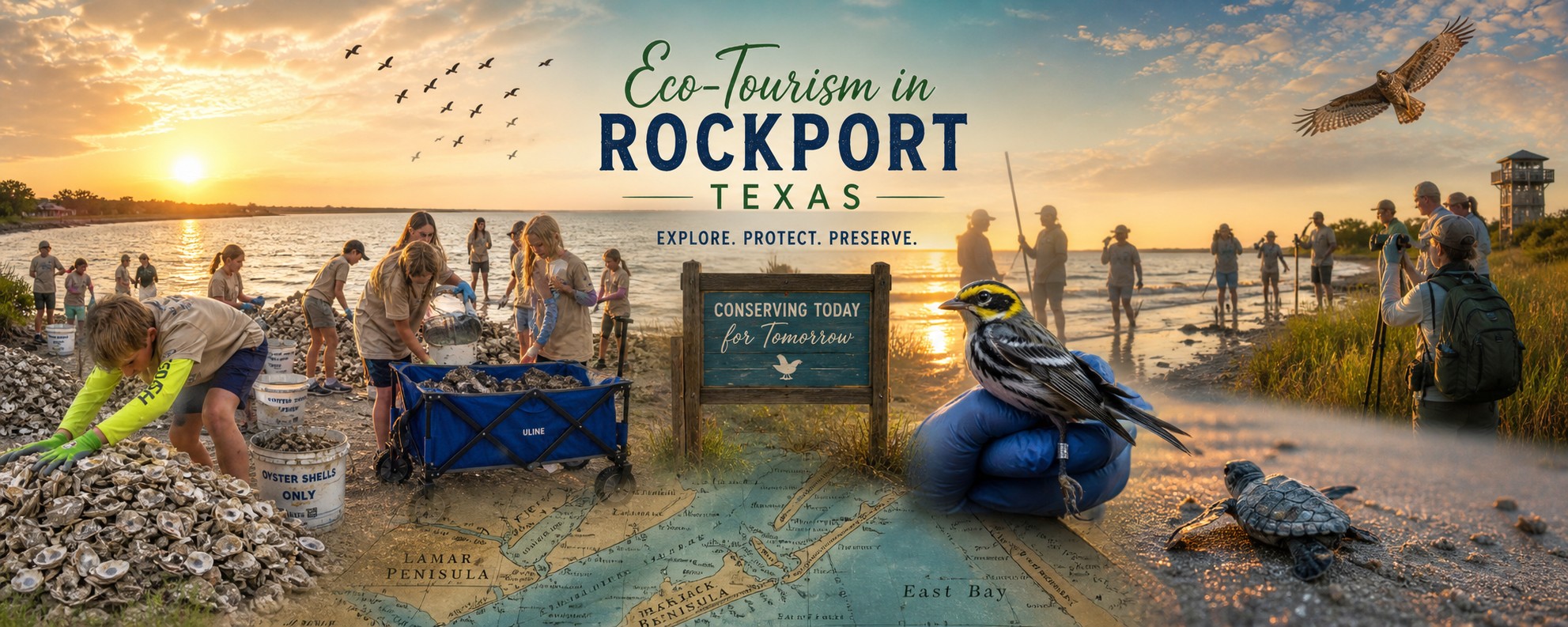
Eco-Tourism in Rockport, Texas
Beneath the birding hotspots and state parks, Rockport has a thriving conservation community that most visitors never discover — until now.
The Conservation Capital of the Texas Coast
Most people come to Rockport to watch birds. What they don’t realize is that the same bays, marshes, and barrier islands drawing those birds are the center of some of the most active conservation work in the state of Texas — and much of it is open to the public.
Oyster reefs are being rebuilt by hand. Sea turtles are hatching and returning to the Gulf. Shorebirds are being monitored. Native habitats are being restored acre by acre. The people doing this work — state park rangers, marine biologists, retired game wardens, school kids with buckets of shell — are out there right now.
This page is your insider guide to what’s happening, who’s doing it, and how to be part of it.
Goose Island State Park · Aransas Bay
Oyster Reef Restoration — Sink Your Shucks
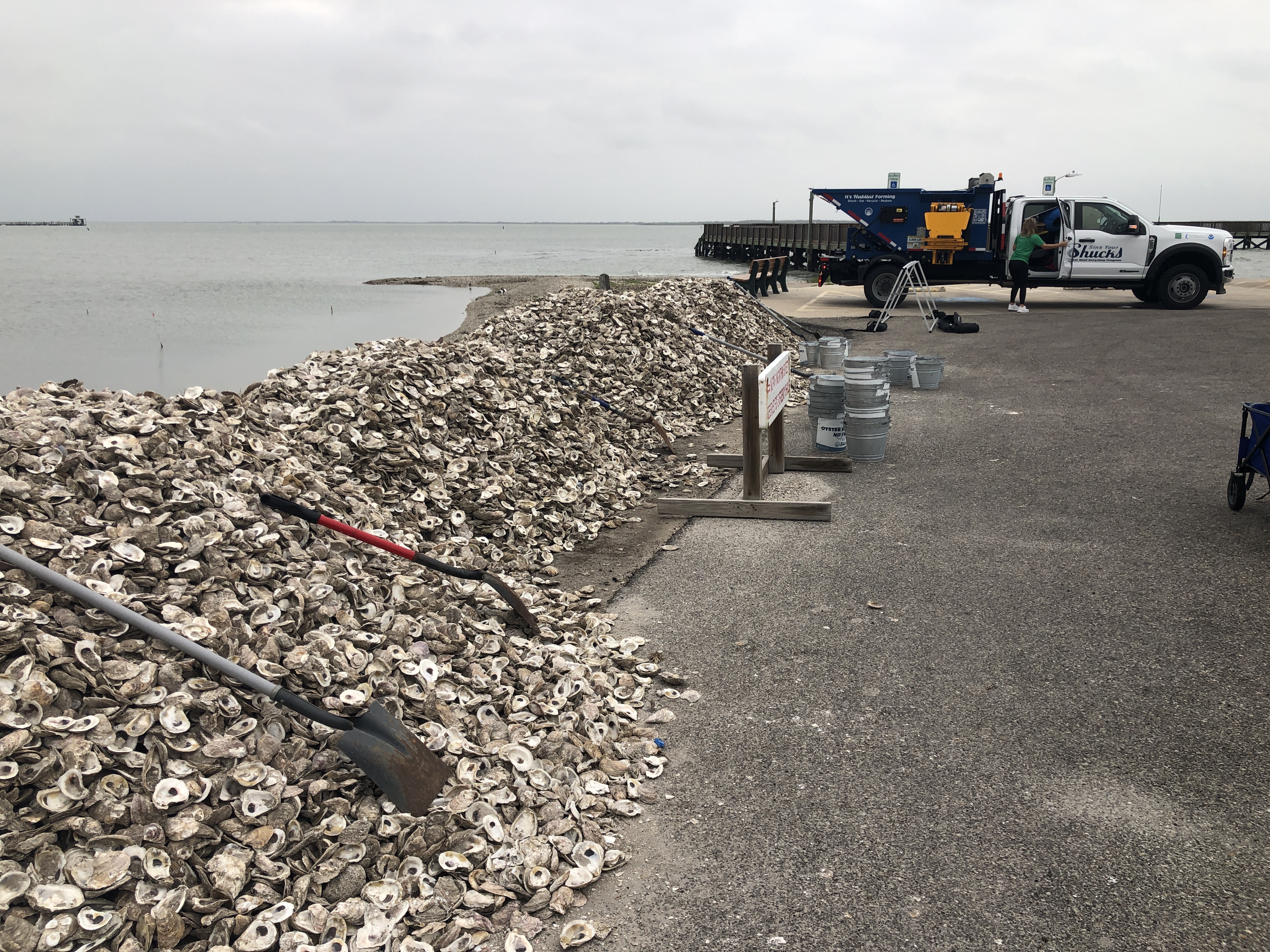
Every oyster shell you see piled at the water’s edge at Goose Island State Park has a purpose. Volunteers with the Sink Your Shucks Oyster Shell Recycling Program collect discarded shells from local restaurants, stage them here, and return them to Aransas Bay — where they become the substrate that future oysters need to grow.
The science is straightforward: baby oysters — called spat — are free-swimming larvae that need hard surface to attach to and grow. Without old shell on the bay floor, there is nothing for them to settle on. No substrate means no reef. No reef means no oysters, no habitat for hundreds of species, and no natural wave dampening to protect the shoreline.
May and June are the peak spawning months on the Texas coast, which is exactly why the commercial harvest season closes April 30 — protecting the moment when oysters are most vulnerable and most essential.
A Warning Written in the Chesapeake Bay
The Chesapeake Bay was once home to oyster reefs so massive they broke the water’s surface at low tide — documented as navigational hazards for European ships in the 1870s. Industrial harvesting didn’t just remove the oysters. It removed the shells, destroying the substrate future generations needed to survive. Today, Chesapeake Bay oyster populations sit at roughly 1% of their historical levels. The bay has yet to recover.
In 1993, oystermen working Aransas Bay could pull 90 sacks in a single day — a measure of a healthy, thriving reef system. That kind of productivity doesn’t exist anymore. The pattern of overharvest and substrate removal that destroyed the Chesapeake is exactly what Aransas Bay is working to avoid.
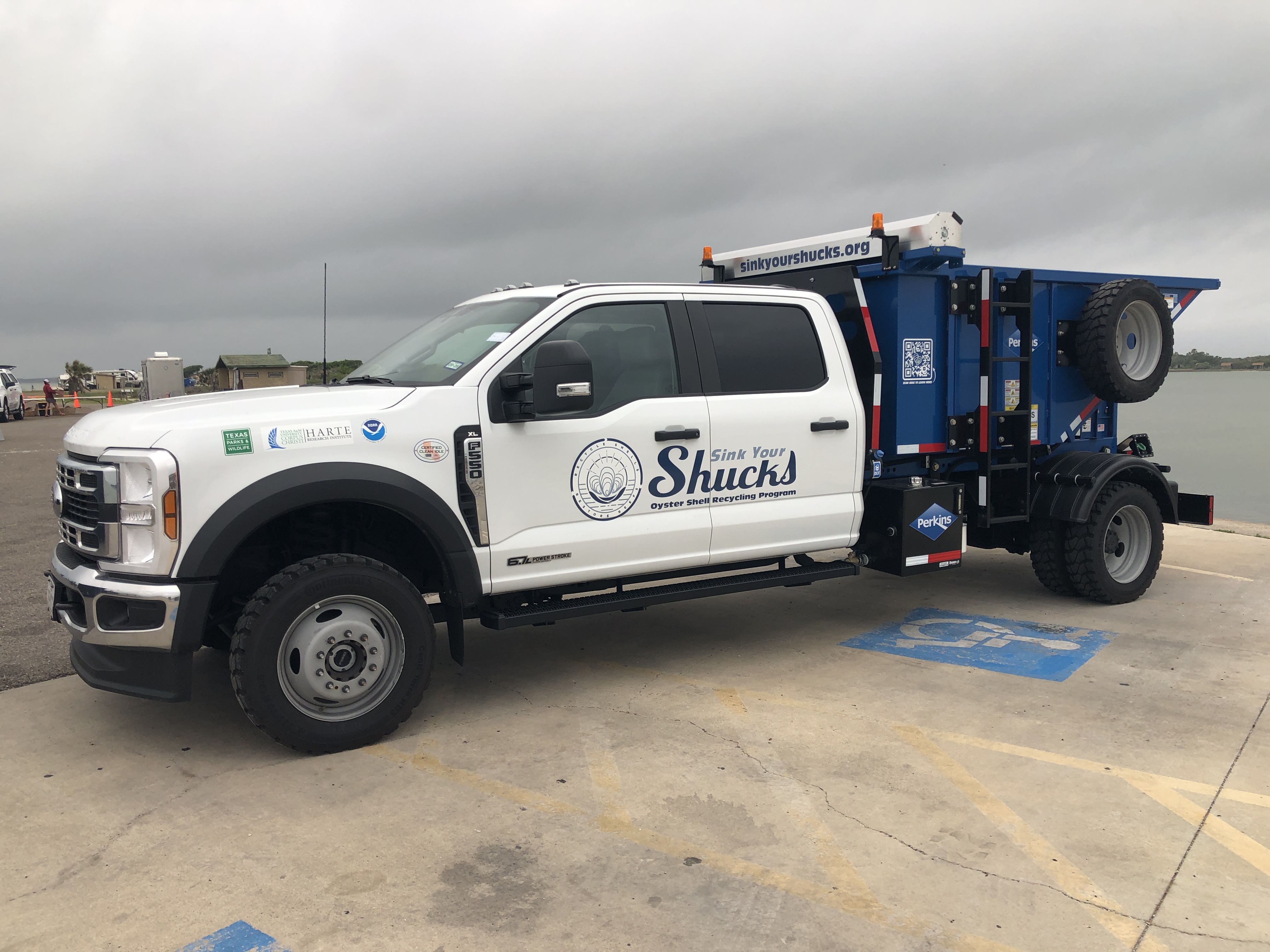
The Sink Your Shucks program — run by the Harte Research Institute at Texas A&M Corpus Christi in partnership with Texas Parks & Wildlife and NOAA — has recycled over 3 million pounds of shells and restored more than 45 acres of oyster reef since 2009. Every shell returned to the bay is a lesson from the Chesapeake, applied here before it’s too late.
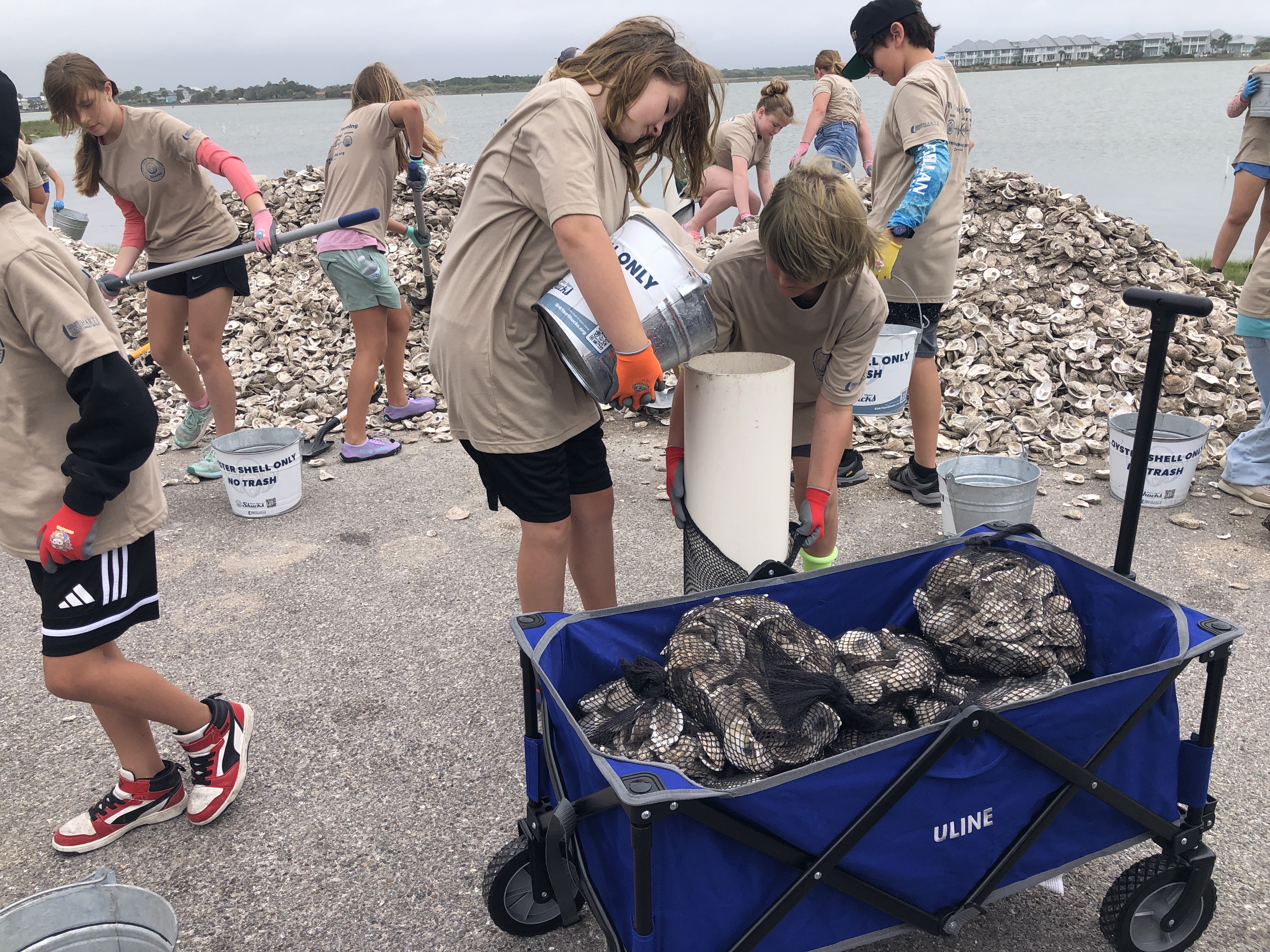
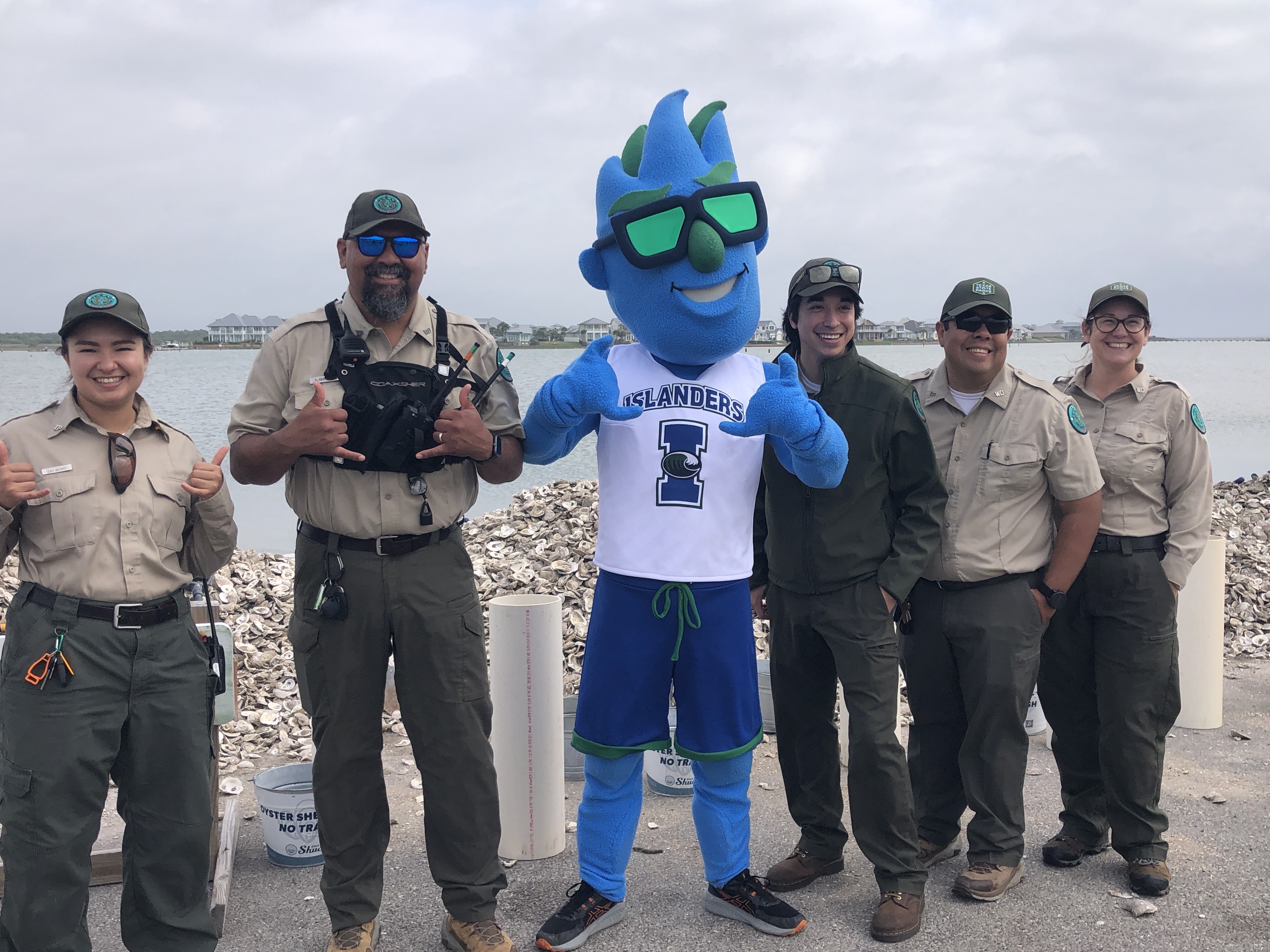
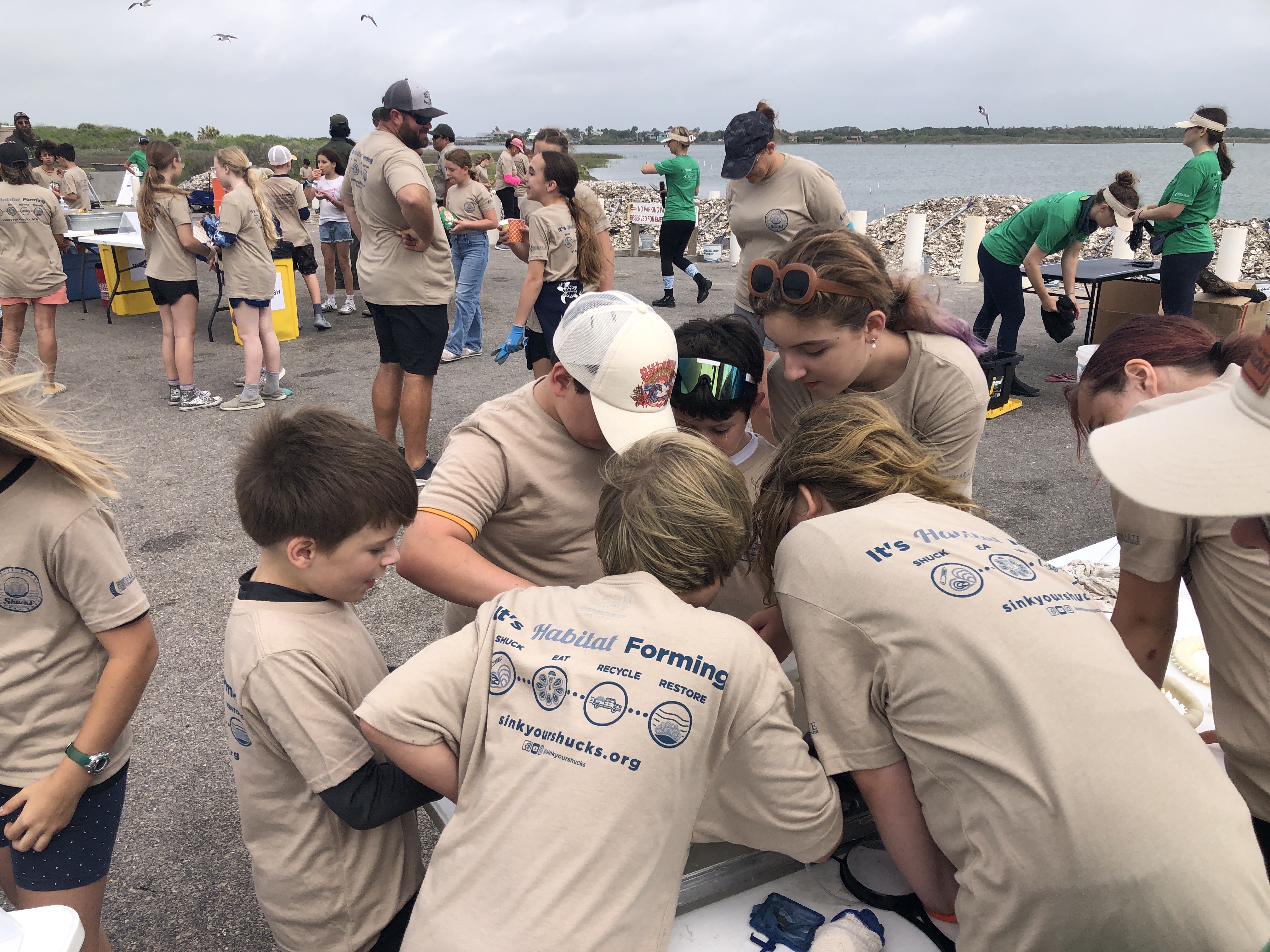
Rockport-Fulton middle school students helping build oyster reef at Goose Island State Park — May 5, 2026
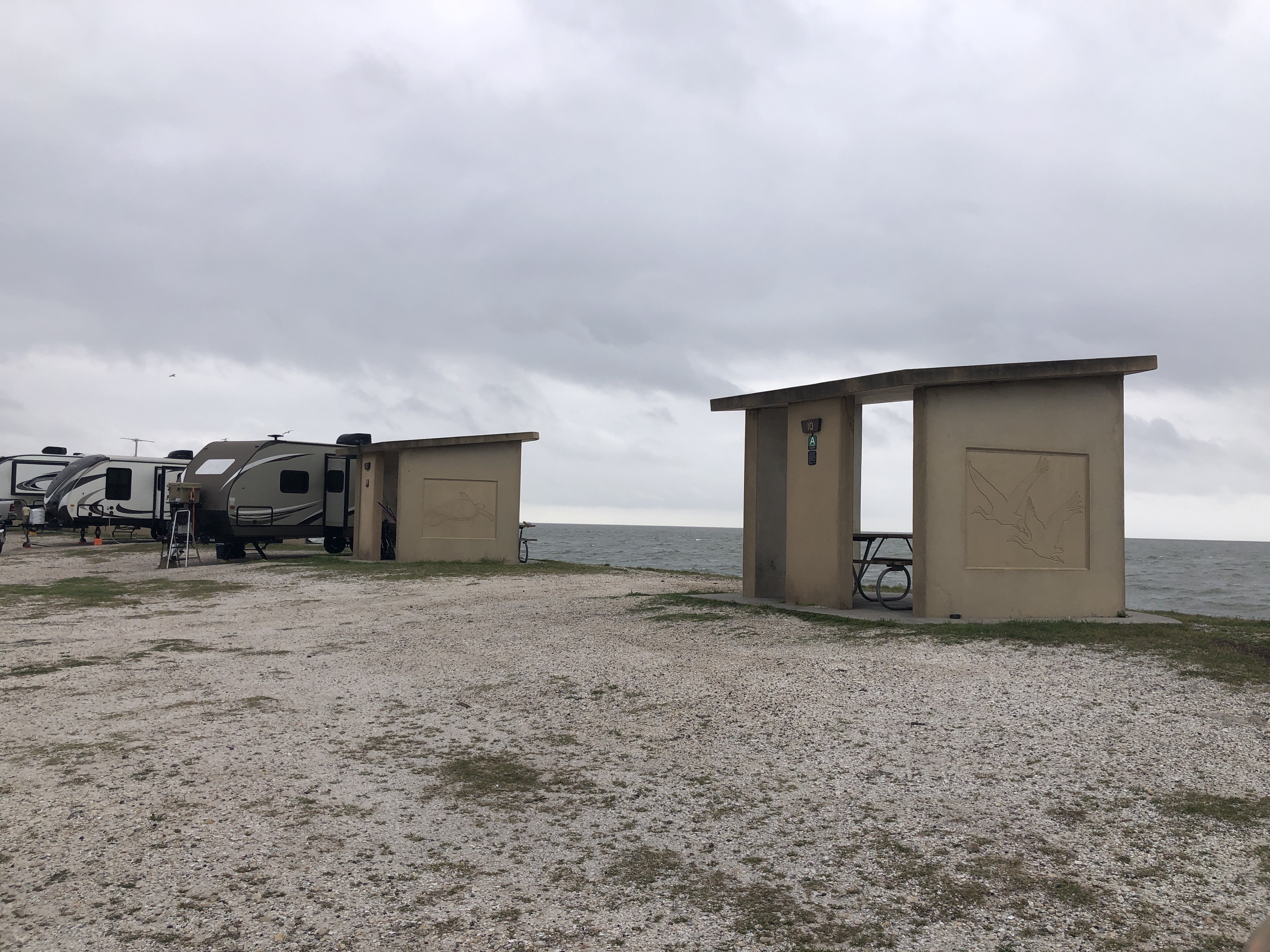
Where This Happens
Goose Island State Park, 202 State Park Road 13, Rockport, TX. The same park with the 1,620-foot fishing pier — longer than the Eiffel Tower is tall — reaching into Aransas Bay. The pier itself sits above some of the most ecologically important shallow water on the Texas coast.
How to Get Involved — Oyster Reef Restoration
Adult volunteer days for oyster reef building are scheduled periodically — but they aren’t widely advertised, which means most people who would love to participate never find out about them. This is the honest reality of local conservation: if you’re not connected to the community, you miss it.
The best way to stay in the loop is to go directly to the source:
- · Visit sinkyourshucks.org for program information
- · Follow Sink Your Shucks on social media for upcoming event dates
- · Contact the Harte Research Institute at Texas A&M Corpus Christi
- · Check with Goose Island State Park directly — (361) 729-2858
You can also drop your oyster shells at participating Rockport restaurants — look for the Sink Your Shucks collection buckets.
Looking for more volunteer opportunities on the Texas coast? TroopMuster aggregates conservation and community volunteer events — from Goose Island reef builds to Junior Naturalist programs and coastal restoration days.
Padre Island National Seashore · South Texas
Sea Turtle Releases — Kemp’s Ridley
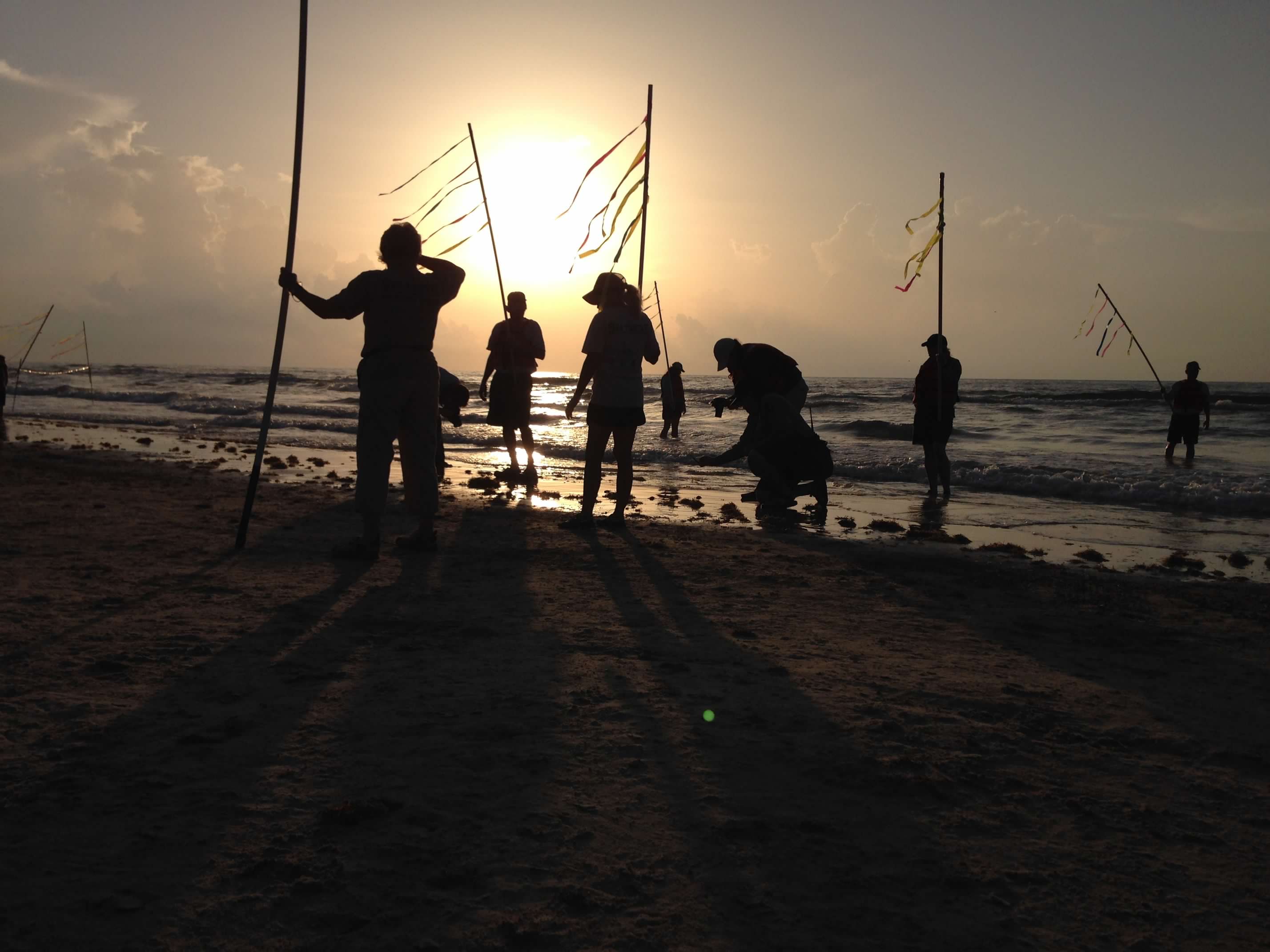
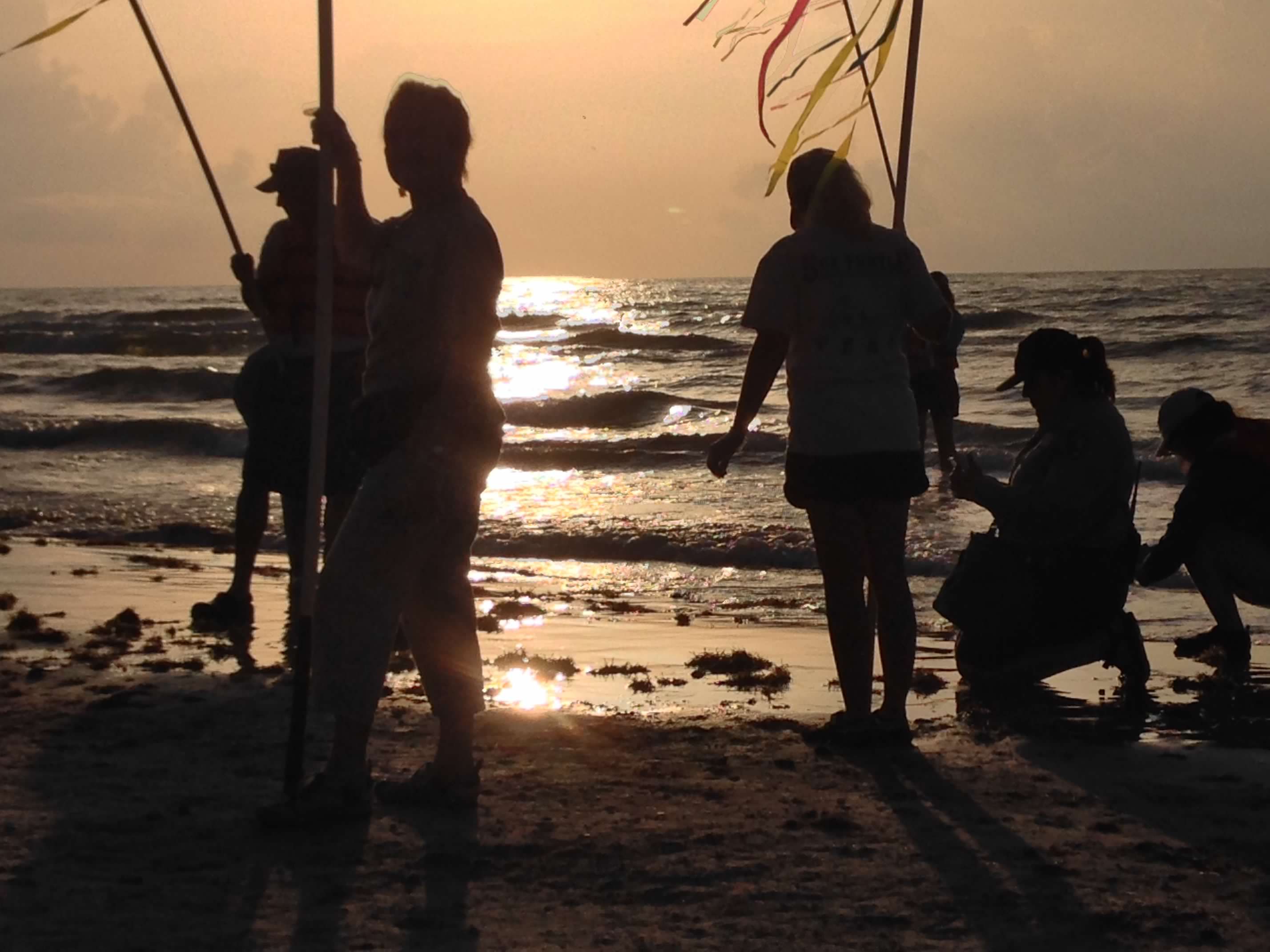
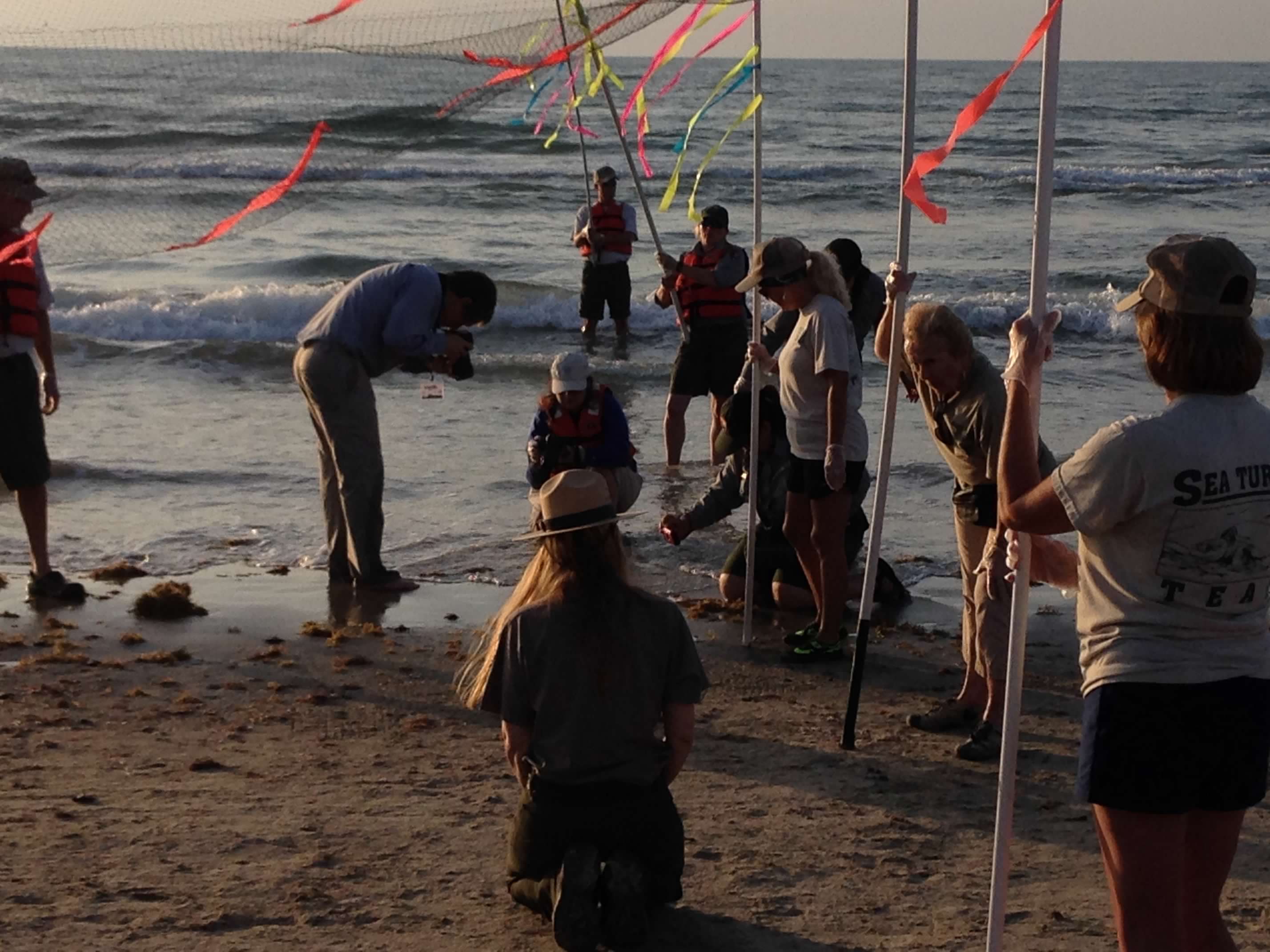
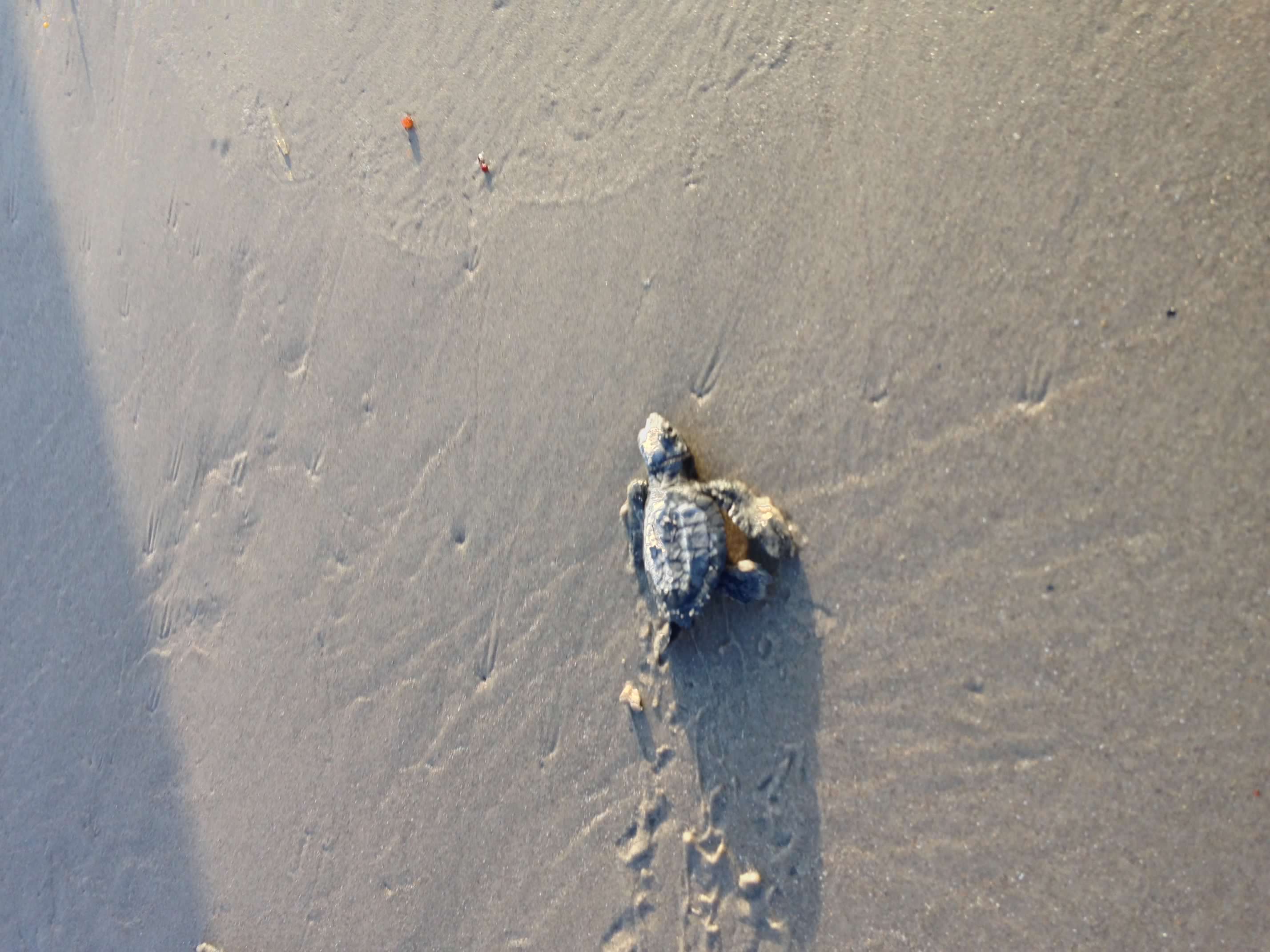
An hour south of Rockport, one of the most extraordinary conservation events on the Gulf Coast happens every summer on the beach at Padre Island National Seashore. Kemp’s ridley sea turtles — the rarest sea turtle in the world — emerge from nests on the beach and make their first run to the Gulf of Mexico.
The National Park Service’s sea turtle program has been protecting and monitoring these nests since the 1970s. Hatchlings are carefully collected, incubated, and released in coordinated events that the public can attend — watching dozens of tiny turtles scramble across the sand toward the water is something you don’t forget.
Releases typically occur June through August, though timing depends entirely on when nests hatch. Padre Island National Seashore announces releases on short notice through their social media and website.
How to Attend a Sea Turtle Release
- · Follow Padre Island National Seashore on Facebook — releases are announced 1–2 days in advance
- · Releases happen at the south end of the seashore beach — plan for an early morning drive
- · No registration required — free and open to the public
- · Season: June through August, weather and nest-dependent
The Living Bay — Coastal Wildlife Worth Knowing
The birds get all the attention. But Aransas Bay and the Texas Gulf Coast support an entire ecosystem of creatures that most visitors walk right past. A morning on any Rockport beach or bay flat will reveal a world in motion.
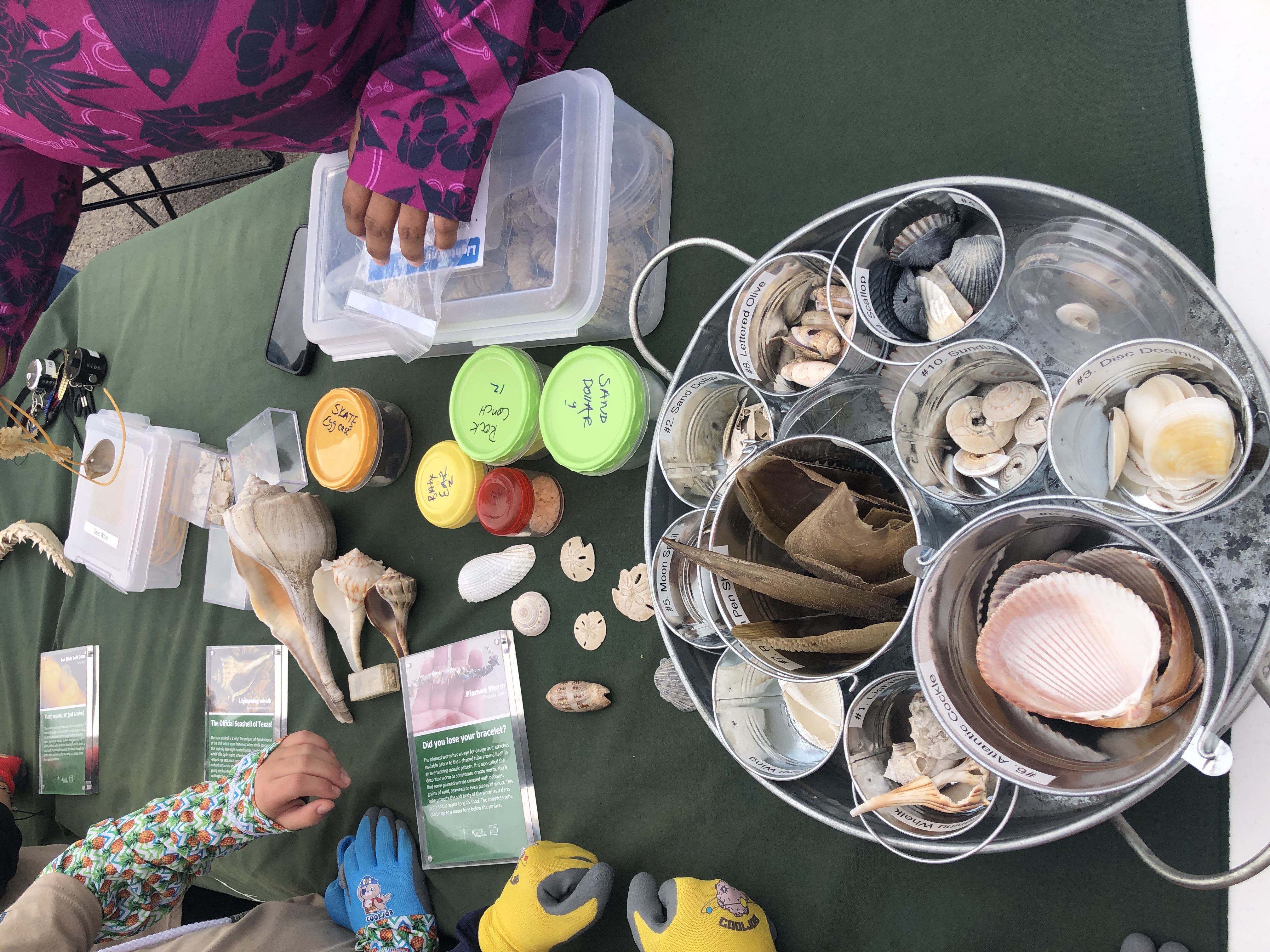
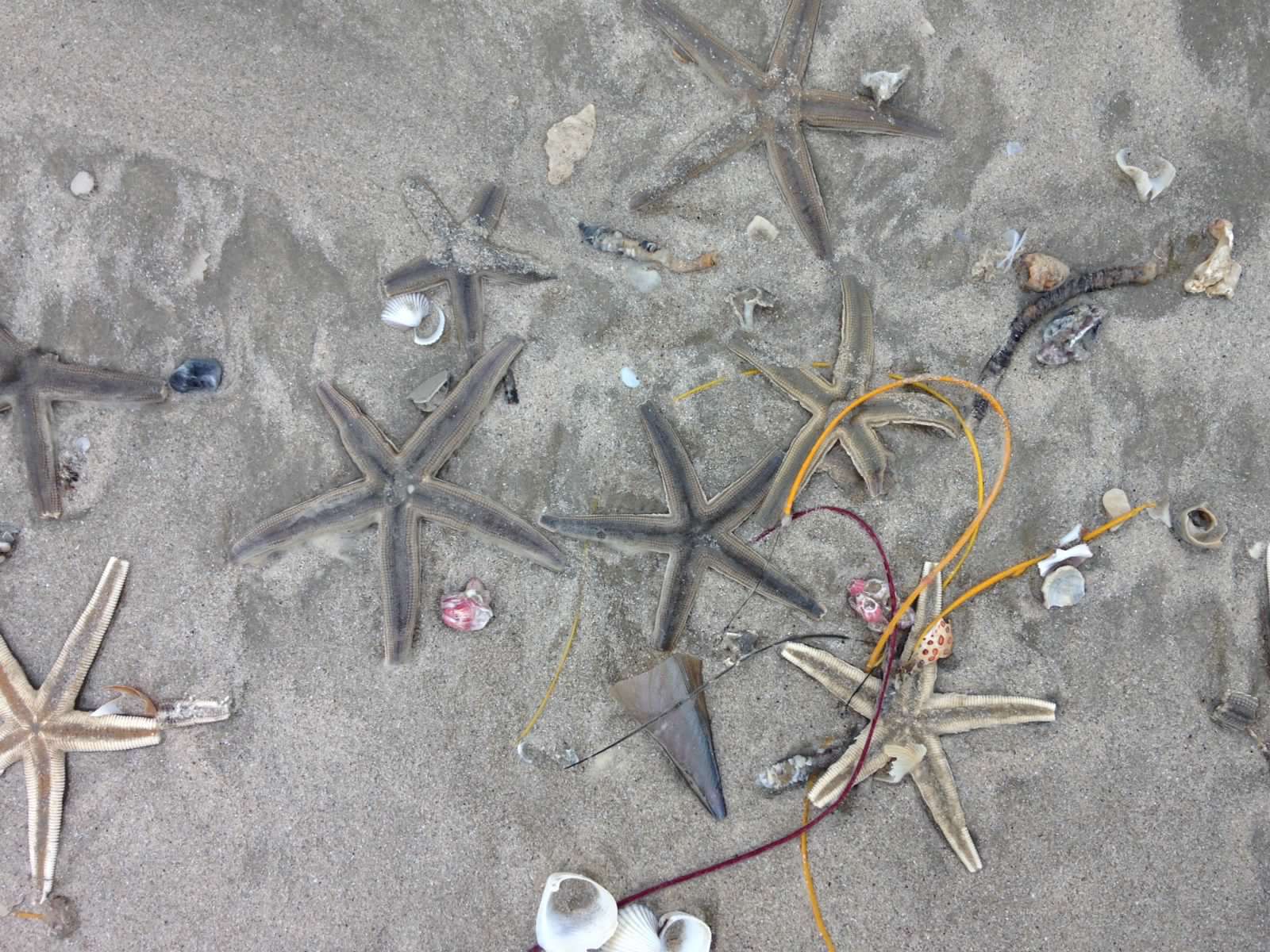
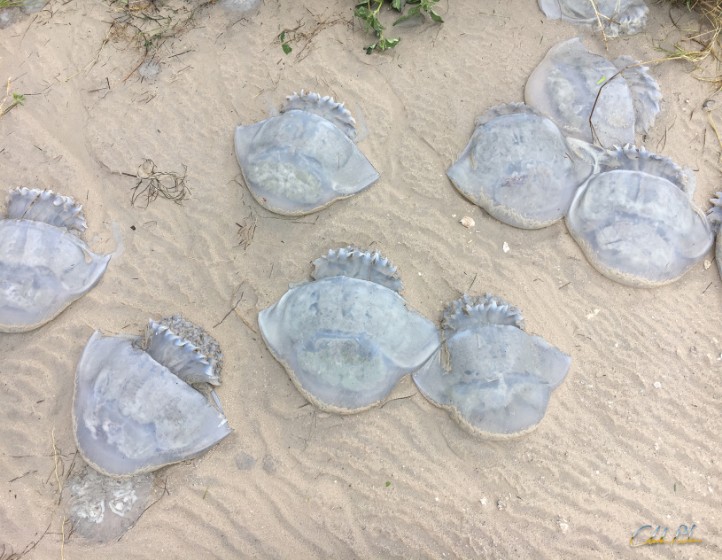
Starfish in the shallows. Jellyfish washed onto shore after storms. Blue crabs in the marsh grass. Schools of mullet breaking the surface. These aren’t curiosities — they’re indicators of a bay system that is still functioning, still alive, and worth protecting.
The Bigger Picture
Birds Are the Reason It All Matters
Rockport sits at the center of one of the most important migratory corridors in North America. The same Aransas Bay waters where oyster reefs are being rebuilt are the wintering grounds for the entire wild Aransas-Wood Buffalo flock of whooping cranes — all 560+ of them. The same Gulf Coast shoreline where sea turtles nest is where millions of songbirds make landfall after crossing the Gulf of Mexico in a single overnight flight.
A healthy bay means healthy birds. Oyster reefs filter water. Clean water grows marsh grass. Marsh grass shelters blue crabs and fish. Fish feed herons, egrets, and roseate spoonbills. Every restoration event happening in Rockport is connected to everything else you came here to see.
Key Organizations
Sink Your Shucks
Oyster shell recycling & reef restoration
sinkyourshucks.org
Harte Research Institute
Texas A&M Corpus Christi — program operator
harteresearch.org
Goose Island State Park
Host site for reef restoration events
tpwd.texas.gov
Padre Island National Seashore
Sea turtle nest protection & releases
nps.gov/pais
Mid-Coast Master Naturalists
Bird monitoring, habitat management, CBBEP
midcoast-tmn.org
By the Numbers
A Note on Finding These Events
Eco-tourism is growing fast in this area, but most events never reach the public because only people already in the community know about them. We’re working to change that. Check back here, and follow the organizations listed above directly.
Planning a Conservation Trip?
Trek4Free covers eco-tourism, outdoor volunteering, and give-back adventures across Texas — including the conservation events happening right here on the Aransas coast.
Read the Eco-Tourism Guide →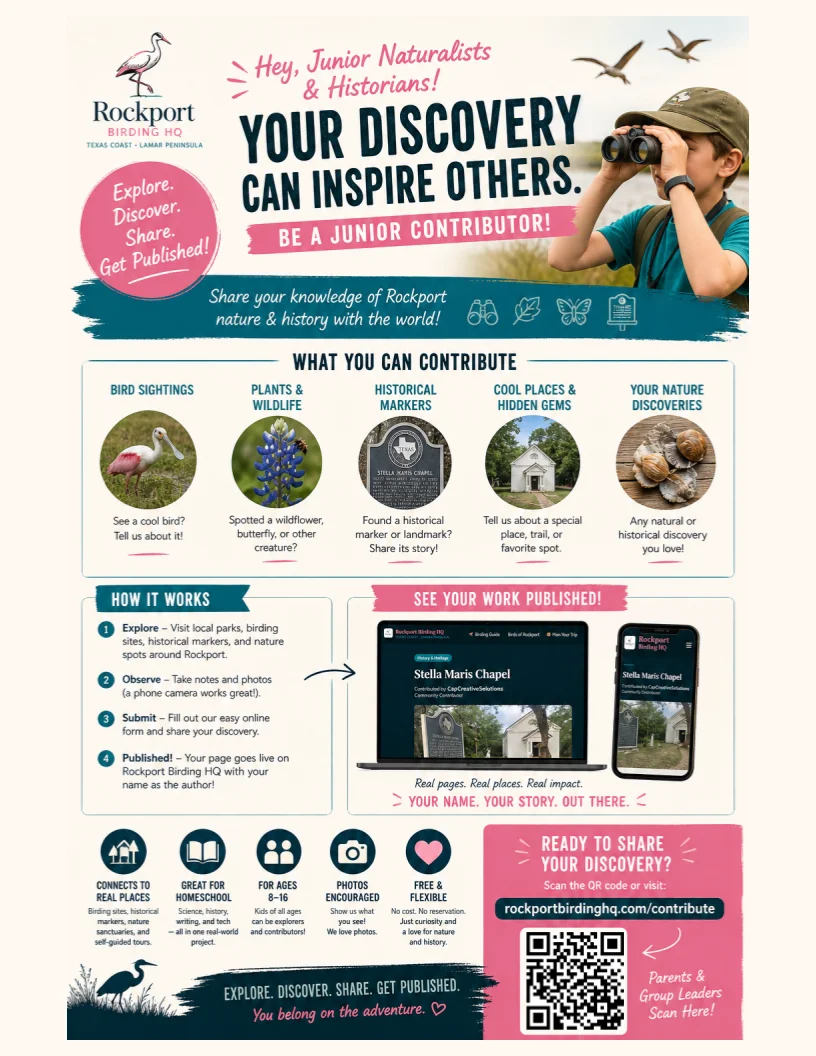
Young Naturalists Welcome
Did You Discover Something?
If today sparked a question, a sighting, or a story — share it. Junior naturalists, student groups, and community members can contribute a species, plant, or conservation topic and earn their own page on Rockport Birding HQ.
Submit Your Discovery →