
Lamar Peninsula · Aransas County, Texas
Two Stories So Strange, Ripley Featured Them Both
A duck caught by an oyster. A tree older than the Magna Carta. Both from a small peninsula on the Texas Gulf Coast — and both verified entries in Ripley’s Believe It or Not.
Entry No. 1 — Mills Wharf, Lamar, Texas
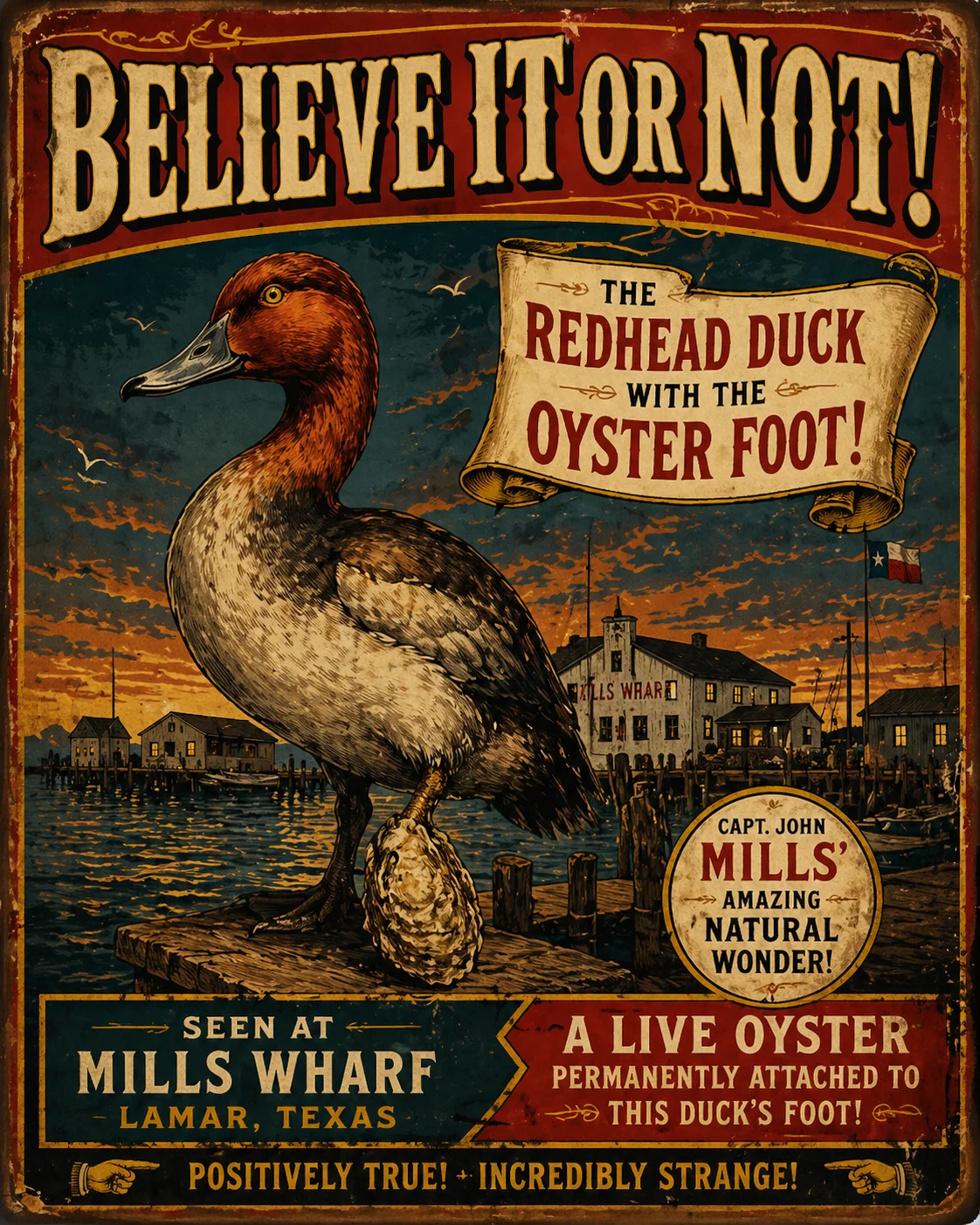
The Redhead Duck with the Oyster Foot
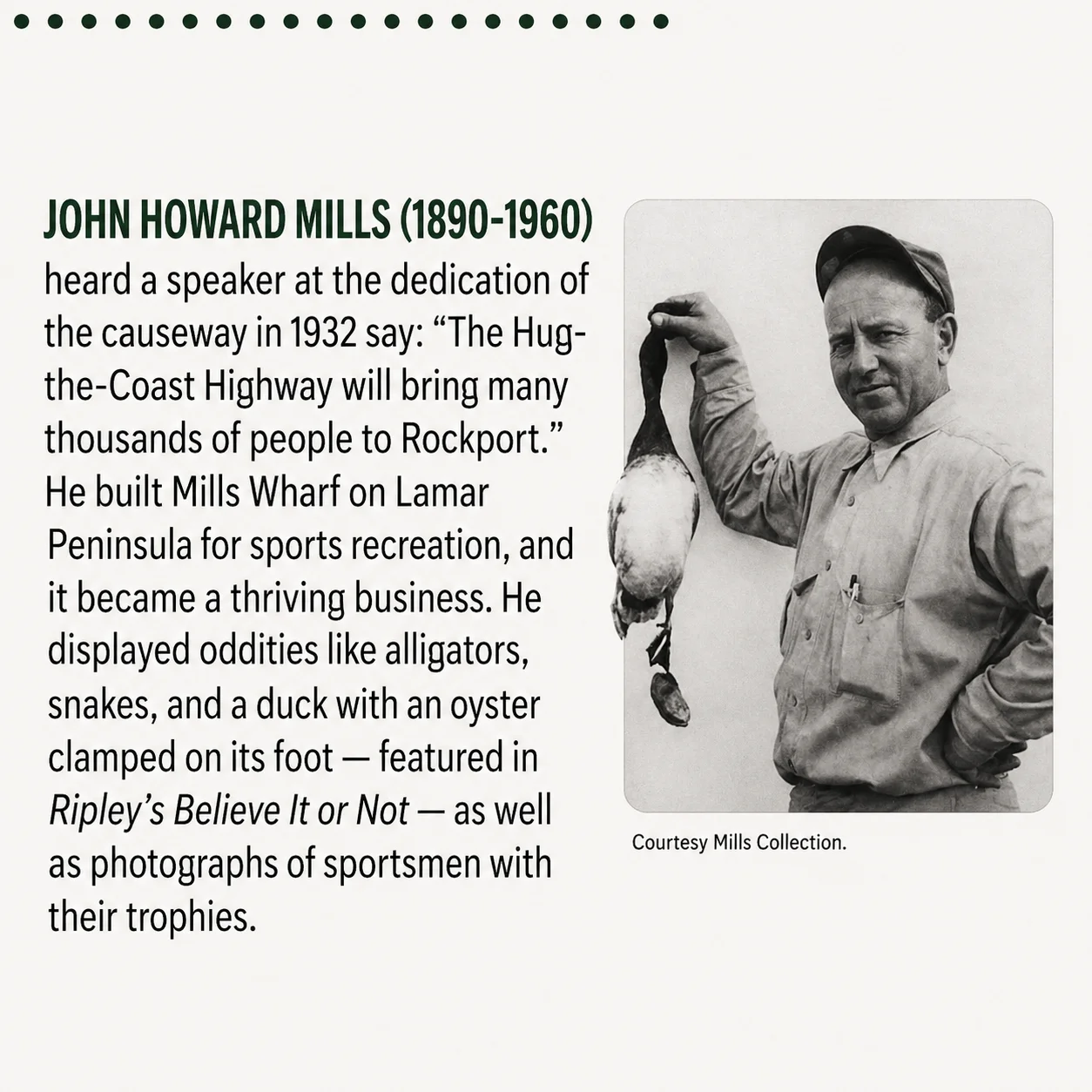
John Howard Mills (1890–1960) holding the duck with oyster attached — Courtesy Mills Collection, History Center for Aransas County
The Day a Duck Got Caught by an Oyster
Sometime in the 1930s, a Redhead duck landed on the shallow oyster reefs of Aransas Bay — the same reefs that had been feeding the Karankawa people and later the commercial fishing industry for centuries. The duck reached into the water for something to eat. An oyster clamped shut on its foot.
The oyster didn’t let go. Not that day, not ever. The duck flew around Aransas Bay with a live oyster permanently attached to its toe — until it was discovered by the staff at Mills Wharf, the famous hunting and fishing lodge on the Lamar Peninsula built by Captain John Howard Mills in 1932.
The duck became the star attraction of the Mills Wharf wildlife display — alongside alligators, snakes, and photographs of sportsmen with their trophies. Word of the duck reached Robert Ripley, and it appeared in his syndicated “Believe It or Not” cartoon, read by tens of millions of newspaper readers nationwide. The Texas Historical Commission marker standing at the site today still mentions it by name.
The Full Story of Mills Wharf
A Seaplane Fishing Service. On Aransas Bay. In 1946.
Mills Wharf wasn’t just a bait shop. John Howard Mills (1890–1960) was at the 1932 Copano Bay causeway dedication when he heard a speaker declare: “The Hug-the-Coast Highway will bring many thousands of people to Rockport.” He went home and built Mills Wharf — a sports recreation destination on the Lamar Peninsula that became the premier waterfowl hunting and fishing lodge on the Texas Gulf Coast. The original pier stretched out over Aransas Bay with rowboats for rent and living quarters for the family. By the 1940s it had grown to include cottages, a guide service, a tackle shop, a store, and the wildlife museum that housed the famous duck.
In 1946, Herbert and Harry Mills — the Captain’s sons — bought the wharf from their parents and took it further. They added a seaplane service: customers could fly out and be dropped at remote fishing sites across the bay system. A seaplane fishing shuttle. On the Texas Gulf Coast. Decades before anyone thought that was a good idea.
The family sold Mills Wharf in 1960 to Toddie Lee Wynne, who developed the property into the Sea Gun Resort. The wharf is gone. But the Texas Historical Commission marker stands at the original location on Hwy 35 in Lamar — and a bait shop still operates on the same grounds, flying the same Live Shrimp flag over the same stretch of Aransas Bay.
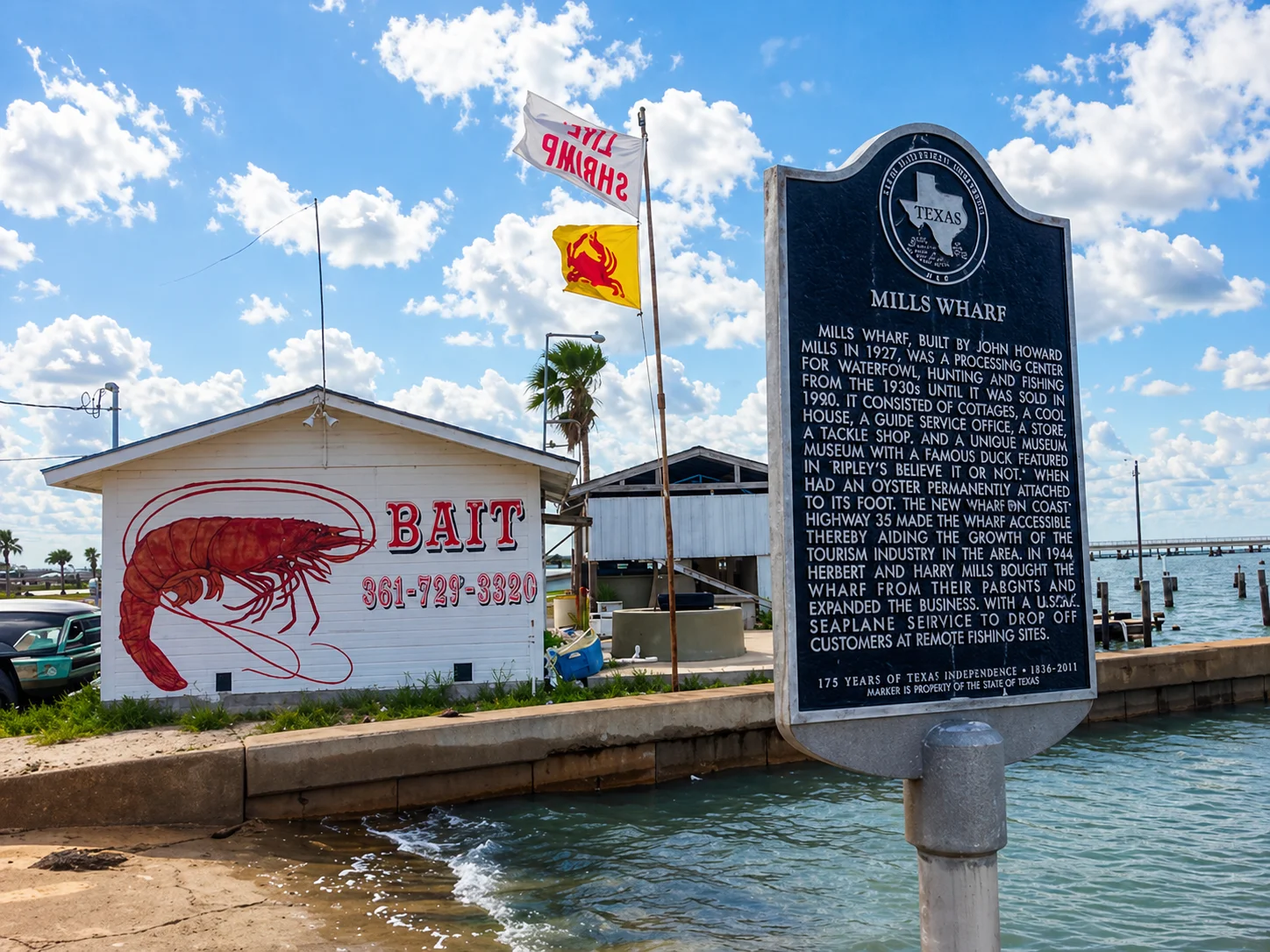
The historical marker still stands at the original Mills Wharf site on Hwy 35, Lamar.
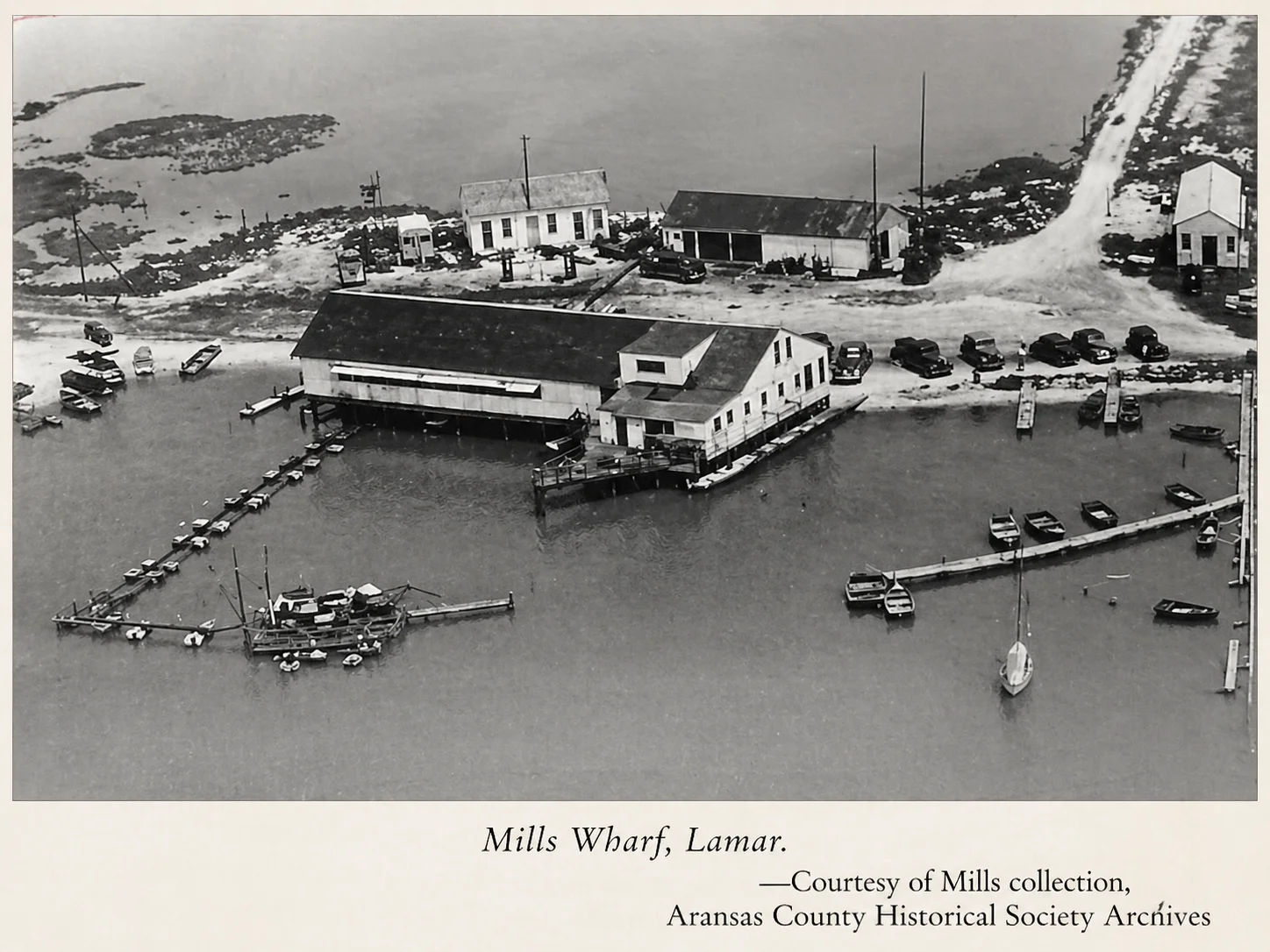
Mills Wharf at its peak, circa 1940s. The long pier, rowboats, and main lodge are all visible.
Photo: Mills Collection, Aransas County Historical Society Archives
Find It Today
The Mills Wharf historical marker is on Hwy 35 in Lamar, just north of the Copano Bay bridge. The bait shop next door is still in business.
Entry No. 2 — Goose Island State Park, Lamar Peninsula
The Tree That Outlived Civilizations

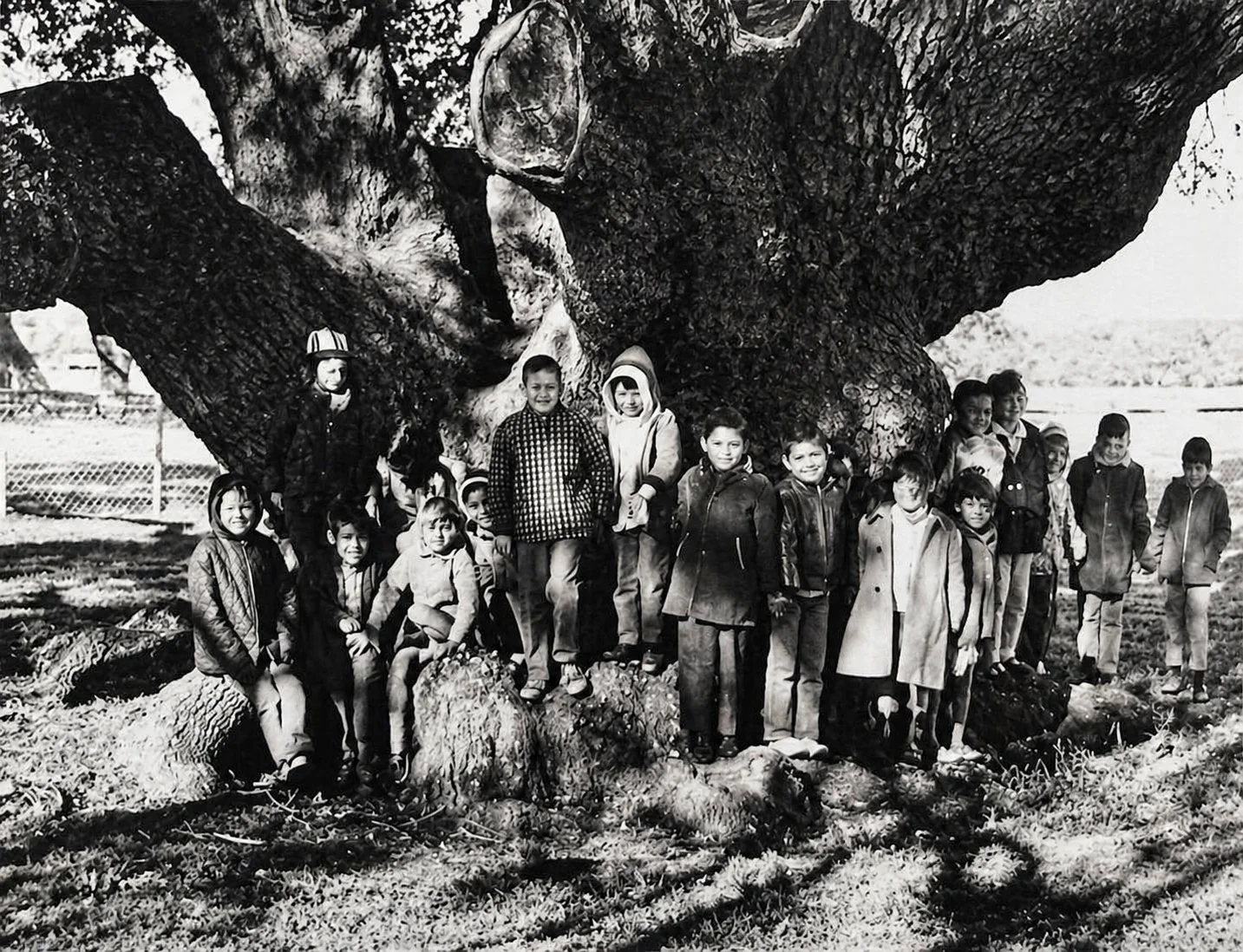
Children at the base of the Big Tree — the massive trunk dwarfs a full class of kids standing beneath it
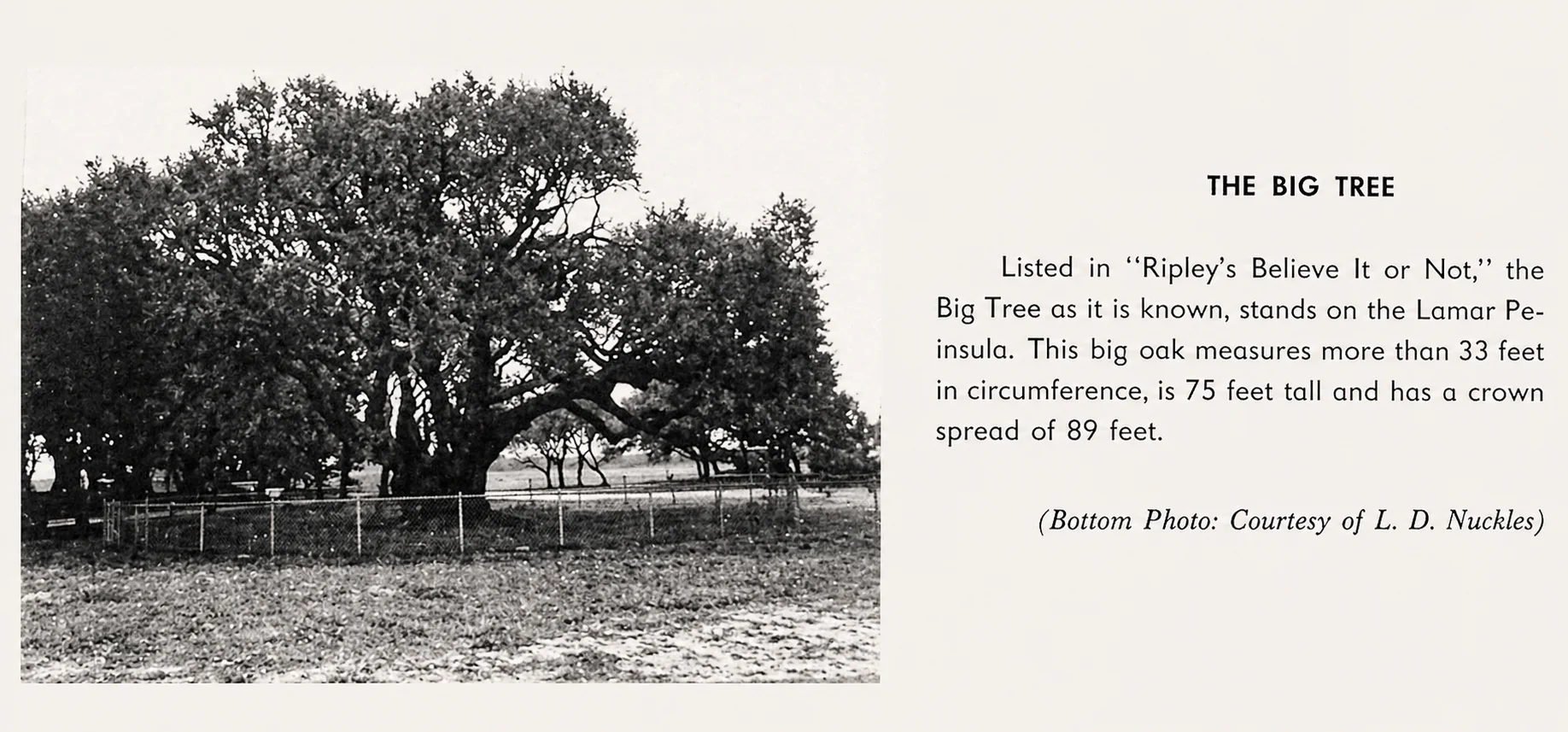
From A Glimpse at Our Past — Aransas County-Rockport Centennial, Inc., 1970. Photo courtesy L. D. Nuckles.
Older Than the Magna Carta. Still Growing.
On the edge of Aransas Bay, on the same Lamar Peninsula where Mills Wharf once stood, there is a coastal live oak that was already ancient when Christopher Columbus was born. The Texas Forest Service estimates it at over 1,000 years old. More recent studies place it closer to 2,000. Either way, it was a full-grown tree when the Battle of Hastings was fought in 1066.
According to the 1970 Aransas County Centennial publication — the same source that confirms the Ripley’s listing — the Big Tree measures more than 33 feet in circumference, stands 75 feet tall, and has a crown spread of 89 feet. It grows more sideways than upright, throwing massive limbs out parallel to the ground like arms stretched wide.
The tree was named Texas State Champion Coastal Live Oak in 1969 and became charter member #16 of the Live Oak Society. It has been the subject of a Ripley’s Believe It or Not cartoon, one of the most widely distributed syndicated features in American newspaper history. The Karankawa people, who lived along this coast for thousands of years, considered it sacred long before anyone was keeping track of such things.
Quick Facts
Find It
1622 Twelfth St, Lamar, TX — inside the Big Tree Natural Area at Goose Island State Park. Free 0.25-mile interpretive trail from the parking area off Park Road 13.
Both Are on the Same Road
You can see both Ripley’s entries in a single afternoon without retracing a mile.
Mills Wharf Marker
Hwy 35, Lamar — north of Copano Bay bridge. Park at the bait shop. The marker is on the waterfront side.
Free · No hours · Always accessible
The Big Tree
1622 Twelfth St, Lamar — continue north on Hwy 35, turn onto Park Road 13. Big Tree Natural Area is signed.
Free · Open daily · 0.25-mile walk