Texas Gulf Coast
Shorebirds of Rockport, Texas
24 species found along Rockport’s tidal flats, sandy beaches, and coastal wetlands — from wintering godwits to nesting Snowy Plovers.
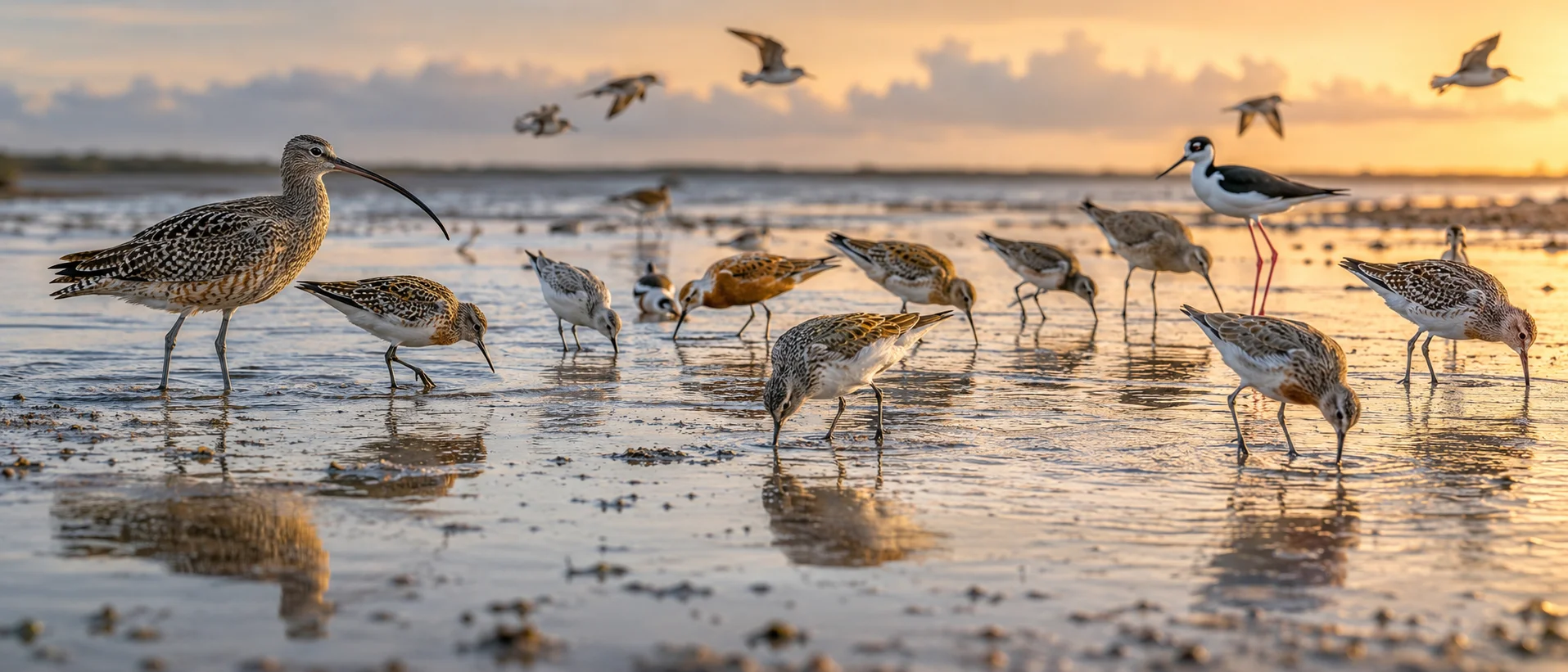
The tidal mudflats, shell beaches, and coastal wetlands around Rockport are among the most productive shorebird habitats on the Texas Gulf Coast. During fall and spring migration, thousands of birds concentrate here, creating one of the best shorebirding experiences in North America.
The Aransas Bay system — miles of protected shallow flats — offers foraging habitat rivaled by few places in the interior of the continent. Shorebird diversity peaks in August–September and again in April–May.
Free Download
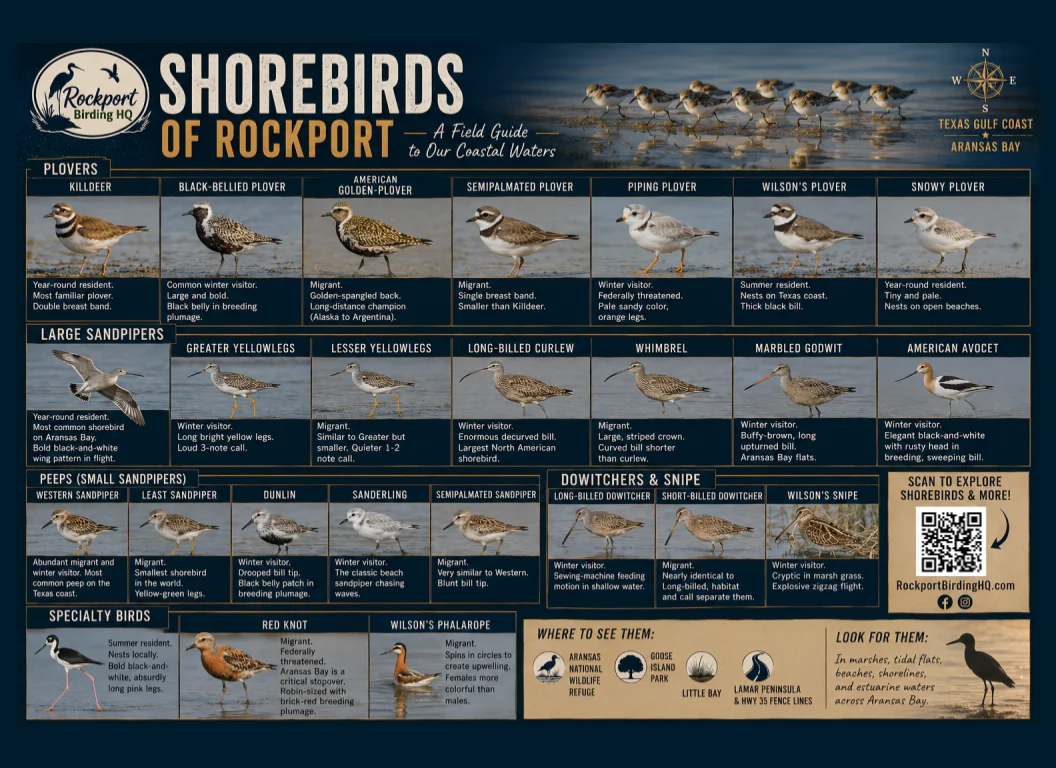
Shorebird Field Guide
A printable identification guide covering the most common shorebirds found along Aransas Bay — organized by size and season for quick field reference.
Download PDF Field Guide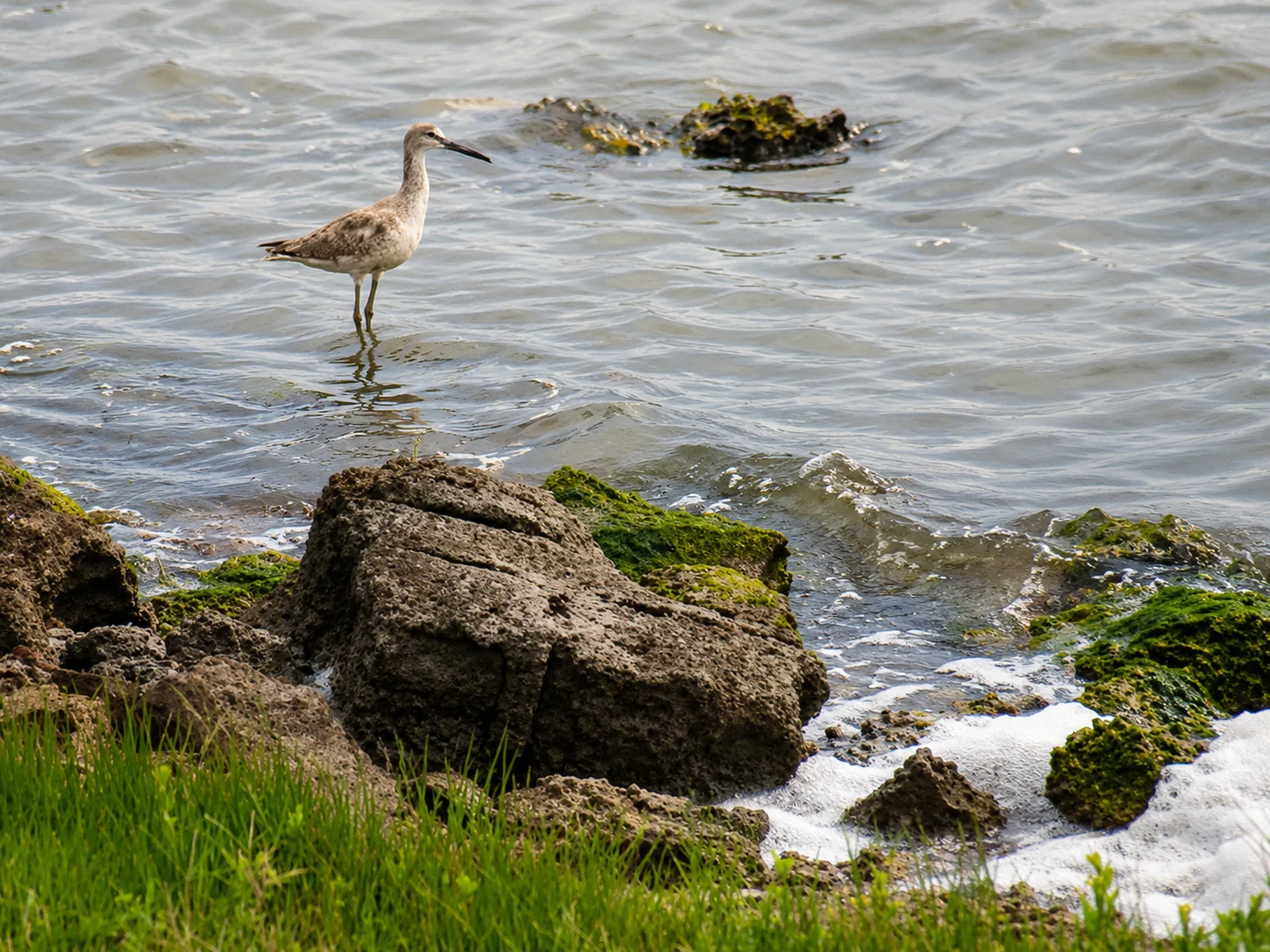
A Willet at rest on the Aransas Bay shoreline — at rest they look plain, but in flight they reveal bold black-and-white wing patterns
Species Found Here
Willet
Year-roundRocky shores, sandy beaches, mudflats
Large, stocky shorebird. Gray-brown at rest — explosive black-and-white wing pattern in flight. Very loud, piercing call.
Black-necked Stilt
Spring–FallShallow wetlands, saltmarsh pools, flooded fields
Unmistakable — jet black back, white underparts, absurdly long pink legs. Nests in Lamar Peninsula wetlands.
American Avocet
Fall–SpringShallow bays, tidal flats, wetland edges
Long upturned bill swept side to side through water. Rust-orange head and neck in breeding plumage. Flocks of hundreds in fall.
Dunlin
WinterTidal mudflats, bay margins
Small, hunched shorebird with drooping bill tip. Black belly patch in breeding plumage. Huge flocks that wheel in unison.
Western Sandpiper
MigrationMudflats, sandy beaches
One of the most abundant migrating shorebirds. Rusty shoulder patches in spring. Often confused with Semipalmated Sandpiper.
Semipalmated Sandpiper
MigrationMudflats, wet sand, tidal flats
Nearly identical to Western Sandpiper — bill slightly shorter and straighter. Webbing between toes, visible up close.
Least Sandpiper
Migration / WinterMudflats, marsh edges, wet fields
Smallest North American shorebird. Yellow-green legs (not black) — the key field mark separating it from similar "peeps."
Long-billed Dowitcher
Fall–SpringFreshwater marshes, flooded fields
Long straight bill probed rapidly in sewing-machine motion. Prefers freshwater edges, unlike Short-billed which favors tidal flats.
Short-billed Dowitcher
MigrationTidal mudflats, saltmarsh
Nearly identical to Long-billed — bill length overlaps. Best separated by habitat, call, and subtle plumage differences.
Marbled Godwit
Fall–SpringCoastal mudflats, shallow bays
Large shorebird with long upturned cinnamon-buff bill. Warm buffy-brown overall. Frequently winters in Aransas Bay in flocks.
Hudsonian Godwit
MigrationCoastal wetlands, tidal mudflats
Rarer than Marbled. Black-and-white tail in flight, dark brick-red belly in breeding plumage. A major rarity for Texas coast.
Ruddy Turnstone
Migration / WinterRocky jetties, shell beaches, wrack lines
Bold harlequin pattern of black, white, and rufous. Flips shells and debris with its short, pointed bill. Common on the Rockport jetties.
Sanderling
Fall–SpringSandy ocean beaches
The classic beach sandpiper — runs back and forth chasing waves. Pale silvery-gray in winter, rusty in breeding plumage.
Piping Plover
Fall–SpringSandy beaches, tidal flats
Federally threatened. Pale sand-colored plover with orange legs and single dark breast band. Often overlooked against pale sand.
Snowy Plover
Year-round (breeds)Shell beaches, sandy tidal flats
Tiny pale plover with dark partial collar. State-threatened in Texas. Nests on barren shell beaches near Rockport.
Wilson's Plover
Spring–FallSandy beaches, tidal flats
Medium plover with distinctively thick black bill — much heavier than other plovers. Complete black breast band, pink-orange legs.
Killdeer
Year-roundWet fields, parking lots, short grass
The most familiar plover — bold double breast band and loud "kill-dee" call. Found far from water in any short-grass habitat.
Black-bellied Plover
Fall–SpringTidal mudflats, sandy beaches
Largest common plover. Stunning black-and-white breeding plumage. Shows distinctive black "armpits" (axillaries) in flight.
Wilson's Phalarope
MigrationShallow ponds, flooded fields
Swims in tight spinning circles to stir up invertebrates. Females brighter than males — reversed sexual dimorphism.
Whimbrel
MigrationTidal flats, coastal grasslands
Large shorebird with long decurved bill. Bold crown stripe. Often heard before seen — distinctive "pee-pee-pee-pee" call in migration.
Long-billed Curlew
Fall–SpringCoastal grasslands, mudflats
Largest North American shorebird. Extraordinarily long decurved bill — up to 8 inches. Cinnamon-buff overall. Year-round on nearby ranches.
Greater Yellowlegs
Fall–SpringShallow marshes, mudflats, pond edges
Bright yellow legs, long neck, active and noisy. Three-note alarm call. Often compared with Lesser Yellowlegs for practice.
Lesser Yellowlegs
MigrationShallow freshwater marshes, flooded fields
Slimmer-billed than Greater, gentler call (two notes). Occurs in same flocks — comparison is the best shorebird teaching tool.
Spotted Sandpiper
Migration / WinterStream edges, bay margins, piers
Constant teetering walk is diagnostic at any distance. Spots on breast in breeding plumage. Bobs ceaselessly while foraging.
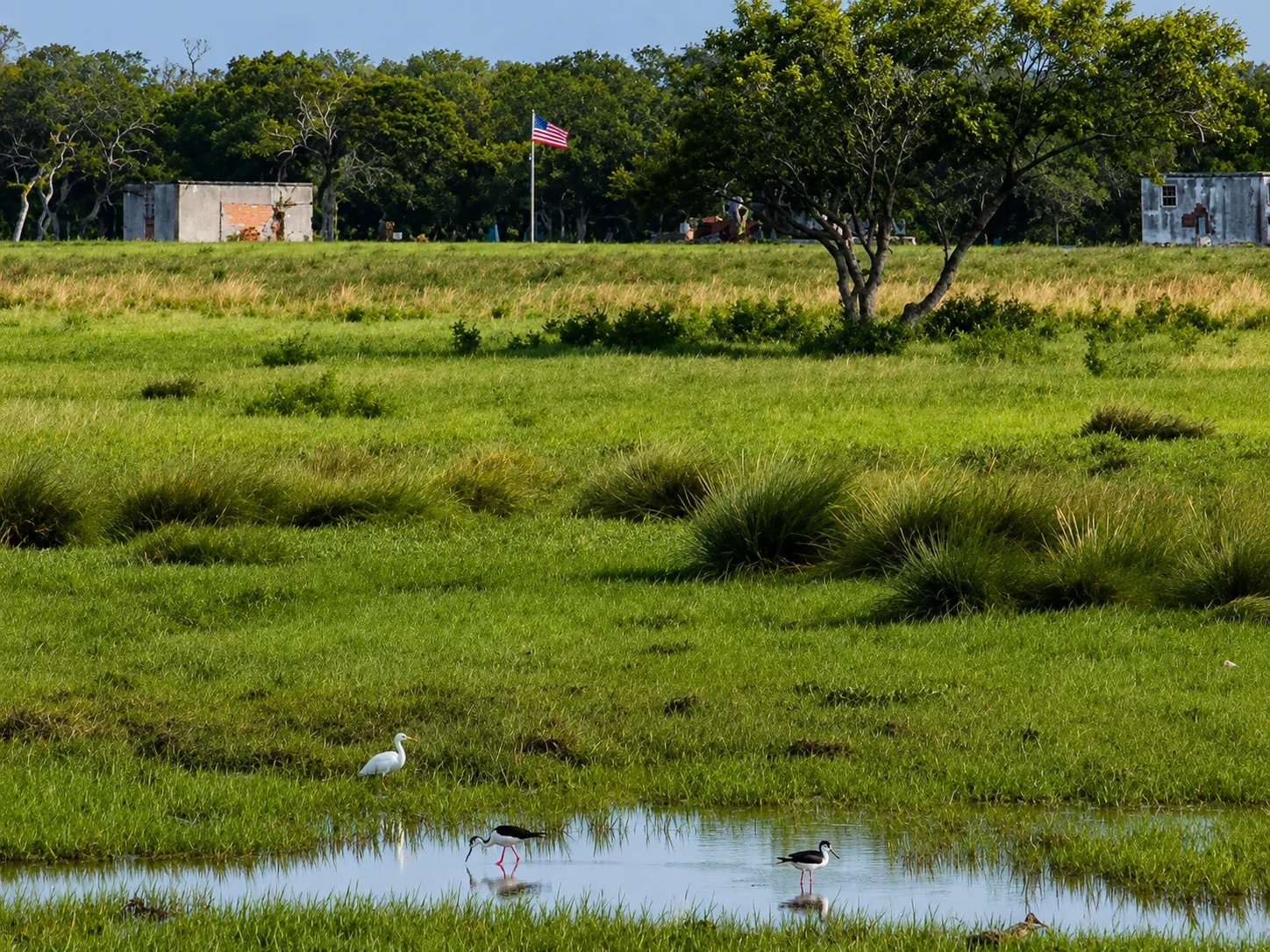
Black-necked Stilts in a Lamar Peninsula wetland — these birds nest here and are active through the warm months
Best Places to Watch Shorebirds Near Rockport
Shorebird Seasons at a Glance
Shorebird ID Tips for Beginners
See Them for Yourself
Plan your Rockport shorebirding trip with our complete guide — best access points, seasons, and expert-led tours.