Aransas Bay · Texas Gulf Coast
Wading Birds of Rockport
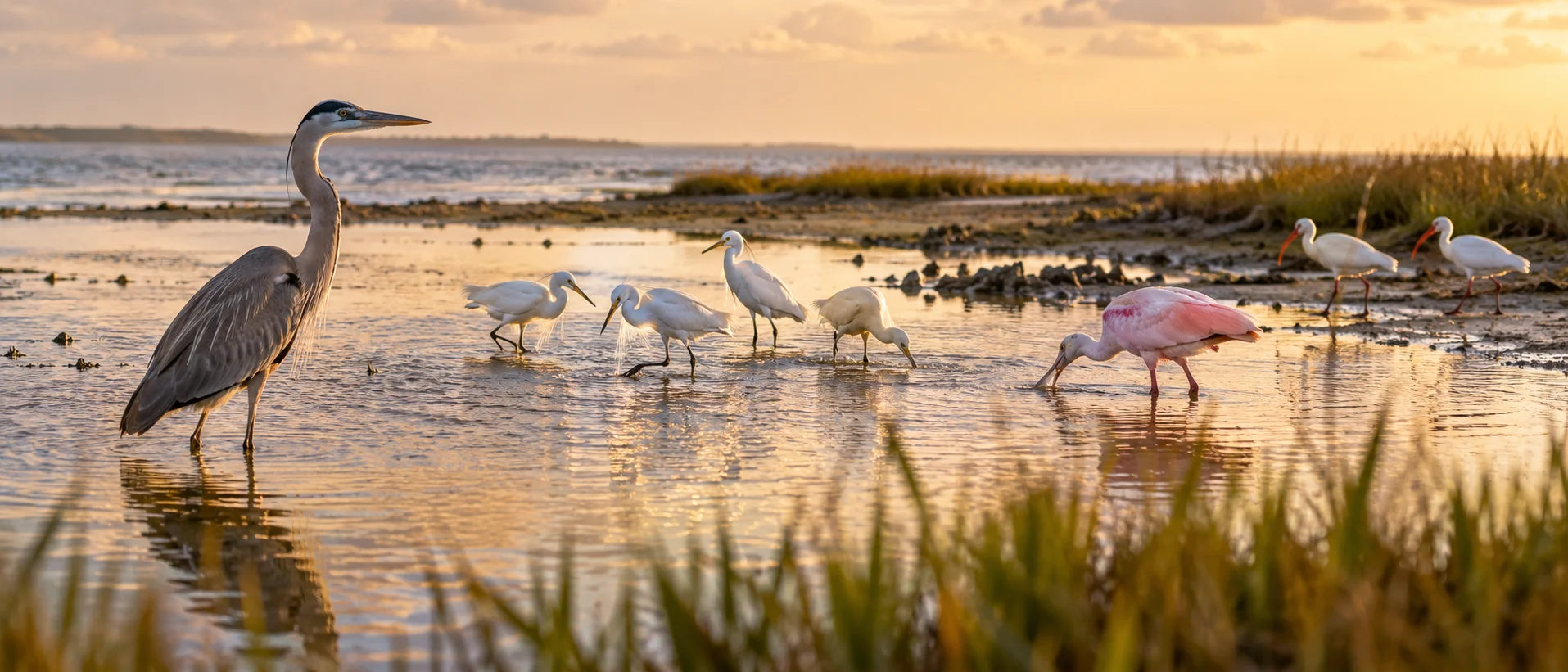
Herons. Egrets. Spoonbills. Ibis. The tidal flats of Aransas Bay host one of the most spectacular concentrations of wading birds in North America — and they're here year-round.
Why Rockport Is a Wading Bird Capital
The shallow tidal flats of Aransas Bay are extraordinarily productive. Warm Gulf waters, extensive seagrass beds, and the constant exchange of tides push shrimp, fish, and crabs into the shallows — exactly where wading birds hunt. The result is one of the most reliable year-round concentrations of herons, egrets, spoonbills, and ibis anywhere in the United States.
You don't need to go far. The Rockport Beach waterfront, Little Bay, the marina, and virtually any tidal flat visible from the road will have wading birds actively feeding — often in mixed flocks of multiple species at once.
The Waders — Who's Out There
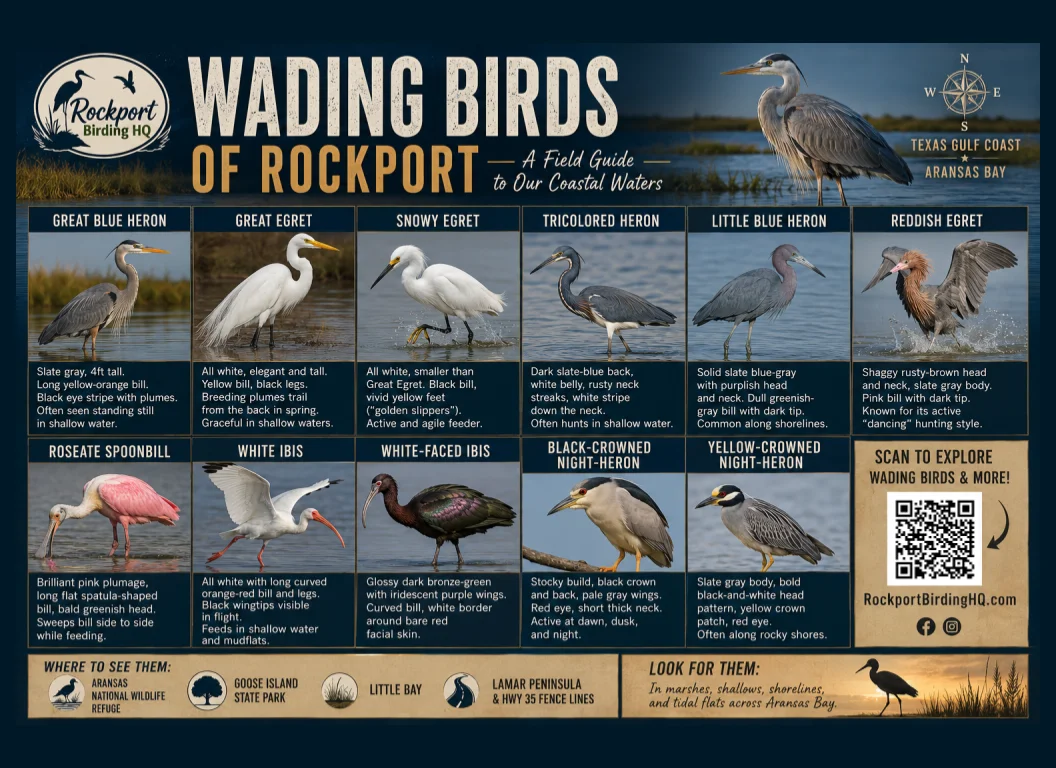
Great Blue Heron
Ardea herodias
45–54 in tall · 6 ft wingspan
The largest heron in North America and one of the most recognizable birds on the Texas coast. Stands motionless for minutes at a time before striking with lightning speed. Year-round on Aransas Bay — often seen alone on dock pilings, tidal flats, and the shoreline at Rockport Beach.
Great Blue Heron Guide →Great Egret
Ardea alba
37–41 in tall · 4.5 ft wingspan
All white with a yellow bill and black legs — elegant and unmistakable. The Great Egret is one of the most commonly seen birds in Rockport Harbor, often hunting from dock edges and marina pilings. Their comeback from near-extinction due to plume hunting is one of conservation's great success stories.
Snowy Egret
Egretta thula
22–26 in tall · 3 ft wingspan
Smaller than the Great Egret with a black bill and vivid yellow feet — those golden slippers are the key field mark. Snowy Egrets are active hunters, shuffling their feet to stir up prey in the shallows. A year-round fixture on the tidal flats around Little Bay and Aransas Bay.
Tricolored Heron
Egretta tricolor
24–26 in tall · 3 ft wingspan
Dark slate-blue above with a white belly and rusty neck streaks — a striking combination. The Tricolored Heron is an active, almost frantic hunter compared to the patient Great Blue. Formerly called the Louisiana Heron, it's one of the most numerous herons along the Texas Gulf Coast.
Little Blue Heron
Egretta caerulea
22–29 in tall · 3 ft wingspan
Adults are slate blue-gray with a purplish head and neck. Immatures are all white and frequently confused with Snowy Egrets — look for the dull greenish-gray bill with a dark tip. Little Blues are quiet, methodical hunters found in marshes and shallow bay edges throughout Aransas County.
Reddish Egret
Egretta rufescens
27–32 in tall · 4 ft wingspan
The showboat of the Texas coast. The Reddish Egret hunts with wild, lurching dances — wings spread like a cape, chasing fish through the shallows. Rockport and Aransas Bay hold one of the largest concentrations in the US. Two color morphs: the rusty-headed dark form and an all-white form that's frequently misidentified.
Reddish Egret Guide →Roseate Spoonbill
Platalea ajaja
28–34 in tall · 4 ft wingspan
The pink bird of Aransas Bay. Nothing else on the Texas coast looks like a Roseate Spoonbill — brilliant pink plumage, spatula-shaped bill, swishing side to side through the water. Year-round residents and one of Rockport's signature birds. Often seen in groups on the tidal flats at low tide.
Spoonbill Guide →White Ibis
Eudocimus albus
21–28 in tall · 3 ft wingspan
All white with a long curved orange-red bill and matching legs. White Ibis often feed in large noisy flocks, probing mud and grass for crabs and crayfish. One of the most colonial nesters on the Texas coast — entire island rookeries can hold thousands of pairs. Common year-round in Aransas County.
White-faced Ibis
Plegadis chihi
19–26 in tall · 3 ft wingspan
A glossy dark ibis with iridescent green-purple wings and a white border around the bare facial skin. Often found mixed with White Ibis flocks. A migrant and occasional winter visitor along the Texas coast — worth scanning any ibis flock carefully during fall migration.
Black-crowned Night-Heron
Nycticorax nycticorax
23–26 in tall · 3.5 ft wingspan
The stocky, short-necked heron that rules at dusk. Black crown and back contrast with pale gray wings. Often heard before seen — a distinctive 'wok' call at dusk signals their emergence from daytime roosts. Common around Rockport's waterfront and marina at dawn and dusk.
Yellow-crowned Night-Heron
Nyctanassa violacea
21–28 in tall · 3.5 ft wingspan
Slate gray with a bold black-and-white head pattern and a yellow crown that glows in good light. Feeds heavily on fiddler crabs and is often seen in saltmarsh habitat. A year-round resident along the Texas coast — look for them roosting in live oaks near the water during the day.
The Marina as Hunting Ground
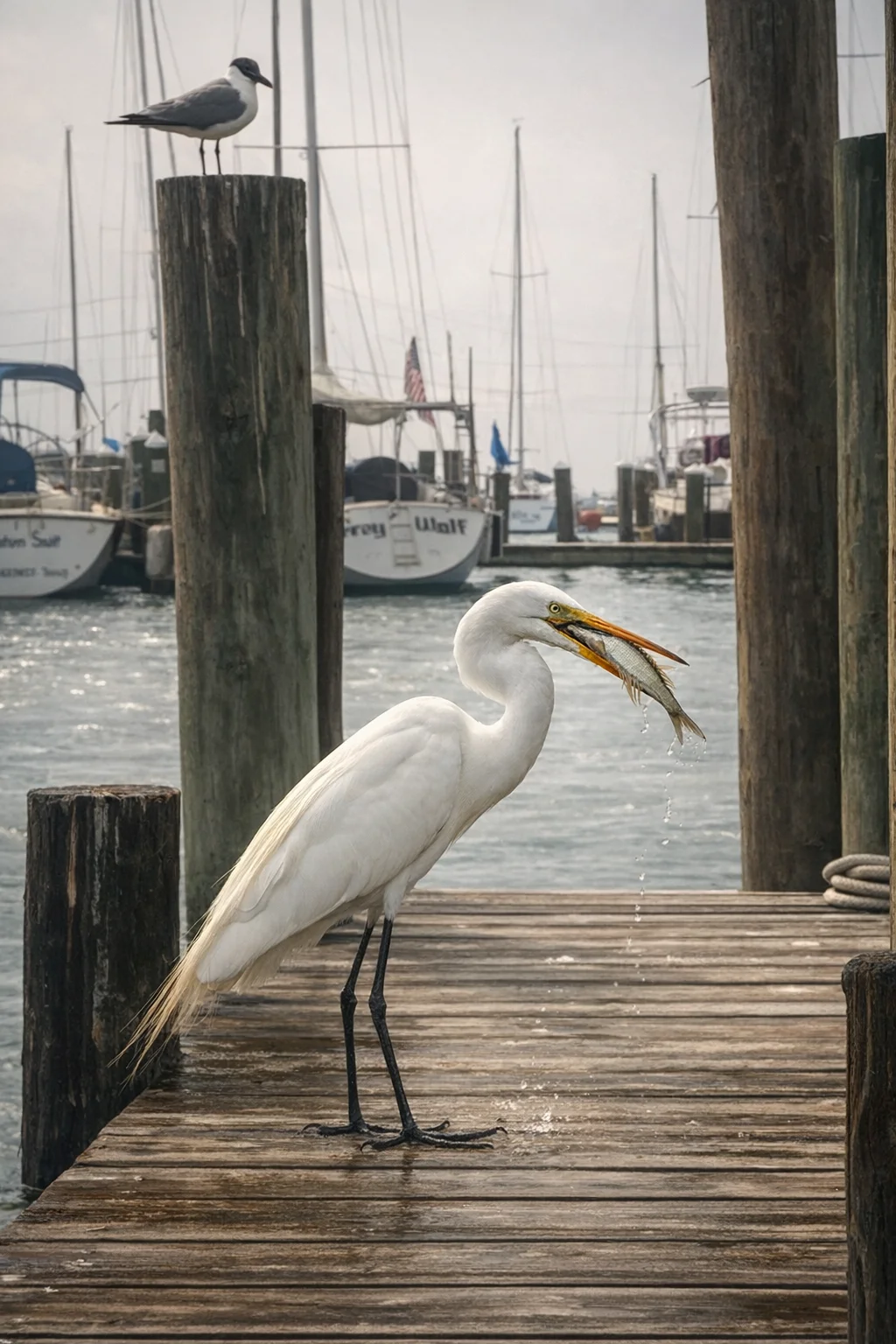
Great Egrets at Rockport Harbor have learned that the marina concentrates fish — and they work the dock edges with patience and precision. This photo was taken right at the Rockport waterfront. The fish barely had a chance.