Year-Round · Texas Coast · September Festival
Hummingbirds of Texas
More than 10 species. One year-round resident. And the most spectacular migration concentration on the Gulf Coast — every September, right here.
Explore with the Coastal Crew


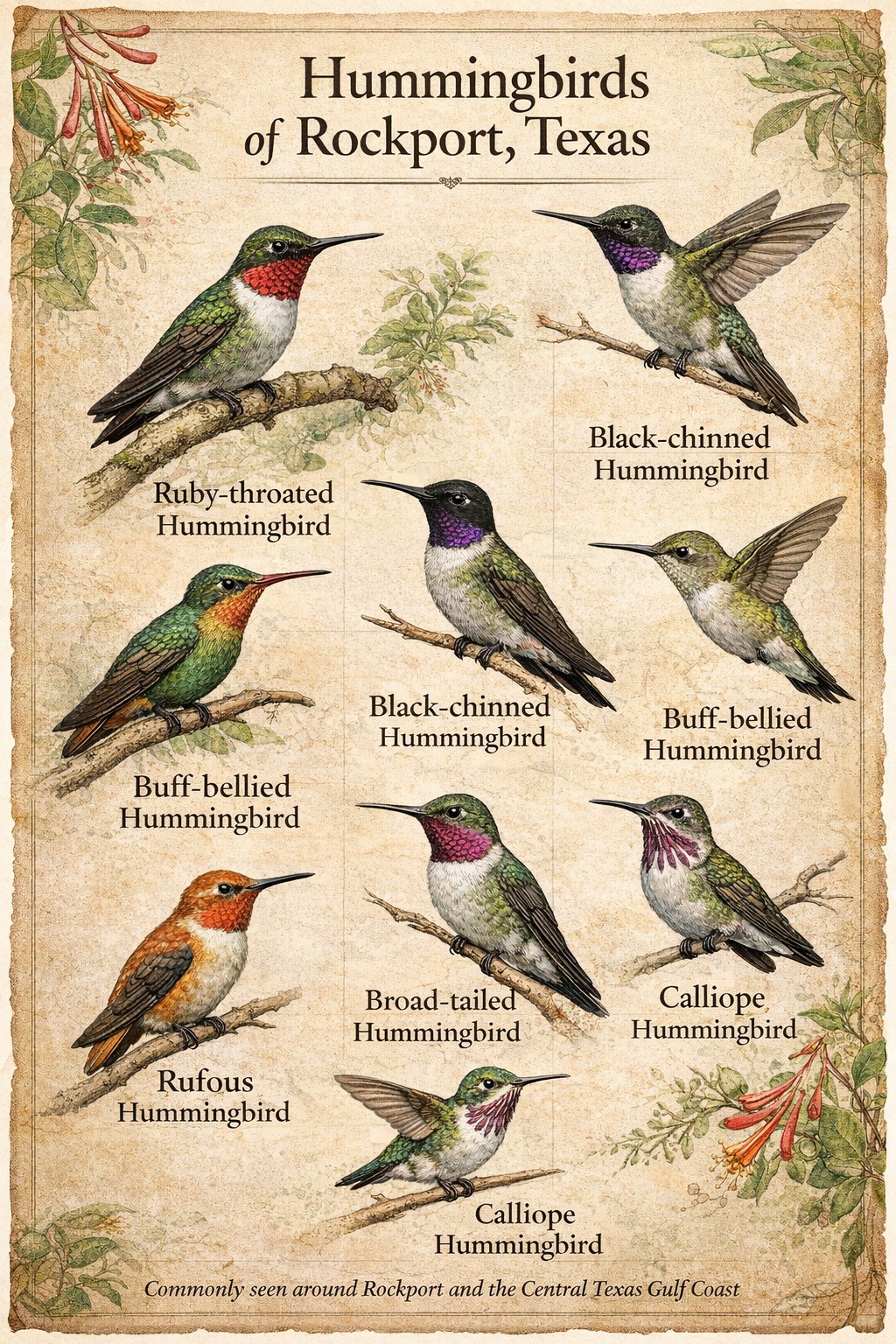
Ten Species. One Coast. One Festival.
Texas is one of the best states in the country for hummingbird diversity. The eastern half draws Ruby-throated migrants in the millions. The western mountains around Big Bend host specialties you won’t find anywhere else in the US. And right here on the Gulf Coast, in Rockport, you have something truly unusual — a hummingbird that never leaves.
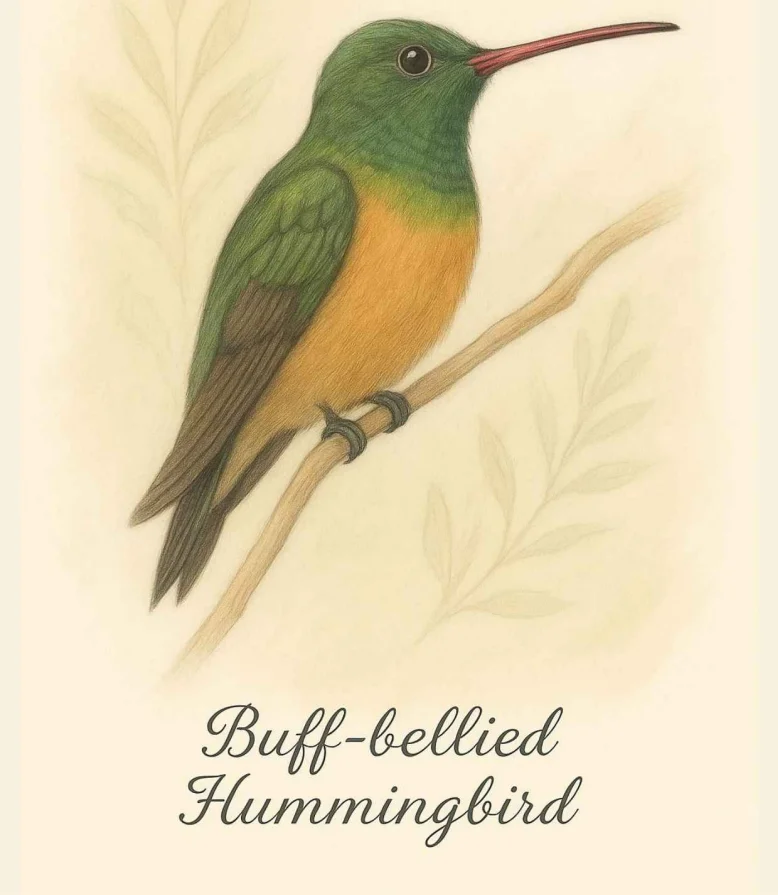
Buff-bellied Hummingbird
Amazilia yucatanensis · Year-Round Texas Coast
This is the one that makes Rockport special. While every other hummingbird species abandons the Texas Coast for the winter, the Buff-bellied stays put — the only hummingbird that can be found year-round along the Gulf. That distinctive red bill with a dark tip is your field mark. Greenish back, warm buffy-cinnamon belly, rufous tail that flashes when it turns. In winter, when your feeder has fallen quiet, the Buff-bellied is still there.
Pro tip: Rockport is the most reliable location in the United States for the Buff-bellied Hummingbird. Winter birders specifically travel here for this species alone.
The September Surge
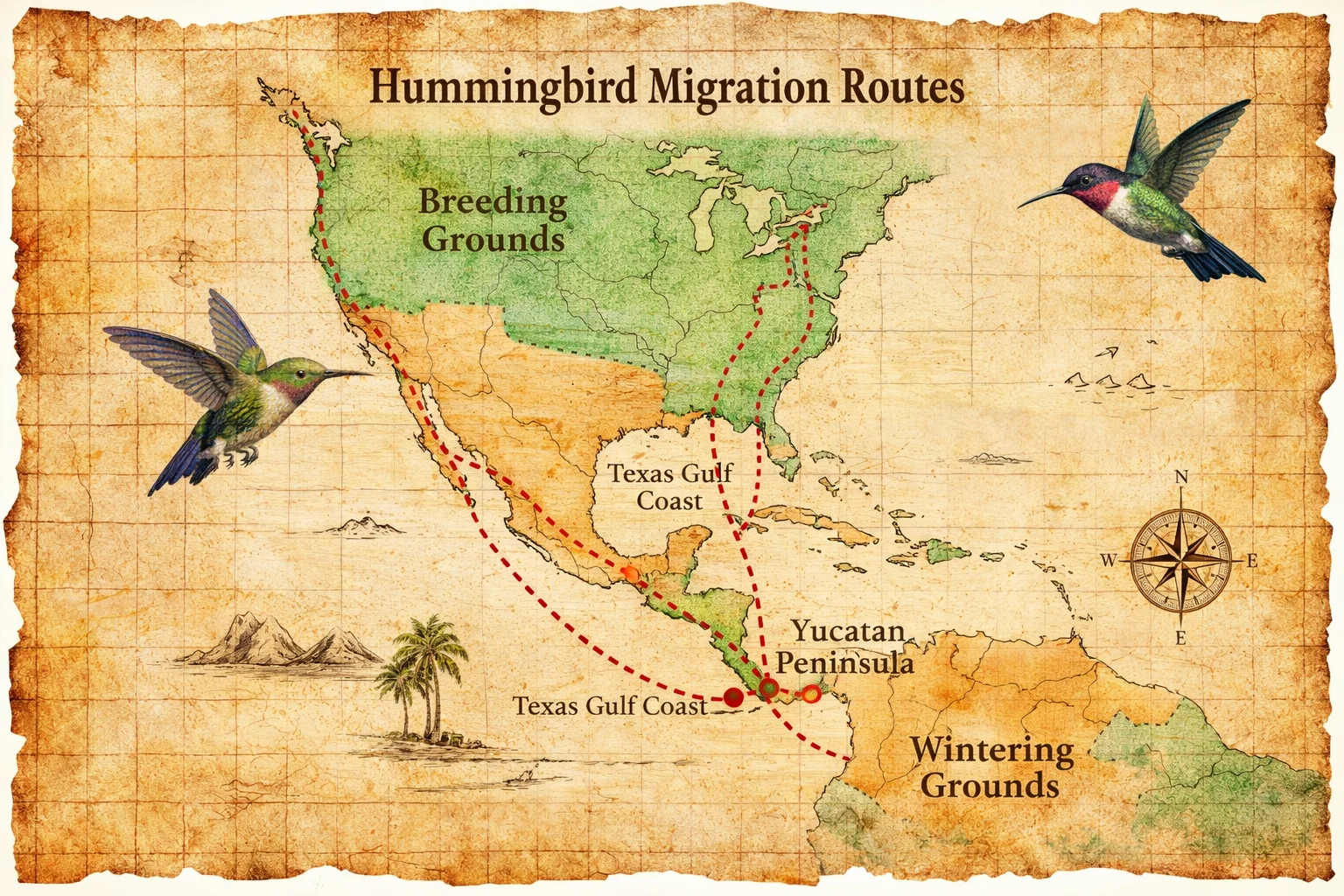
Every August and September, something remarkable happens along the Rockport waterfront. Ruby-throated and Rufous hummingbirds — and a half-dozen rarer species mixed in — funnel through the Texas Coast on their way to Mexico and Central America. Hundreds of hummingbirds concentrate at backyard feeders, flowering gardens, and natural areas throughout Aransas County.
Rockport has celebrated this phenomenon for over 45 years with the Hummingbird Festival — one of the most beloved birding events on the Gulf Coast. Guided tours, banding demonstrations, expert speakers, and access to private yards that regularly host 20+ hummingbirds at once.
All Texas Hummingbird Species
Here’s every hummingbird you might realistically encounter in Texas — from the common to the coveted.
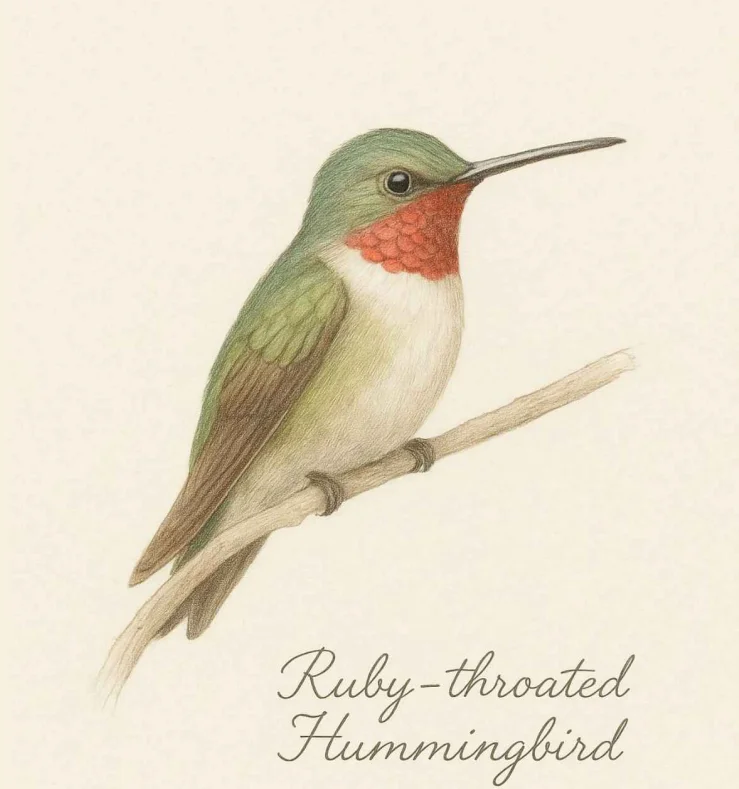
Ruby-throated Hummingbird
Archilochus colubris
The hummingbird most people picture when they think "hummingbird." The undisputed star of the Rockport Hummingbird Festival each September — thousands pass through the Texas Coast during peak migration, turning backyard feeders into aerial circuses.
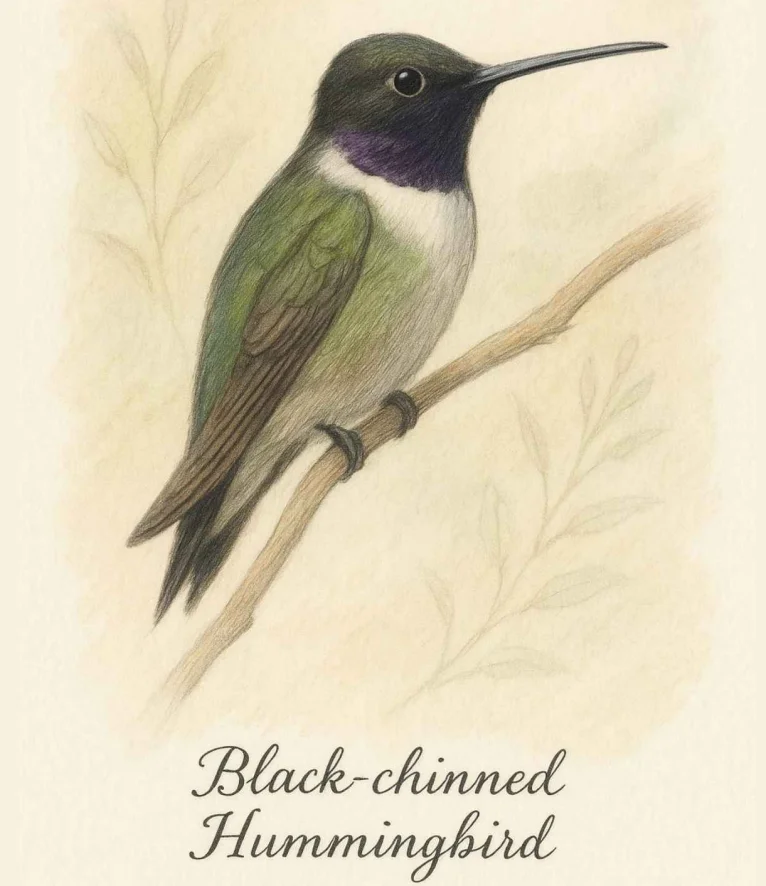
Black-chinned Hummingbird
Archilochus alexandri
The most widespread breeding hummingbird in Texas. Males pump their tails while hovering — a reliable field mark. Often confused with Ruby-throated but the iridescent purple band on the chin is visible in good light. Texas's most common summer hummingbird.
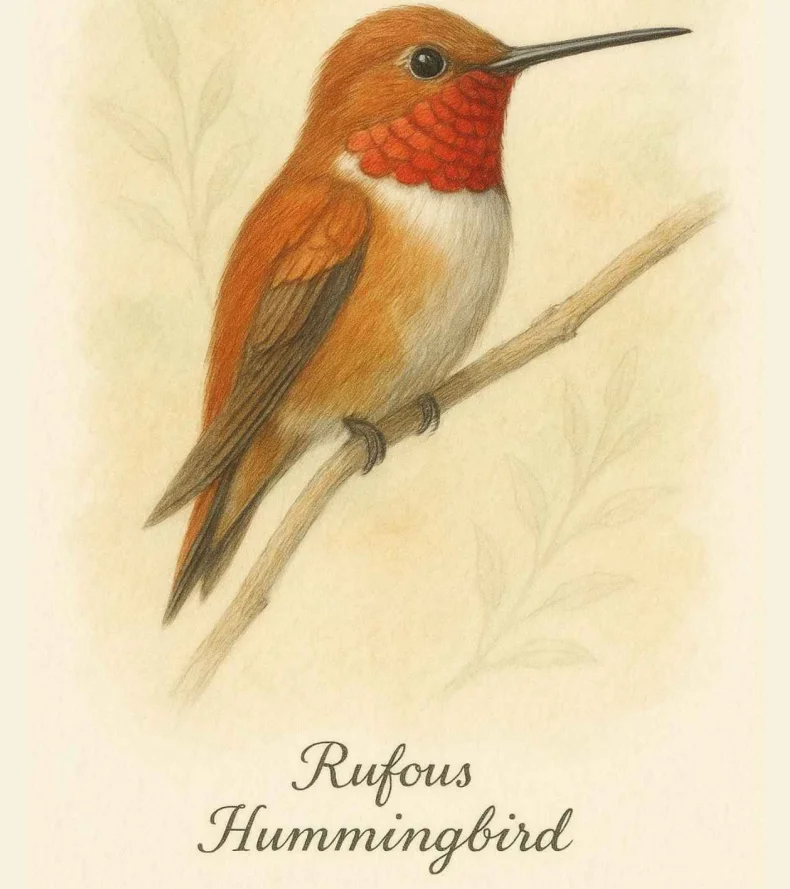
Rufous Hummingbird
Selasphorus rufus
The September bully. Rufous hummingbirds have a notorious personality — they will claim a feeder as their personal territory and defend it aggressively against birds three times their size. The fiestiest hummingbird by weight in North America. When your feeder suddenly has a tiny orange bouncer, you've found a Rufous.
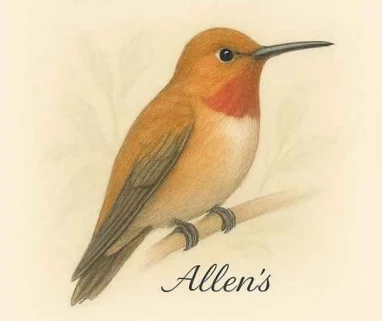
Allen's Hummingbird
Selasphorus sasin
Nearly identical to the Rufous in the field — even experienced birders struggle with this one. The key is the green on the back (Rufous males are typically all-orange back). Uncommon but regular on the Texas Coast during fall migration.
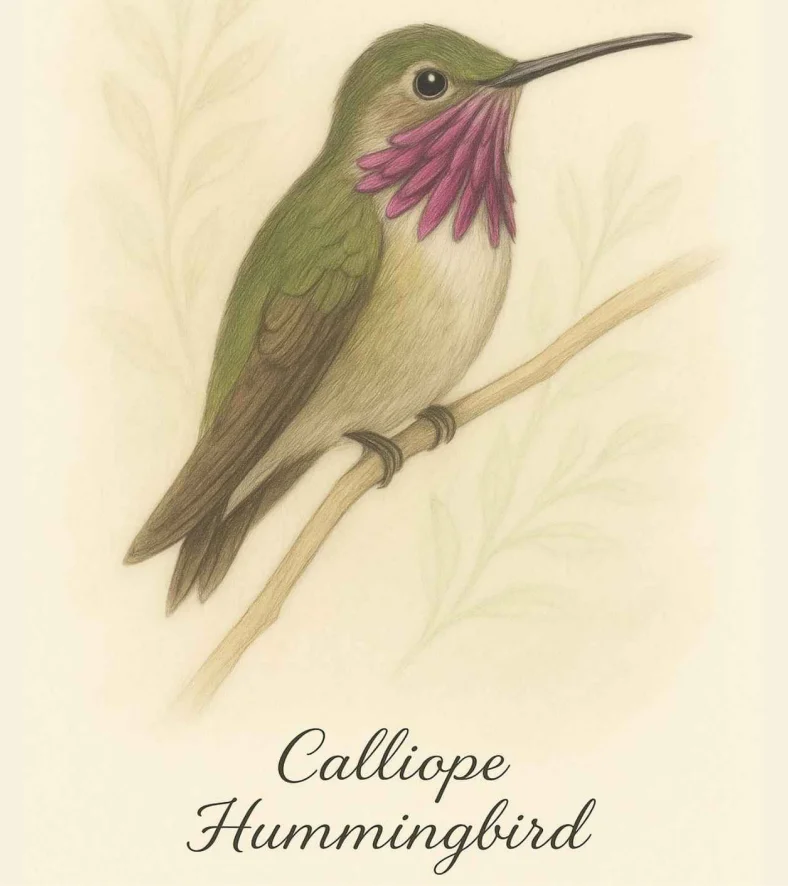
Calliope Hummingbird
Selasphorus calliope
North America's smallest bird. Weighs less than a penny. Those magenta streaks on the throat look like the bird was painted with a fine brush — each one is an individual iridescent feather. Despite its tiny size it migrates thousands of miles annually.
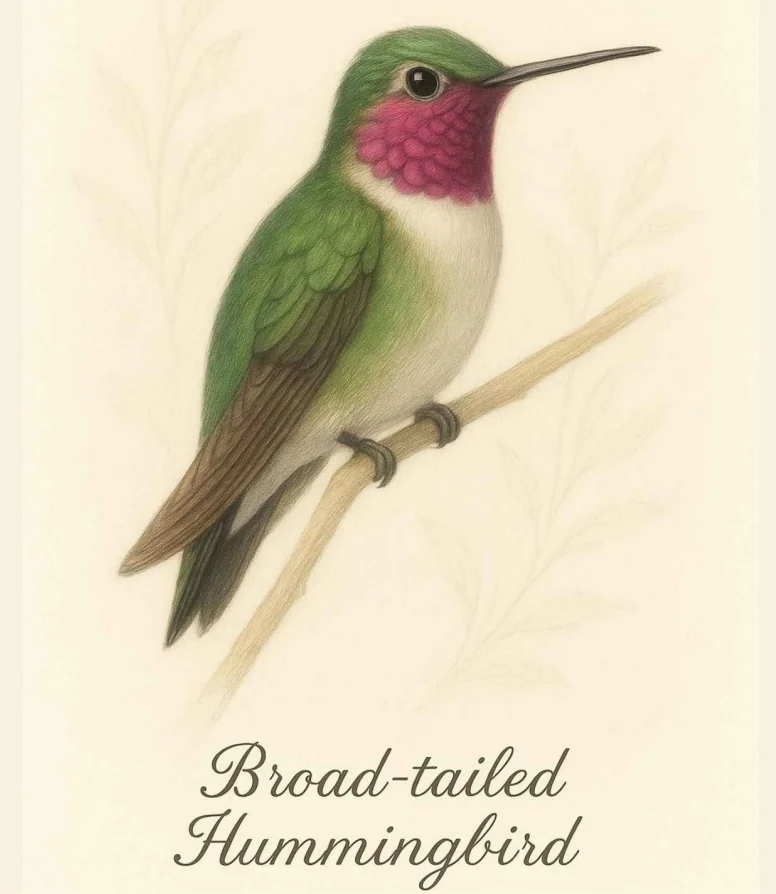
Broad-tailed Hummingbird
Selasphorus platycercus
Males produce a distinctive metallic trill with their wings — you hear a Broad-tail before you see it. Most common in the mountains of West Texas and Big Bend country during spring migration. Less common on the Coast.
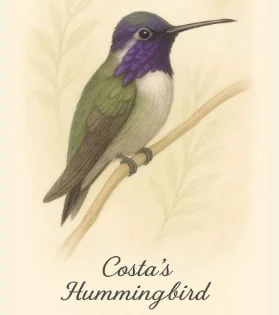
Costa's Hummingbird
Calypte costae
Those extended gorget points make the Costa's look like it's wearing a purple handlebar mustache. Primarily a desert hummingbird from the Southwest — occasionally wanders into West Texas. A good find anywhere on the Texas Coast.
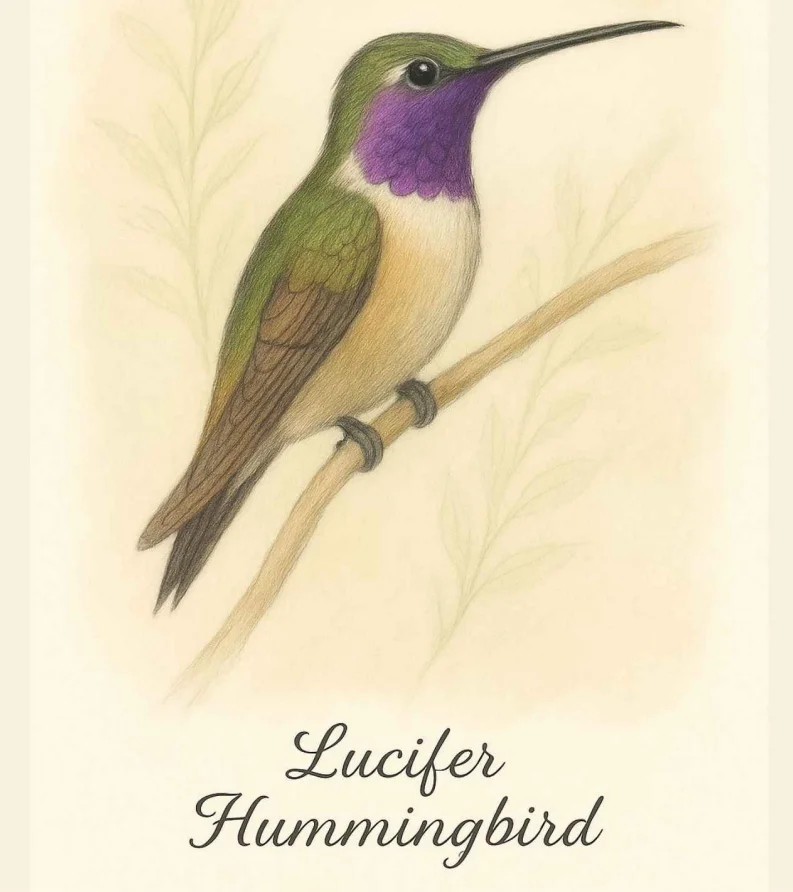
Lucifer Hummingbird
Calothorax lucifer
Not demonic — named for Lucifer, meaning 'light-bearing,' a reference to the shimmering gorget. One of Big Bend's most sought-after species. The dramatically curved bill is unique among Texas hummingbirds. April through August at Big Bend is your window.
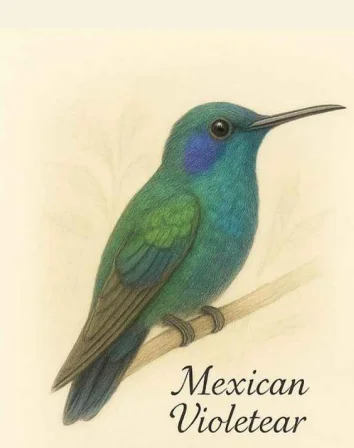
Mexican Violetear
Colibri thalassinus
A visitor from Mexico and Central America that occasionally wanders north into Texas, especially in summer. When one shows up at a Texas feeder it creates an immediate buzz in birding circles. Larger and heavier-set than most Texas hummingbirds, with that unmistakable violet ear patch.
Attract Them at Home — Plant Turk’s Cap

The single best thing you can do to attract hummingbirds to a Texas yard is plant Turk’s Cap (Malvaviscus arboreus). This native Texas shrub blooms from summer through fall — exactly when migration peaks — and hummingbirds go absolutely wild for it. It’s drought-tolerant, deer-resistant, thrives in partial shade, and requires zero maintenance beyond planting.
Paired with a sugar-water feeder (4:1 water to sugar — no red dye needed), Turk’s Cap will turn your yard into a migration stopover that hummingbirds remember and return to year after year.
September in Rockport. It’s Impossible to Describe.
Hundreds of hummingbirds in a single backyard. The sound of wings everywhere. A Buff-bellied at the feeder in January when everyone else has gone south. Come see it for yourself.